
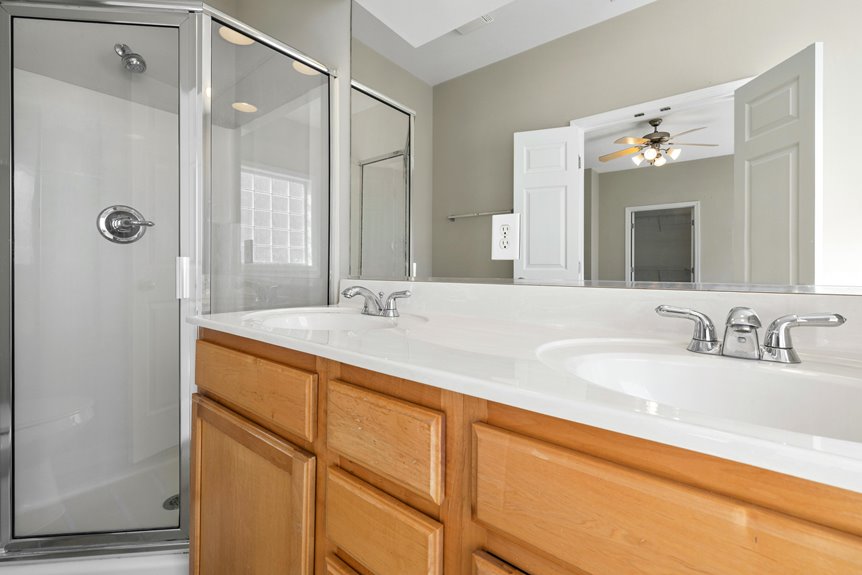
Your bathroom fan won’t cool your house—it moves air at 60–110 CFM, which isn’t enough for whole-home cooling. What it actually does is remove humid air after showers, which can make heat feel less intense.
The problem? Running it too long creates negative pressure that pulls in warm, humid outdoor air, potentially making things worse. For real cooling relief, you need multiple strategies working together: balanced ventilation, strategic timing, and support from your HVAC system. Understanding what actually works requires looking at the full picture.
Your Bathroom Fan Won’t Cool Your House: Here’s Why
Why doesn’t running your bathroom fan help cool down your house on a hot day? The answer lies in how exhaust-only fans actually work. When you run your bathroom fan, it creates negative pressure inside your home. This pulls in outdoor air from cracks and gaps, which often feels warmer than the air you’re exhausting. The air exchange happens too slowly to meaningfully lower your indoor temperature. Meanwhile, that negative pressure can increase your humidity levels by drawing in damp outside air. Your fan exhausts whatever’s inside, but it doesn’t replace that air with cooler alternatives. Without balanced ventilation or proper cooling systems supporting it, your bathroom fan simply can’t overcome the physics working against temperature control.
What Your Bathroom Fan Actually Does: Humidity and Air Exchange
Your bathroom fan actually works by managing humidity and moisture, not by cooling air like you might think. When you run the fan during or after a shower, it pulls humid air out of your bathroom and draws in drier outdoor air, which changes your indoor dew point—the temperature at which moisture starts to condense. Understanding how this air exchange affects your home’s moisture levels and cooling load is the real key to using your fan effectively.
Humidity Metrics And Dew Point
When you’re trying to figure out whether running your bathroom fan will actually help, you need to understand the difference between relative humidity and dew point—because they’re not the same thing, and one matters far more for what happens in your home.
Relative humidity tells you the percentage of moisture in air at a specific temperature. Dew point measures the actual moisture content—the temperature at which air becomes saturated. Here’s what matters: dew point stays constant during temperature changes, making it the real indicator for moisture management and mold risk.
| Metric | What It Shows | Why It Matters |
|---|---|---|
| Relative Humidity | Moisture percentage | Changes with temperature |
| Dew Point | Actual moisture amount | Predicts condensation risk |
| Outdoor Air Exchange | Fresh air movement | Determines fan effectiveness |
When your outdoor dew point is lower than indoors, outdoor air exchange through your bathroom fan actually reduces moisture problems.
Air Exchange And Moisture Dynamics
Now that you understand dew point matters more than relative humidity, it’s time to see what actually happens when you flip on that bathroom fan. Your bathroom exhaust fan creates negative pressure that pulls humid air outside. Here’s what matters: this air exchange also draws outdoor air inside, and that air brings its own moisture level based on the outdoor dew point.
During a shower, your indoor dew point climbs from 58°F to 70°F. If your outdoor dew point sits at 64°F, you’re pulling in air that’s drier than your bathroom. Your fan helps in this scenario. But if outdoor dew point exceeds your indoor humidity level, running the fan worsens your indoor humidity and increases cooling costs. Compare the numbers before deciding whether your air exchange helps or hurts.
Why Exhaust-Only Fans Create a Dangerous Backdraft Problem
Have you ever noticed how turning on your bathroom fan seems to make your house feel drafty? That’s backdrafting, and it’s a real problem with exhaust-only fans.
Here’s what happens: Your fan pulls air out, creating negative indoor air pressure. This pressure imbalance sucks outdoor air through cracks and leaks—but not evenly. Instead of controlled fresh air intake, you’re pulling in whatever’s closest: humid outside air, contaminants, or unconditioned air that makes your home uncomfortable.
| Problem | Effect | Result |
|---|---|---|
| Negative pressure | Uneven air infiltration | Backdrafting occurs |
| Single leak path | Air drawn through one spot | Contaminants enter |
| No balanced intake | Moisture and temperature fluctuate | Condensation forms |
The solution? Pair your exhaust fan with controlled fresh air or use balanced ventilation like an HRV system. You’ll maintain healthy indoor air pressure and prevent those drafty, uncomfortable situations.
How to Safely Run Your Bathroom Fan Without Risks
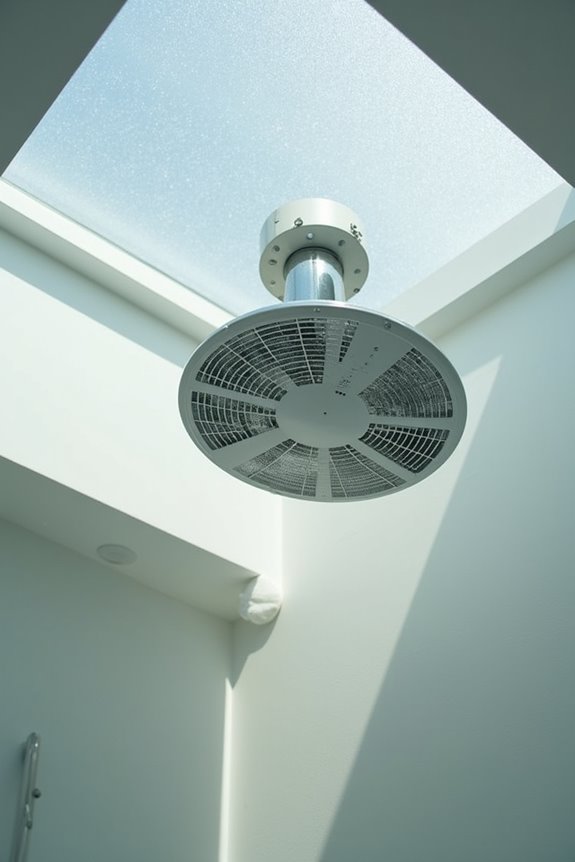
So what’s the smart way to use your bathroom exhaust fan without creating those backdraft problems? I’d recommend pairing your bathroom exhaust with controlled intake to balance air changes throughout your home. Install a timer switch set for 20–30 minutes after showers to limit runtime and prevent excessive negative pressure. For humidity management, consider a condensation sensor that automatically turns the fan off when moisture drops. Check your outdoor dew point before running the fan; if it’s higher than your indoor humidity, exhausting air can actually bring in more moisture. Keep filters clean for efficiency, and maintain proper intake paths—either intentional vents or cracked windows. This balanced approach protects against backdraft risk while effectively removing bathroom moisture.
What Really Works: HRV, Shade, and Balanced Ventilation
If you’re serious about cooling efficiency, you’ll want to move beyond a simple exhaust fan and consider systems that actually balance your home’s air pressure. An HRV, or heat-recovery ventilator, exchanges stale indoor air with fresh outdoor air while recovering energy. You can also achieve balanced ventilation by opening opposite corners of your house to create cross-flow air movement. This natural approach costs nothing but requires attention to wind direction. For better results, pair ventilation with attic insulation strategies. Bury attic ducts in blown insulation and channel cool air from soffits to ridge vents. These combined techniques—balanced ventilation, proper insulation, and strategic air movement—work together to cool your home efficiently without relying solely on bathroom fans.
Dew Point, Not Just Temperature: Why Humidity Matters More
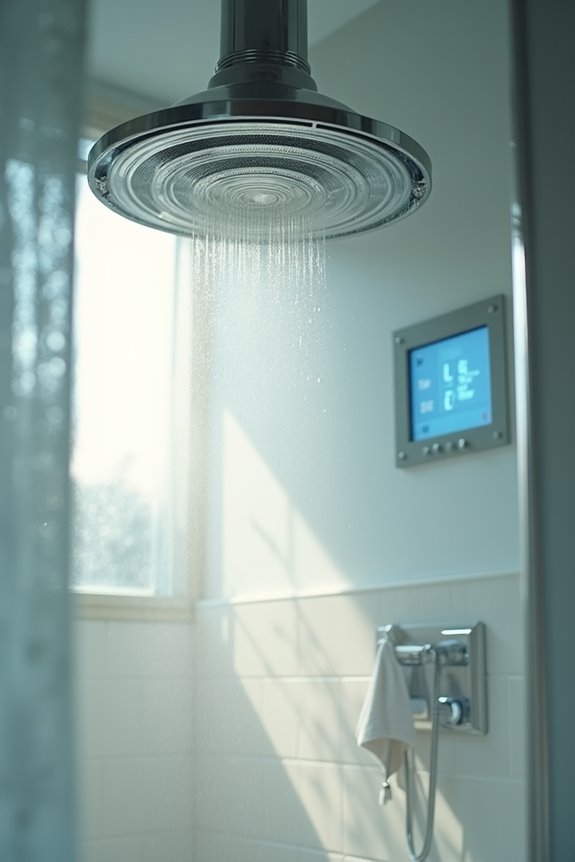
When you’re deciding whether to run your bathroom fan, focus on dew point instead of just temperature—it’s the real measure of moisture in the air. Your outdoor dew point tells you whether pulling in fresh air will actually dry out your home or make it more humid, which matters far more for comfort than whether it’s 75°F or 80°F outside. By comparing your bathroom’s moisture level to what’s coming in from outside, you’ll make smarter ventilation choices that actually help cool your house instead of working against you.
Dew Point Over Temperature
Most people focus on temperature when they think about humidity, but dew point is actually the metric that matters most for your bathroom ventilation strategy. Here’s why: dew point tells you when moisture will condense on your surfaces—the real problem behind mold and mildew. A hot shower can push your bathroom’s dew point from 14.5°C to 21°C, creating conditions favorable for condensation. When you run your exhaust fan, you’re removing that humid air, which improves indoor air quality. However, if outdoor dew point is higher than your indoor level, exhausting actually worsens your moisture problem. Understanding dew point helps you ventilate more effectively, protecting your bathroom’s health and your home’s integrity.
Humidity’s Hidden Cooling Impact
Why does your bathroom feel so much worse after a hot shower even though the temperature barely changed? The culprit isn’t heat—it’s dew point. During a shower, dew point can jump from 58°F to 70°F, making the air feel heavier and stickier despite similar temperatures.
This matters because humidity governs how moisture behaves in your home. When dew point rises, water condenses on cooler surfaces like mirrors and tiles. Your ventilation fan plays a tricky role here. Running it briefly after showering helps clear moisture-laden air. However, if you run it too long in humid conditions, you risk pulling moisture toward colder surfaces, increasing condensation and mold risk.
Understanding dew point helps you ventilate smarter and protect your bathroom effectively.
Build a Real Cooling Strategy: Where Fans Fit In
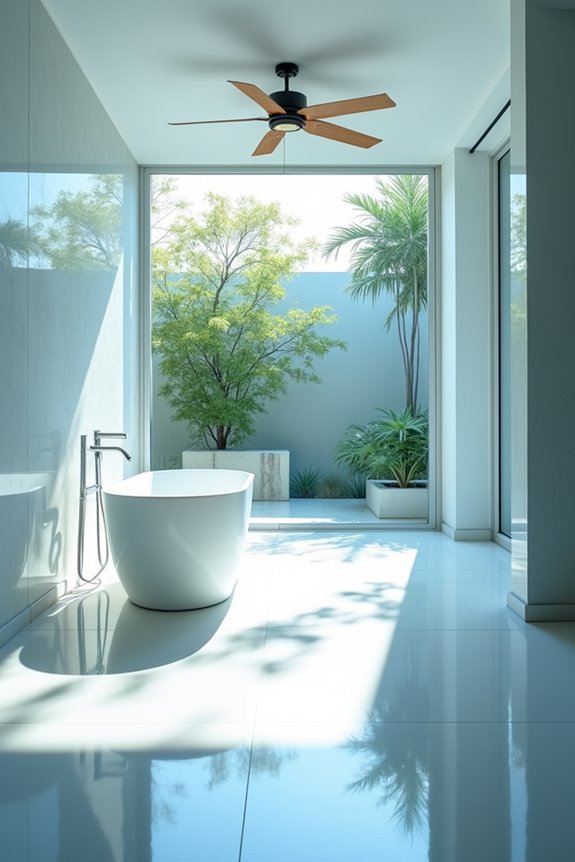
If you’re thinking a bathroom exhaust fan alone will cool your house, here’s what you need to know: it won’t, but it can be one useful piece of a larger cooling plan. Your bathroom fan moves air in the 60–110 CFM range, which helps with ventilation but lacks real cooling power. Instead, pair it with other strategies. Use a timer switch to run your fan continuously during cooler hours. Add a ducted supply through your central air handler. Layer in high-efficiency ceiling fans to improve air circulation and cooling perception throughout your home. Consider a heat-recovery ventilator for better efficiency. This combination—bathroom ventilation, strategic timing, and supplemental air movement—creates actual relief on warm days.