
Mount towel bars at 48 inches from the floor to keep them accessible and prevent dragging.
Place toilet paper holders 26 inches high, 8–12 inches from the toilet rim.
Position robe hooks at 70 inches for comfortable reach.
Install vanity sconces at 60–65 inches, spacing them 36–40 inches apart for balanced lighting.
Shower rods go at 75–77 inches, with valves between 38–45 inches.
Keep accessories symmetrically aligned and avoid switches and outlets.
Each measurement serves a purpose—understanding why they matter makes your bathroom both functional and balanced.
Standard Heights for Towel Bars and Rings
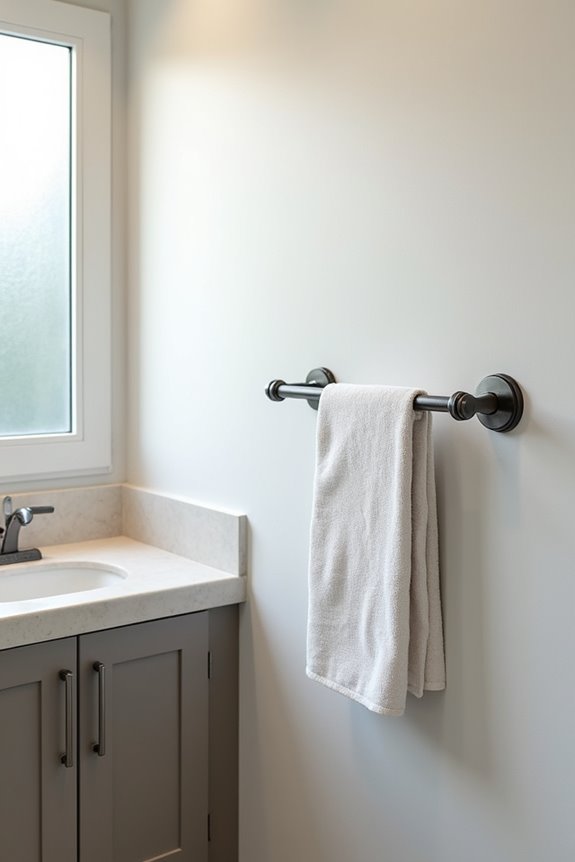
How high should you actually mount a towel bar? I’ll walk you through it. Standard heights for towel bars and towel rings are pretty straightforward once you know the basics.
Most double towel bars should be mounted 48 inches from the floor. This height works well for most people and keeps towels accessible without awkward reaching.
Mount double towel bars at 48 inches from the floor for optimal accessibility and comfort for most household members.
Towel rings follow similar guidelines. I’d mount them 48 inches from the floor to the bottom of the ring, or about 20 inches above your counter if you’re placing one beside your vanity.
These standard heights keep towels hanging freely without dragging on the floor. They’re also easy to reach for everyone in your household. You can adjust slightly to avoid switches or outlets, but staying close to these measurements keeps things practical and comfortable for daily use.
Toilet Paper Holder Height and Distance
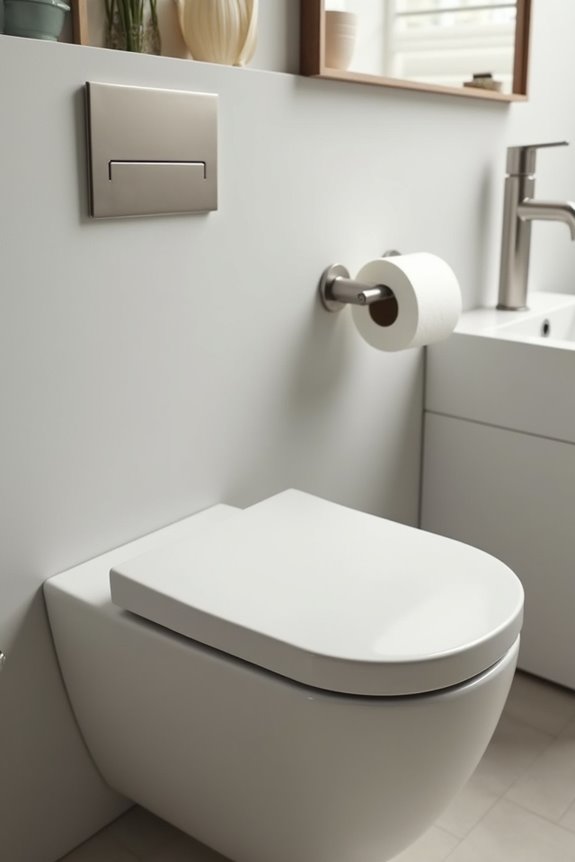
While towel bars need to sit up high for easy access, your toilet paper holder calls for a completely different approach. I’d recommend mounting your toilet paper holder at 26 inches from the floor—this height works well for most people. You’ll also want to position it within 8–12 inches from the front rim of your toilet seat, so it’s conveniently within arm’s reach. If you’re placing the holder beside your vanity, measure about 20 inches above the counter to the bottom of the ring. Getting this distance right prevents awkward reaches and keeps things functional. When space is tight, consider a toilet paper stand instead of wall mounting. These placement guidelines help everyone in your household access what they need comfortably.
Why Robe Hooks Should Be 70 Inches High
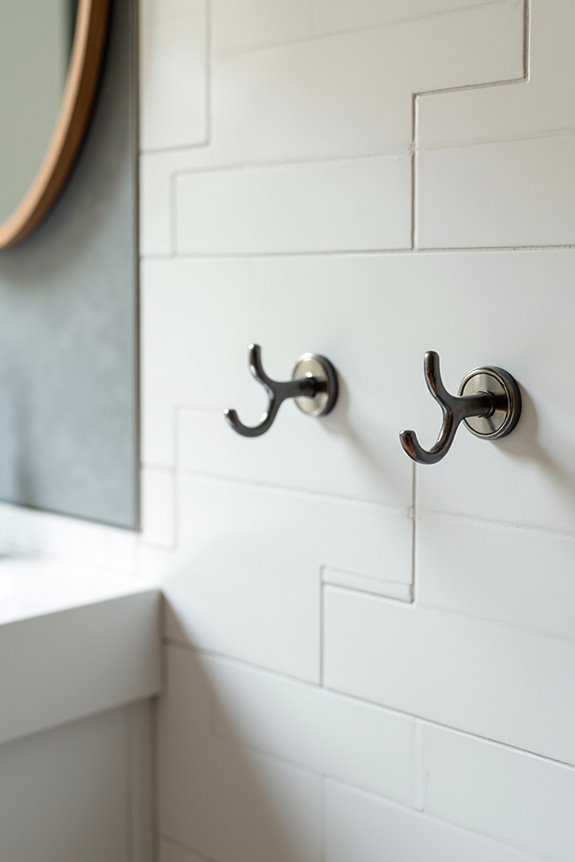
After you’ve sorted out your toilet paper holder placement, it’s time to think about where your robe hooks should go. I recommend mounting height at 70 inches from the floor. This standard measurement works well for most bathrooms and provides accessibility for different users. At this height, you can easily grab your robe without stretching too much or bending down awkwardly. The positioning keeps robes above counters and towel bars, preventing clutter and obstruction. If your bathroom has lower ceilings or tight space, you can adjust slightly, but 70 inches remains the common guideline. Before installing, check clearance around doors, vanities, and shower enclosures. This prevents interference with daily movement and maintains your bathroom’s functionality while keeping everything within comfortable reach.
Shower Rod Installation: Creating Visual Height and Space
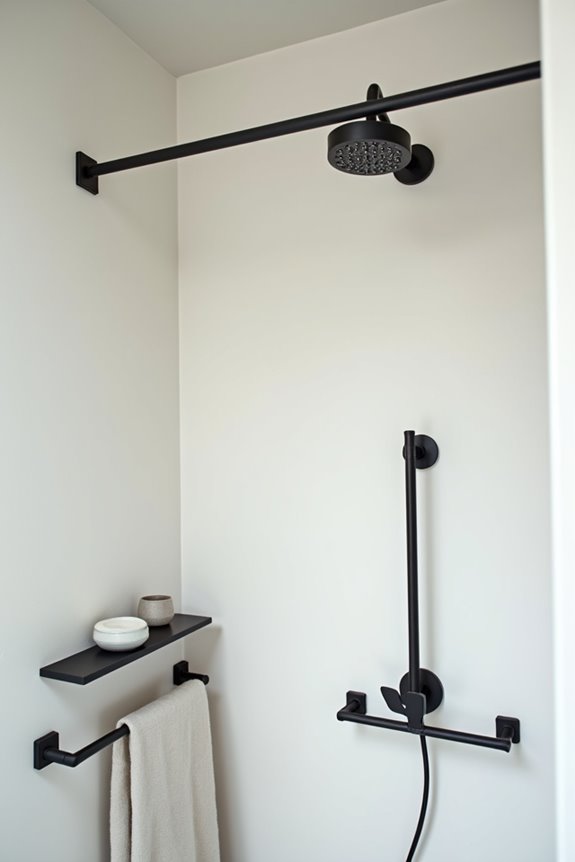
Now that you’ve positioned your robe hooks at 70 inches, install your shower rod at 75–77 inches from the floor for standard 72-inch showers. This height creates visual height and improves space perception by making your bathroom feel more open and balanced.
Positioning the rod slightly higher than your shower head enhances the room’s sense of openness. Consider your ceiling height and tile splash zone when deciding placement. The curtain edge should fall cleanly without blocking mirrors, lighting, or towel bars.
For accessibility, keep the rod within easy reach and avoid interfering with your shower door clearance. This thoughtful placement addresses both function and aesthetics in your bathroom.
Vanity Mirror Height and Positioning
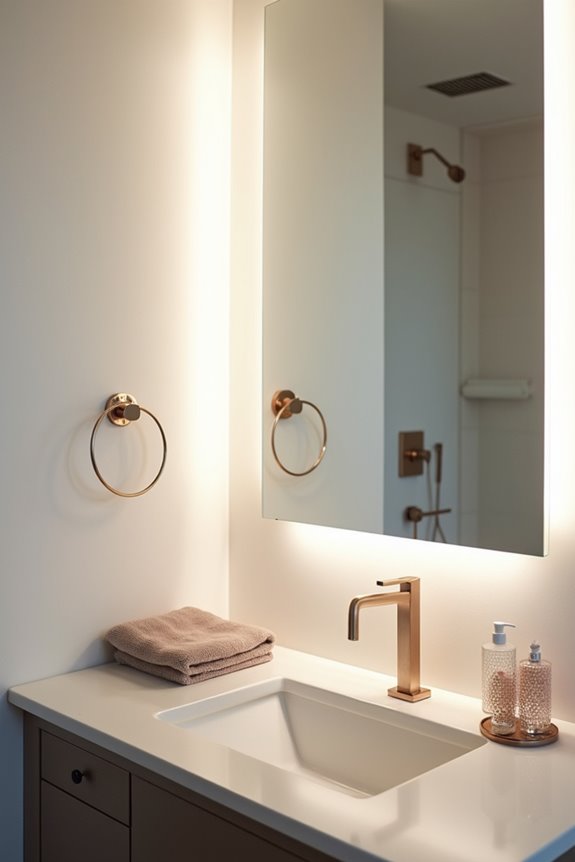
How do you know if your vanity mirror’s at the right height? I’ll walk you through it. Your mirror’s bottom edge should sit near or slightly above counter height to reduce neck strain. Position the top edge at or just above eye level for optimal reflection of your entire face.
For lighting alignment, flank your mirror with vanity sconces positioned 60–65 inches from the floor to the junction box. Space them 36–40 inches apart for balanced illumination. This setup prevents glare by distributing light evenly across your face.
| Setup Element | Measurement |
|---|---|
| Mirror bottom edge | Near/above counter |
| Mirror top edge | At/above eye level |
| Sconce height | 60–65 inches |
| Sconce spacing | 36–40 inches |
| Optimal face visibility | Entire face reflected |
Consider surrounding elements—outlets, cabinet hardware, and lighting placement—to achieve a unified design while avoiding unwanted shadows or reflections.
Shower Valve and Showerhead Heights
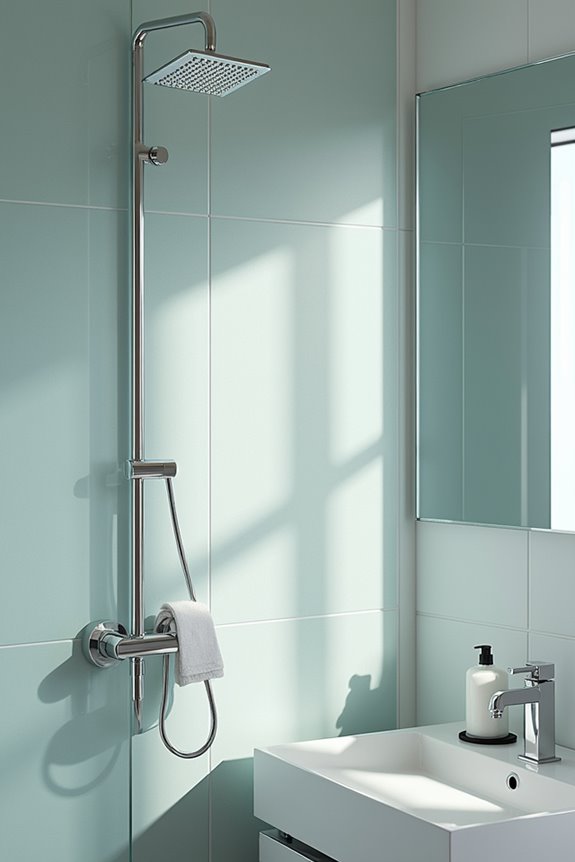
Where you place your shower valve and showerhead matters just as much as your mirror height does. I’ll walk you through the right heights so everything works smoothly.
Install your shower valve between 38 and 45 inches above the floor. This placement keeps it within comfortable reach for most people. Your tub spout should sit 8 to 18 inches below the valve for proper mounting alignment.
Install shower valves between 38 and 45 inches high, with tub spouts positioned 8 to 18 inches below for proper alignment.
For showerhead height, aim for around 80 inches from the floor. This accommodates average user height and provides good water coverage.
Here’s the point: your shower valve height and showerhead height must work together. When you position the valve correctly, it aligns with where you want water flowing from your showerhead. This coordination prevents awkward angles and gives you consistent water pressure throughout your shower experience.
Tub Spout and Wall-Mounted Faucet Placement
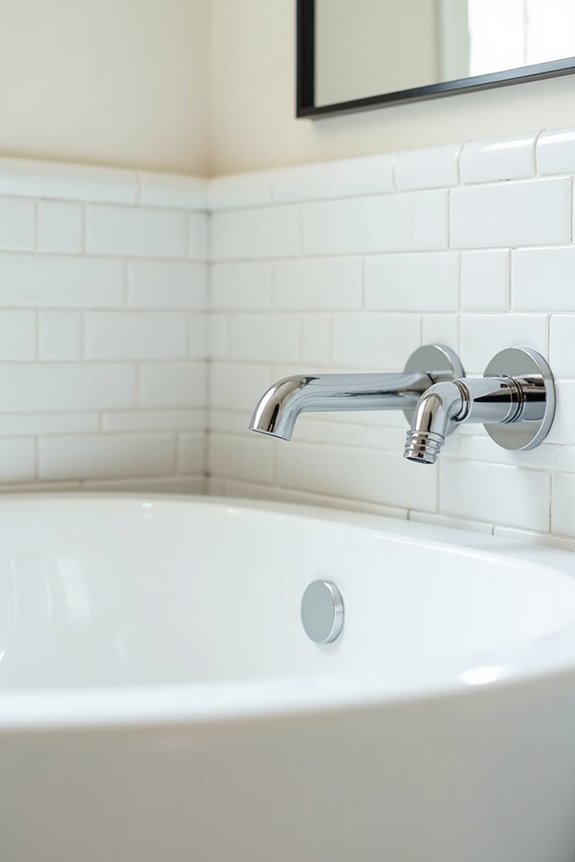
Getting your tub spout and wall-mounted faucet at the right height affects how your bathroom functions. Here are the key measurements for comfortable and practical installation.
| Component | Height | Purpose |
|---|---|---|
| Tub spout | 12–18 inches above rim | Comfortable reach and splash control |
| Wall-mounted valve | 38–45 inches from floor | Aligns with standard sink height |
| Showerhead | Around 80 inches from floor | Optimal shower experience |
For tub spout height, mounting 12–18 inches above the rim lets you reach it easily while controlling splashes. Wall-mounted faucet placement at 38–45 inches from the floor keeps everything at a natural working level.
Leave sufficient maintenance clearance behind the tub spout. Avoid positioning it where shower curtains or glass panels block drainage or movement. This planning prevents future problems and keeps your setup functional for years.
Bathroom Lighting Height and Placement
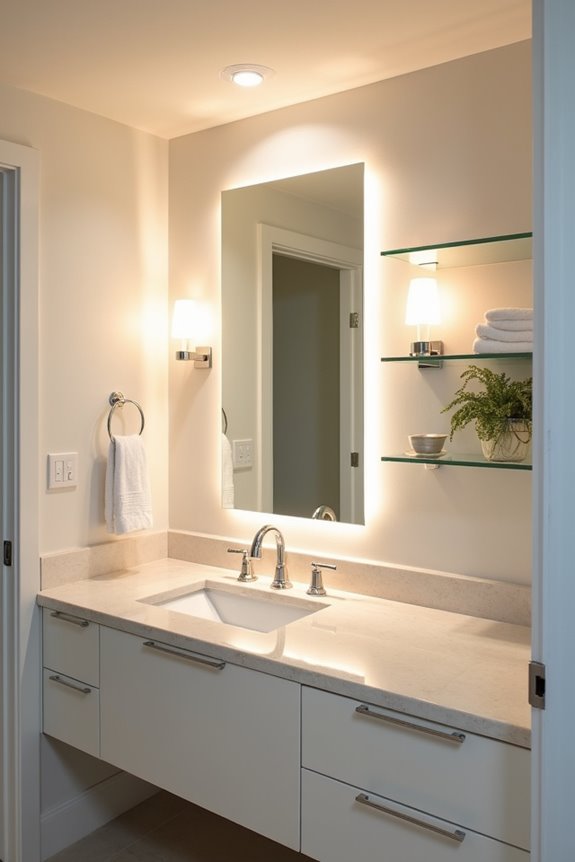
When you’re planning your bathroom lighting, here are the key heights and placements for proper functionality. Mount vanity sconces at 60–65 inches from the floor, spacing them 36–40 inches apart, and position any light above your mirror about 6 inches higher to eliminate shadows on your face. Getting these measurements right—along with coordinating your ceiling lights with your vanity setup—creates balanced, layered lighting that improves visibility and brightness in your bathroom.
Vanity Sconce Placement Guidelines
Proper vanity sconce placement affects how you look in the mirror and your ability to groom yourself. I recommend mounting vanity sconces 60–65 inches from the floor to the junction box, flanking your mirror on both sides. Space them 36–40 inches apart for balanced lighting. Position sconces about 6 inches above the mirror to eliminate shadows across your face. This lighting height aligns with eye level when you’re standing, creating even facial illumination. Maintain at least 24 inches of clearance above your countertop where lights are mounted. These placement guidelines work with your mirror size and vanity height to deliver shadow-free task lighting. Coordinating sconces with other bathroom lighting provides both ambient and focused illumination around your sink area.
Shower Fixture Height Standards
How high should your showerhead actually be? I’ll walk you through shower fixture heights so your bathroom functions well. Standard showerheads sit around 80 inches from the floor—that’s about eye level for most people. Your shower valve should land between 38 and 45 inches high, positioned 8 to 18 inches above the tub spout for comfortable reaching. These measurements matter because vanity placement and lighting alignment depend on them. When you’re planning your bathroom layout, remember that shower fixture heights affect how you’ll use the space daily. Getting these dimensions correct prevents awkward reaches and allows your whole setup to work together. Take time measuring before installation, and you’ll create a shower area that meets your needs.
Mirror Lighting Coordination Tips
Getting your vanity mirror lighting right makes a big difference in how well you can see yourself for daily tasks like makeup and shaving.
Here’s what works best for mirror lighting setup:
- Mount vanity sconces on both sides of your mirror at 60–65 inches from the floor, spacing them 36–40 inches apart for even face illumination
- Position light sources about 6 inches above the mirror’s top edge to eliminate harsh shadows on your face
- Use frosted or diffused bulbs to avoid glare, and add dimmers for flexibility with different lighting needs
Aim for 300–400 lux total lighting on the mirror plane. I’d also recommend placing your mirror where it reflects natural daylight from nearby windows. This strategy improves vanity height effectiveness while reducing glare and energy use. Your lighting setup will meet professional standards.
Match Accessories to Your Vanity Finish
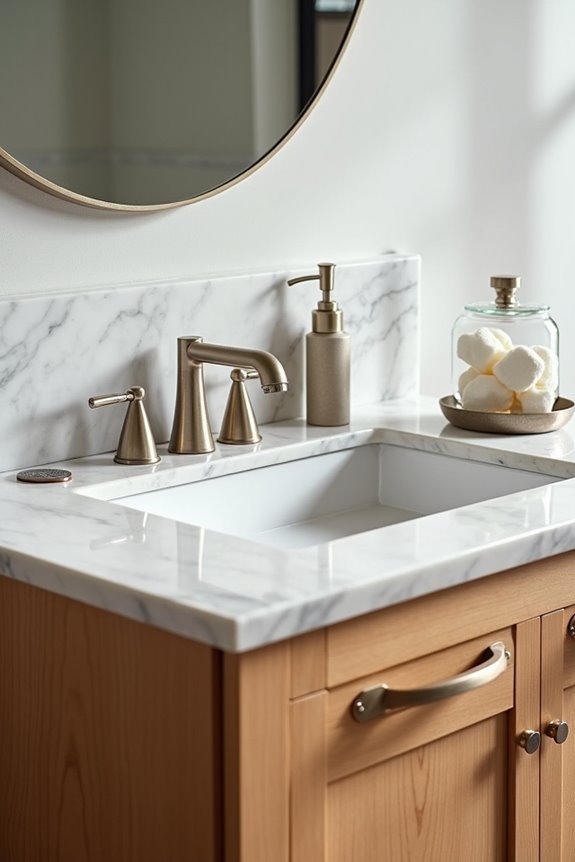
Why does matching your bathroom accessories to your vanity finish matter? It creates a unified appearance throughout your bathroom. When you select towel bars, rings, and holders in finishes that complement your vanity, all elements work together as a coordinated design.
Start by noting your vanity height and finish styling. Install towel bars at 48 inches from the floor to align with your vanity. If you’re placing a towel ring beside the vanity, mount it about 20 inches above the counter. Position toilet paper holders at 26 inches from the floor, staying 8–12 inches from the toilet’s front rim.
This coordinated installation height approach means your accessories won’t clash. They’ll support your vanity’s aesthetic instead of competing with it. You’re creating a bathroom with accessories that work together as a complete design.
Use Lighting to Make Your Bathroom Brighter and Larger
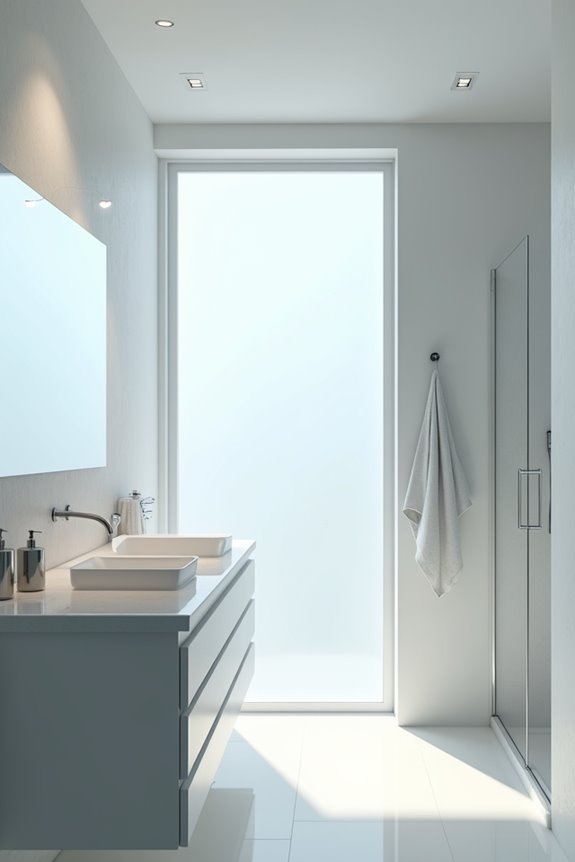
Strategic lighting placement affects how spacious and inviting your bathroom feels. Layering different light sources makes a difference in creating that open, airy atmosphere.
Here’s what I recommend:
- Mount vanity sconces at 60–65 inches from the floor, spaced 36–40 inches apart on either side of your mirror for balanced illumination
- Install overhead lighting combined with task lighting to reduce shadows and enhance the room’s perceived size
- Position your shower head around 80 inches high and align vanity lighting with your mirror to distribute light evenly
Strategic mirror and vanity placement amplifies natural and artificial light reflection. Light-colored fixtures maximize this effect. By combining multiple lighting layers, you’ll eliminate dark corners and create a more spacious bathroom without adding bulk.
Adapt Heights for Low Ceilings and Walls
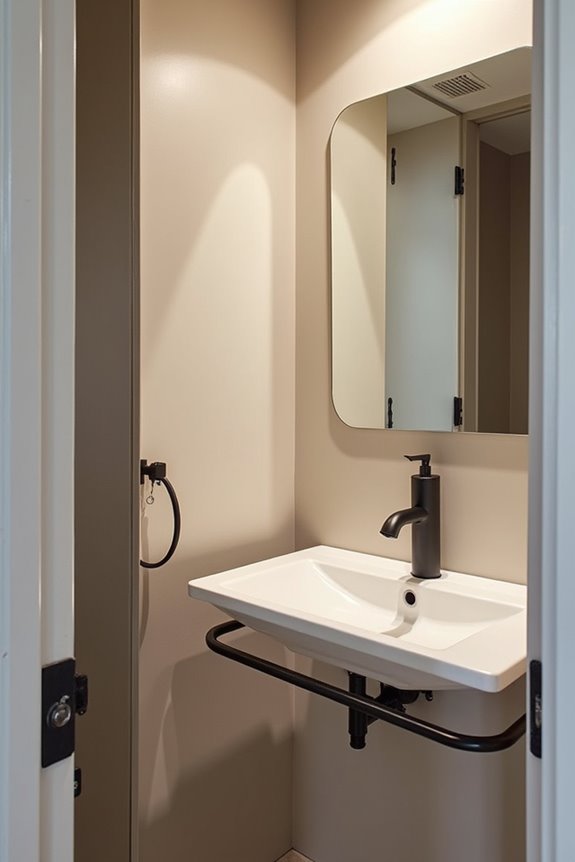
When you’re working with a low ceiling, adjusting where you place accessories is key to keeping your bathroom from feeling cramped. You’ll want to shift everything down from standard heights—towel bars go around 42–44 inches instead of 48, showerheads drop to about 78–80 inches, and mirrors sit closer to 60 inches to eye level—all of which creates better visual balance and gives you more headroom. These space-saving adjustments aren’t just about fitting things in; they actually make your bathroom feel larger by preventing a crowded look that makes low ceilings seem even lower.
Space-Saving Installation Strategies
How you position bathroom accessories in a tight space affects functionality—it’s about fitting things in strategically so everything remains practical and doesn’t feel cramped.
You’ll want to think strategically about vanity height and storage placement to maximize your room’s potential. Here’s what works:
- Install towel bars and hooks at 42–48 inches from the floor for low ceilings, keeping headroom open while maintaining accessibility
- Mount vanity mirrors around 60–65 inches high to align with eye level and reduce visual clutter
- Position towel rings 20 inches above your counter to preserve space for daily tasks
This approach protects your countertop workspace while keeping everything within comfortable reach. You’re creating a bathroom that works harder for you without sacrificing comfort or functionality.
Adjusting Standard Height Guidelines
Low ceilings need different mounting heights than standard bathrooms, and I’ll show you exactly what adjustments work best. When you’re dealing with limited vertical space, I reduce standard heights by 2–4 inches across the board. For vanity height and accessory placement, I mount towel rings at 44–48 inches from the floor instead of the usual 50–52 inches. Vanity mirrors get trimmed down too—I position the bottom edge at 54–60 inches rather than the typical 60–65 inches, which keeps viewing comfortable without feeling cramped. Showerheads can drop 2–3 inches to around 76–77 inches if needed. My key strategy: I align all accessories to a consistent baseline around 48–50 inches. This preserves visual balance while respecting your low ceilings, and everything maintains proper proportions within the space.
Maximizing Visual Bathroom Proportions
Creating the illusion of more space in a low-ceiling bathroom comes down to smart placement and visual tricks. Adjusting your vanity height and wall spacing makes a real difference in how spacious your bathroom feels.
Here’s what works:
- Mount your vanity mirror with its bottom edge around eye level to preserve perceived headroom and balance throughout the room.
- Position shower fixtures and towel bars in the upper third of walls to maintain visual proportions without crowding the lower area.
- Use lighter finishes and slim-profile hardware to reduce visual bulk and enhance the feel of increased space.
Aligning accessories on a consistent grid with your countertop creates unity. This approach keeps your bathroom organized and open, even when ceiling height is limited.
Space Your Accessories Correctly
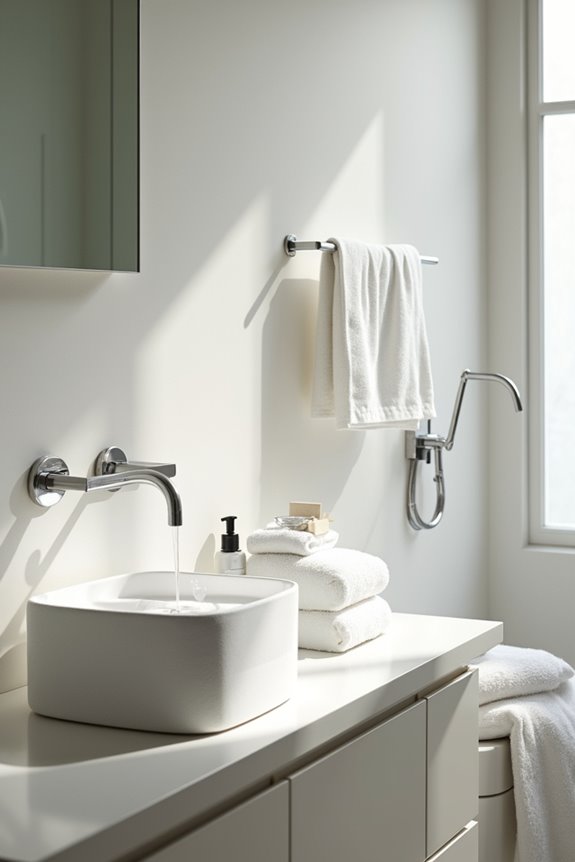
When you’re installing bathroom accessories, getting the spacing right affects both function and appearance. Proper mounting height supports bathroom accessibility while space optimization prevents crowding. Following standard measurements creates a balanced layout that works for everyone.
| Accessory | Height | Distance |
|---|---|---|
| Double towel bar | 48 inches | From floor |
| Towel ring | 48 inches | To bottom of ring |
| Toilet paper holder | 26 inches | 8–12 inches in front |
| Robe hook | 70 inches | From floor |
| Shower valve | 38–45 inches | From floor |
These measurements give you a framework for spacing. Measure twice before drilling any holes. Adjust slightly for outlets or switches nearby. This approach prevents costly mistakes and creates an organized bathroom that functions well.
Balance Fixtures Across Your Walls
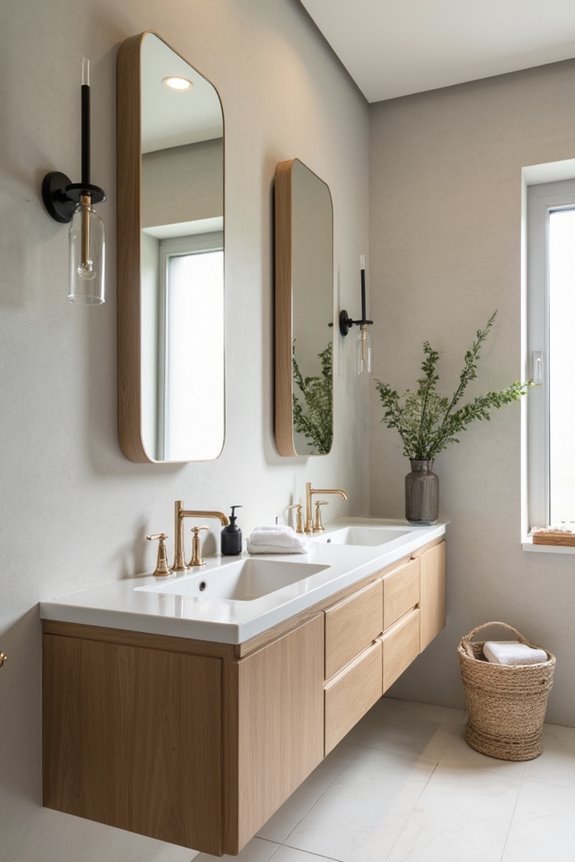
When you’re arranging your bathroom accessories, think about how they look from different angles in the room. You’ll create a more polished space when you place items like towel bars, mirrors, and lighting fixtures at matching heights on opposite walls—for example, mounting towel bars at 48 inches on both sides of the bathroom or positioning sconces at 60–65 inches on either side of your mirror. The key is spacing everything evenly so nothing feels crowded or lopsided, which means measuring the distance between fixtures and leaving enough room between items so your eye can move smoothly across each wall.
Symmetrical Placement Principles
To create a bathroom that feels balanced and deliberate, position your fixtures across your walls using symmetrical placement. This approach results in a coordinated and welcoming space.
Here’s what to focus on:
- Mounting height – Position towel bars at 48 inches and sconces at 60–65 inches, mirroring these heights on both sides of your center line
- Equal spacing – Leave 6–12 inches between adjacent items to maintain rhythm and prevent one side from feeling cramped
- Symmetry alignment – Align fixture edges within the same horizontal plane so both sides carry equal visual weight
Consider existing room features like windows and outlets. This thoughtful placement keeps your bathroom balanced while maintaining functionality and accessibility. Purposeful symmetry makes the whole space feel planned and organized.
Visual Weight Distribution
How do you keep one side of your bathroom from looking heavier than the other? You balance your visual weight across opposing walls. Place substantial items like large mirrors or cabinets on one side, then counterbalance them with lighter elements such as towel bars and open shelving on the opposite wall. This symmetry prevents a cramped, lopsided feel.
Consider your wall’s existing features—windows, outlets, and switches—when planning placement alignment. A heavy vanity cabinet works well opposite a lighter wall. Position towel bars at 48 inches high and mirrors at 60–65 inches. Shower fixtures go higher: showerheads at 80 inches, valves at 38–45 inches. These measurements create visual rhythm while distributing weight evenly throughout your space, making everything work together as part of a cohesive design.
Spacing Between Wall Fixtures
Now that you’ve balanced the overall weight of your bathroom fixtures, it’s time to fine-tune exactly where each piece sits on your walls.
Proper spacing creates visual harmony and keeps your bathroom from feeling cluttered. Here’s how to approach it:
- Mount towel bars at 48 inches from the floor, spacing them equally from outlets and switches to avoid a cramped look
- Align vanity mirrors with your vanity lighting and counter, positioning them at eye level for visual balance
- Maintain vertical alignment between sconces, mirrors, and towel bars so your fixtures create a balanced rhythm across the wall
Consistent spacing prevents one area from feeling crowded while another looks bare. When you space fixtures thoughtfully, you’ll create a bathroom that works well and looks professionally designed.
Common Accessory Placement Mistakes
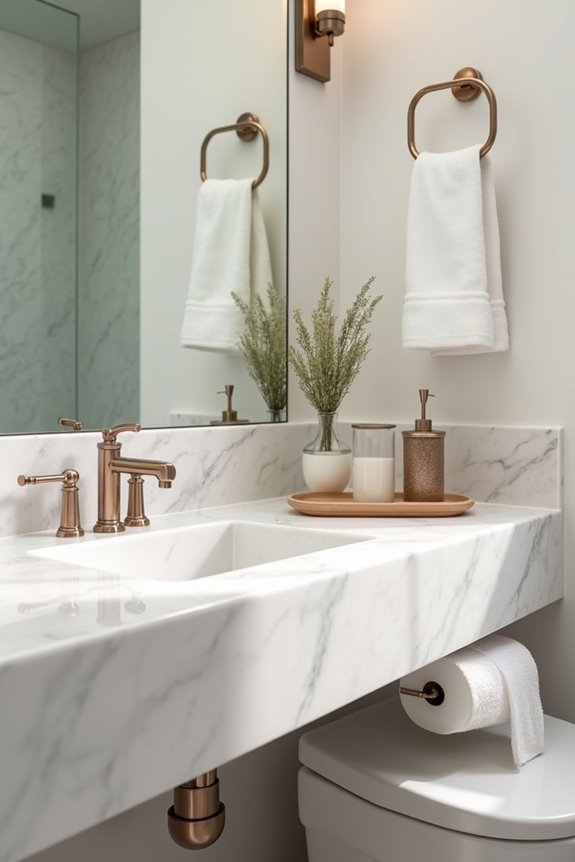
When you’re installing bathroom accessories, it’s easy to overlook how placement affects both function and flow. I’ve seen towel bars mounted too high or jammed into corners, making them unreachable and creating awkward gaps. Mounting heights matter—your towel bars should sit around 48 inches from the floor for comfortable access. TP holders typically go at 26 inches, but coordinate this with your vanity and door/sink accessibility so nothing blocks movement. Oversized mirrors and shelves often obstruct light switches and outlets, casting shadows on task areas. When accessories scatter randomly, they clutter your space and impede traffic flow in smaller bathrooms. The key is planning heights consistently across your vanity, shower rod, and sconces. This coordination creates a functional design that actually works for daily use.
Pre-Installation Checklist
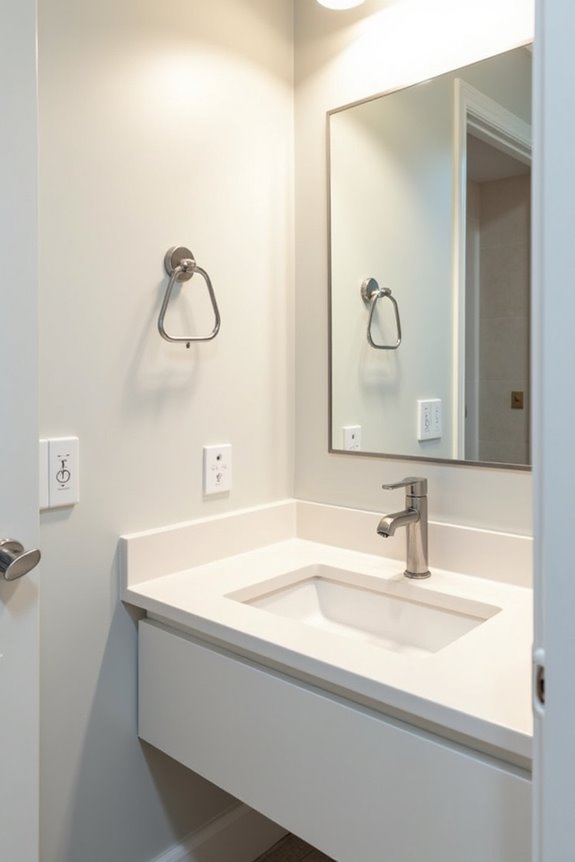
Before you start hanging anything, measure your bathroom wall space carefully and mark where obstacles like switches, outlets, and counters sit. Next, identify how much clearance you actually have around these spots so your accessories won’t bump into anything or block what you need to use. Taking these two steps—measuring dimensions and locating obstacles—saves you from having to remove and remount accessories later.
Measuring Wall Dimensions
How you measure your bathroom walls helps you get your accessories placed correctly the first time. I’ll walk you through creating accurate bathroom measurements that guide your entire project.
Start by gathering your tape measure and notebook. Here’s what you need to do:
- Measure your wall length and height, noting obstructions like outlets, switches, and windows
- Mark your reference point from the floor where each item will mount, maintaining consistent mounting heights across accessories
- Locate wall studs to identify secure mounting points for heavy items
Record everything carefully. Your wall layout sketch becomes the foundation for spacing decisions. These bathroom measurements help you avoid costly mistakes and position your accessories exactly where they’ll work best for everyone using the space.
Identifying Obstacle Locations
You’ll want to identify every fixed obstacle in your bathroom before you mount anything. Walk around and mark light switches, electrical outlets, and plumbing vents on your walls. Check behind surfaces for pipes and studs using a stud finder. These obstacles determine where you can safely install towel bars and racks without hitting them.
Next, note your door swing path. Open doors fully and see what space they occupy. This clearance measurement prevents brackets from blocking movement.
Finally, map your vanity edges and cabinet tops. Measure the distance from these fixtures to your walls. This prevents towel bars from colliding with mirrors or existing structures. Creating this obstacle map takes thirty minutes but saves you from costly mistakes and reinstallation work later.