
Bathroom doors run smaller—typically 24 to 32 inches wide—because bathrooms are tight spaces where plumbing, fixtures, and vanities eat up wall real estate. A narrower door preserves floor area for the toilet, sink, and shower, plus it helps your exhaust fan work better by keeping moisture contained.
Most interior doors are 36 inches because living areas need more flexibility. That said, accessibility matters too, and there’s more nuance to finding your bathroom’s perfect fit.
Why Bathrooms Favor Smaller Doors: The Space-Efficiency Logic
Why do bathrooms get smaller doors than other rooms in your house? The answer centers on space efficiency. Bathrooms are typically compact, so designers use narrower bathroom door widths—usually 28–32 inches—to maximize usable floor area. Here’s why this matters: a standard bathroom door has a clear opening of about 32 inches, often requiring a 34-inch door. This smaller footprint reduces door swing clearance, preventing the door from consuming valuable bathroom space when opened. Compare this to interior doors in bedrooms or living areas, which commonly measure 30–36 inches wide. That extra width works fine there, but bathrooms need every square foot. By choosing narrower doors, you’re preserving room for fixtures, cabinetry, and movement—making tight layouts genuinely functional.
Safety Considerations in Smaller Bathrooms
While smaller bathroom doors save space, they also create safety challenges you need to think through carefully. Emergency access becomes trickier with narrower doorways—first responders need adequate width to reach someone quickly, and a 24-inch door limits mobility for people using walkers or wheelchairs. The confined space itself increases risks like door-swing collisions with fixtures and falls near toilets and sinks, so you’ll want at least 21 inches of clear floor space in front of these areas to move safely.
Emergency Access And Egress
How fast can you actually get out of your bathroom in an emergency? I’ll be honest—smaller doors can slow you down. When a door swings inward, fixtures like vanities can block your path during a crisis. That’s why designers increasingly favor outward-swing doors or pocket/sliding doors that eliminate swing obstruction entirely.
| Door Type | Clear Opening Width | Emergency Speed |
|---|---|---|
| Standard inward swing | 24–28 inches | Slower |
| Outward-swing door | 28–32 inches | Faster |
| Pocket/sliding doors | 30+ inches | Fastest |
| ADA compliant | 32+ inches | Optimal |
| Repositioned vanity | Varies | Improved |
Accessibility standards recommend 32-inch minimum clear openings, but many homes still use smaller doors. If you’re remodeling, consider repositioning your vanity or plumbing to maintain unobstructed emergency egress. Safety takes priority over saving a few inches of floor space.
Fall Prevention In Confined Spaces
Slippery floors and tight quarters create a risky combination in small bathrooms, especially when you’re trying to maneuver a narrow doorway while wet. Bathroom clearance directly affects your safety.
Smaller door swings actually help you here. When you’re in confined spaces, a narrower door means less obstruction when you’re entering or exiting wet. You have better bathroom clearance to move carefully without tripping over a swinging door.
What to do: install grab bars near your doorway and toilet area. Position them within your turning radius so you can steady yourself while negotiating tight spots. Consider accessibility clearance standards—that 21-inch floor space in front of fixtures isn’t just for wheelchair users. It gives everyone room to balance safely.
Sliding or pocket doors work best in small bathrooms since they don’t swing into your path.
Door Swing Collision Hazards
A swinging door in a cramped bathroom creates a real collision problem you’ll want to address. When you open an inward-swinging door in a tight space, it takes up valuable floor area and can hit your toilet, vanity, or towel racks if you’re not careful. This isn’t just inconvenient—it’s a genuine safety hazard.
Here’s what matters: you need at least 21 inches of clearance in front of fixtures for safe door movement. Narrower bathroom doors (24–28 inches) help, but they don’t solve collision hazards entirely. If your space planning reveals tight constraints, consider switching to a pocket or barn-style door. These alternatives eliminate swing clearance issues completely, giving you full access to your bathroom without worrying about door-to-fixture collisions. Smart design keeps you safe and functional.
What Building Codes Actually Say About Door Width
When you’re checking building codes for bathroom doors, you’ll find that the rules aren’t always straightforward—they depend on where you live and which guidelines your local inspector follows. The International Residential Code, or IRC, forms the foundation for most building standards, but local amendments change things. The NKBA guidelines recommend a minimum clear opening of 32 inches, which means you’ll need at least a 34-inch door width. ADA standards also require that 32-inch clear opening, though they suggest going with a 36-inch-wide door for better wheelchair and walker access. Here’s the catch: some inspectors follow IRC without specifying an exact door width, leaving interpretation to local rules. For remodeling projects, your existing door size typically stays the same unless you’re relocating or improving accessibility.
Plumbing Gets in the Way: Why Fixtures Shrink Door Options
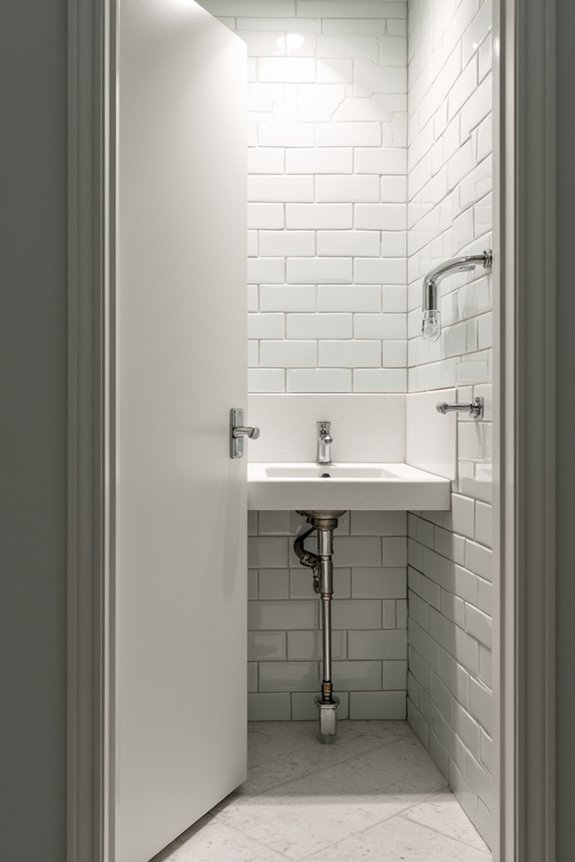
When you’re designing a bathroom, plumbing fixtures like sinks, toilets, and drain lines take up valuable wall space, and they don’t move once they’re installed. This means the door opening has to squeeze into whatever space is left over, which is why you’ll often find bathroom doors narrower than the standard 36-inch interior doors in bedrooms and living areas. The vanity depth, shower layout, and plumbing lines behind the walls force designers to prioritize fixture placement over door width, sometimes shrinking your opening down to just 24 or 28 inches.
Fixture Placement Constraints
They take up valuable space that the door swing needs to work properly. Your sink, toilet, and shower all compete for real estate in tight bathrooms. When you’re working with a fixture layout that includes a deep vanity, the door swing gets squeezed significantly.
Here’s what happens: a standard 32-inch door needs clearance on both sides. A 24-inch door becomes necessary when vanity depth eats into that space. You might need to change your door swing direction entirely to gain plumbing clearance around fixtures.
In compact bathrooms, designers often choose 28-inch doors as a compromise. If you’re dealing with extremely tight constraints, consider pocket doors or barn-style alternatives. These bypass traditional swing requirements completely, giving you maximum usable floor space while accommodating your plumbing layout.
Wall Space Limitations
Beyond the door swing itself, the walls in your bathroom are already crowded with plumbing pipes, water lines, and drain connections that you can’t move around. These hidden systems take up real estate that would otherwise give you more wall space for bathroom door widths. When you’re dealing with tight spaces, every inch matters.
Standard 32-inch doors need substantial wall clearance for door swing clearance. But your plumbing fixtures interference—especially with vanity cabinets and supply lines—limits what’s actually possible. Most builders shrink doors to 24–28 inches because that’s what the wall space realistically allows. Some professionals opt for pocket doors or barn doors instead, eliminating swing clearance issues entirely. This constraint explains why your bathroom door looks noticeably narrower than hallway doors.
Access And Clearance Trade-Offs
How’d you like to open your bathroom door only to have it smack into your toilet or vanity? That’s exactly why bathroom doors shrink. Here’s what’s really happening:
- Plumbing fixtures demand clearance space—toilets need at least 21 inches in front, and sinks require similar breathing room
- Your door swing competes directly with these required clearances, forcing narrower openings
- Standard 32-inch clear openings (favored by ADA and NKBA guidelines) replace typical 36-inch doors
- Space-saving doors like pocket, barn, or bi-fold options eliminate swing interference altogether
When you’re fitting plumbing fixtures into tight quarters, that door opening becomes negotiable. Designers prioritize fixture access over door width because you use your toilet daily. Smaller doors aren’t failures—they’re practical solutions that keep everything functional without sacrificing the clearance you actually need.
Standard Sizes: 24, 28, 32, 34, and 36 Inches Explained
When you’re shopping for a bathroom door or planning a renovation, you’ll encounter five standard sizes: 24, 28, 32, 34, and 36 inches. Here’s what each bathroom door width means for your space.
| Door Width | Clear Opening | Best For |
|---|---|---|
| 24 inches | 22 inches | Tight retrofit bathrooms |
| 28 inches | 26 inches | Small spaces, budget constraints |
| 32 inches | 30 inches | Standard accessibility target |
| 34 inches | 32 inches | New construction, comfort |
| 36 inches | 34 inches | ADA compliance, wheelchairs |
The difference between door width and clear opening comes from door frame reduction—typically about 2 inches. Smaller bathrooms commonly use 24 or 28 inches to fit cramped layouts. However, 32 and 34 inches have become standard sizes for better accessibility and comfort. If you’re building new, 34 inches offers a practical balance between space efficiency and usability. The 36-inch option meets full ADA compliance when you need it.
ADA Requirements vs. Standard Codes
When you’re planning a bathroom renovation, you’ll notice that ADA requirements set a specific 32-inch minimum clear opening width, which is different from what standard building codes might suggest for other interior doors. This means you need a door that’s at least 36 inches wide—or the more common 34-inch door—to actually achieve that 32-inch opening once the frame and hardware take up space. Understanding this gap between accessibility standards and practical constraints helps you choose the right door size and style, especially since sliding or pocket doors often work better than swinging doors in tight bathroom spaces.
ADA Minimum Clear Opening
Most standard bathroom doors you’ll find in homes are narrower than what accessibility guidelines recommend, and that’s where ADA requirements come into play. I want to share what the actual standards are so you can make informed decisions about your space.
The ADA minimum clear opening width is 32 inches. Here’s what that means for you:
- The door itself needs to be at least 36 inches wide
- This allows wheelchair accessibility when the door swings open
- Clear opening width measures the actual passageway space available
- Interior door size typically falls short of these measurements
Standard interior doors often come in 28 or 30-inch widths, which don’t meet universal design standards. Sliding doors work better since they don’t require swinging clearance. Understanding these measurements helps you create spaces where everyone can move freely and feels welcomed.
Standard Code Interpretations
Now that you understand the accessibility baseline, it’s worth knowing that actual building codes vary quite a bit from strict ADA standards. Local codes and the National Kitchen and Bath Association (NKBA) often interpret door requirements differently depending on your space and situation.
| Standard | Clear Opening | Door Width | Application |
|---|---|---|---|
| ADA Requirement | 32 inches | 36 inches | Accessible bathrooms |
| Standard Code | 28-32 inches | 28-34 inches | Most residential bathrooms |
| NKBA Guidelines | Varies | 28-36 inches | Kitchen and bath design |
| Pocket Door Option | Up to 32 inches | Reduces swing space | Tight layouts |
Many contractors default to smaller doors in cramped bathrooms unless accessibility upgrades are planned. Understanding these code variations helps you make informed decisions about your bathroom door sizing while staying compliant with your local requirements.
Accessibility Versus Practical Constraints
Why do bathroom doors seem to shrink compared to hallway doors? The answer sits between two competing needs: accessibility requirements and practical reality.
The ADA requires a minimum 32-inch clear opening for wheelchair access. Here’s what that means for your home:
- A 36-inch door width accommodates the 32-inch clearance requirement
- Standard bathroom doors measure 28–30 inches wide instead
- The 2-inch difference accounts for frames and hardware
- Pocket or sliding doors solve swing-clearance issues without extra space
Most residential bathrooms don’t follow full ADA standards. Regional codes and NKBA guidelines balance accessibility needs with typical home constraints. You’ll find smaller door width remains practical for tighter bathroom layouts while maintaining functionality. This compromise lets builders maximize usable floor space without sacrificing reasonable access.
The 32-Inch Standard: Accessibility and Cost Balance
Ever wondered why your bathroom door seems narrower than your bedroom door? The answer lies in the 32-inch standard, a practical balance between accessibility and cost. Here’s what you need to know: The NKBA and ADA guidelines recommend a 32-inch clear opening—that’s the actual space you move through after accounting for the door frame. A typical 34-inch door width achieves this reliably in most bathrooms. For wheelchair access, a 36-inch door works best. This 32-inch standard matters because it supports aging-in-place functionality and protects your home’s resale value. By choosing a 34-inch door, you’re meeting guidelines while making a smart investment. You’re keeping your bathroom accessible without unnecessary expense or space waste.
Door Swing Direction and Space Constraints
While the 32-inch standard gives you a solid foundation for bathroom accessibility, there’s another practical reality that shapes bathroom door sizing: how and where the door swings.
I want you to understand why swing direction matters so much in tight bathrooms:
- Inward-swinging doors tuck behind walls and fixtures, preserving precious floor space
- Outward doors risk hitting sinks, toilets, or adjacent hallway furniture
- Reversing swing direction can dramatically improve clearance around plumbing
- Space-saving alternatives like pocket or barn-style doors eliminate swing interference entirely
The doorway’s clearance depends on which way your door opens. In constrained bathrooms, you’ll find inward swings work best because they don’t compete with fixtures. When you’re working with smaller door widths—especially 24-inch doors—choosing the right swing direction becomes important for both accessibility and daily usability.
Choosing the Right Size for Your Bathroom
How do you know what door size actually works for your bathroom? Start by measuring your actual space. If you’ve got a tight layout, a 24- to 30-inch door saves room for fixtures and storage while maintaining clearance for daily use. However, consider your long-term needs. The ADA opening standard requires a 32-inch clear opening, which typically means installing a 36-inch-wide door. This larger size works better if you’re planning accessibility standards into your home or thinking about aging-in-place features. Pocket doors are excellent space-saving options regardless of width. Measure your doorway, check your swing clearance, and honestly assess whether you prioritize maximum bathroom square footage or future accessibility. Your choice depends on balancing current comfort with practical foresight.
Ventilation and Moisture Control: How Door Size Affects Both
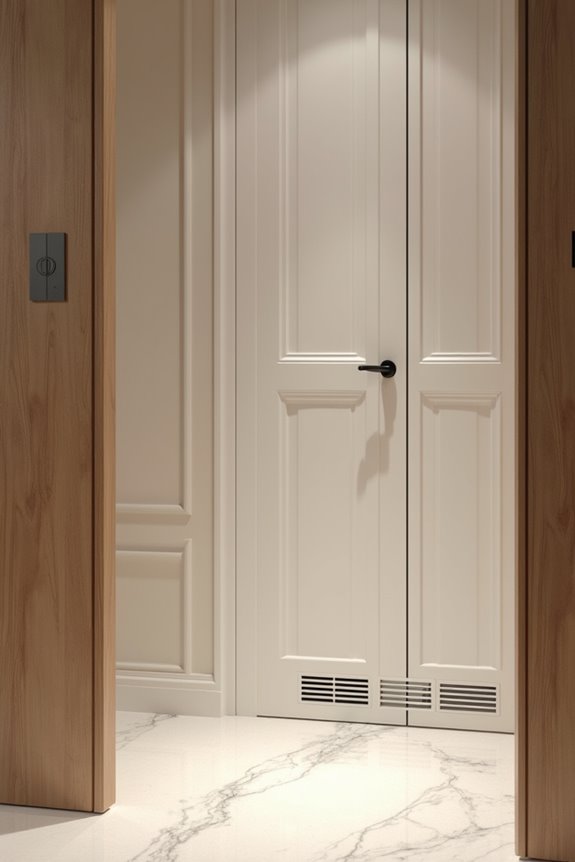
You might not realize it, but your bathroom door’s size actually plays a role in how moisture moves through your home. Smaller doors help manage humidity better than expected. Here’s why door size matters:
- Reduced air gaps allow exhaust fans to work more efficiently
- Smaller clear openings prevent moisture from escaping into adjacent rooms
- Compact door sizes support moisture-resistant construction like solid-core materials
- Limited swing area means less disruption to ventilation patterns
When you install a 32–34 inch door instead of a standard 36 inch interior door, you’re creating a tighter seal. This containment helps your exhaust fan remove humidity faster. Moisture stays concentrated where it belongs—in the bathroom. That’s why smaller doors are recommended. They’re not just space-savers; they’re ventilation partners.
Space-Saving Alternatives: Pocket and Barn-Style Doors
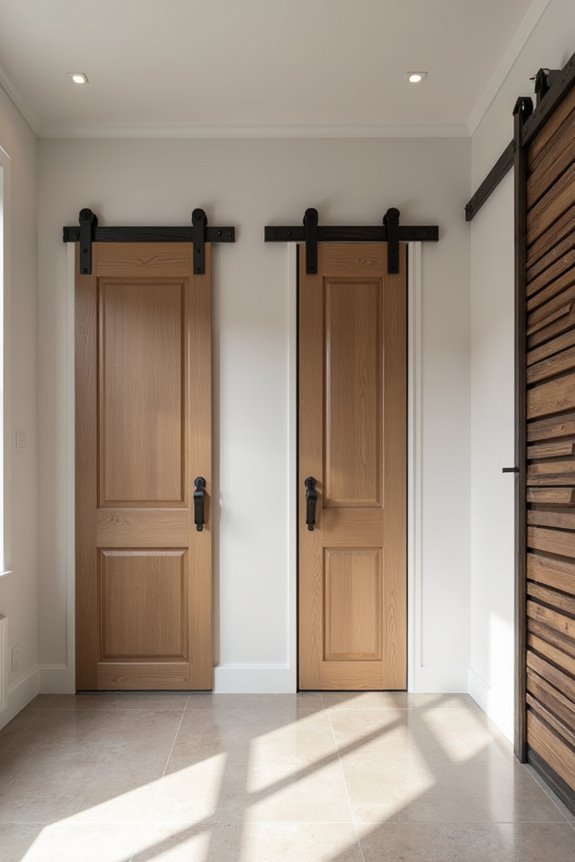
If you’re cramped for space in your bathroom, sliding doors offer a practical solution that standard swing doors can’t match. Pocket doors slide directly into the wall, giving you up to 50% more floor space for your vanity, toilet, and storage. Barn-style doors glide along an exterior rail instead, preserving your interior wall while maintaining a clean layout.
Both options work well for smaller bathrooms with 24–28 inch doorways. They eliminate door swing clearance requirements, making your space feel larger and more functional. These designs also help you meet accessibility standards without sacrificing room. Plus, they won’t interfere with plumbing or fixtures during remodeling. Whether you choose pocket or barn-style doors, you’re making a practical choice that maximizes your bathroom’s usable area.
Upgrading Older Bathrooms: When to Go Larger
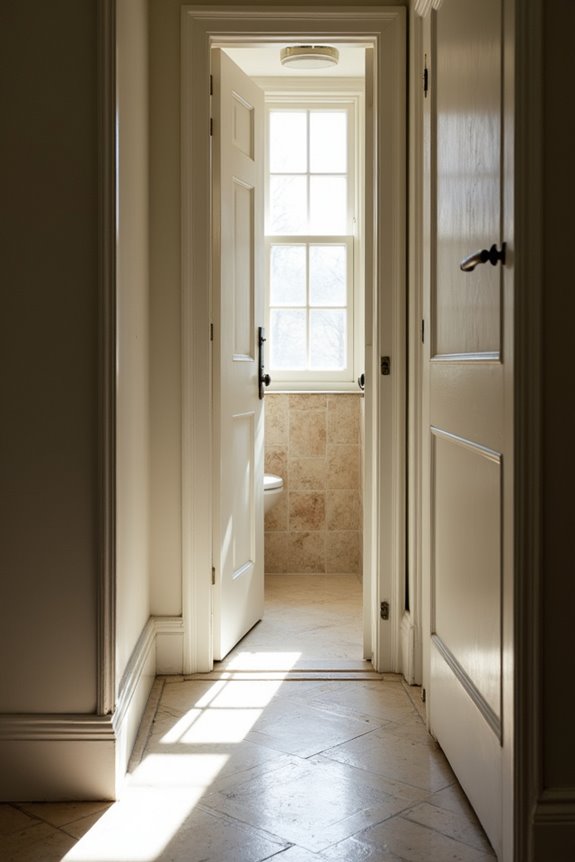
While pocket and barn-style doors solve space problems in tight quarters, they’re not always the best long-term solution for aging homes. If you’re planning a bathroom upgrade, consider these reasons to go larger:
Pocket and barn doors save space, but wider bathroom doorways are the smarter long-term investment for aging homes.
- Accessibility guidelines – ADA standards recommend 32-inch clear openings for wheelchair access
- Aging-in-place planning – Wider doorways accommodate mobility aids as you grow older
- Resale value – Larger bathroom door sizes appeal to future buyers
- Safety and comfort – Extra space reduces fall risks and improves maneuverability
Standard 28-inch doors limit accessibility, but upgrading to 32–34 inches wide gives you that doorway clear opening you’ll benefit from later. Retrofit projects take effort, yet investing in space-saving doors or wider openings now means you won’t need major renovations down the road. Your future self will appreciate the investment.