Kitchen islands aren’t disappearing—they’re getting smarter. Instead of generic designs, today’s islands pack hidden storage, integrated appliances, and prep sinks that support real cooking workflows. Designers are adding curved edges, warm wood tones, and mixed materials like marble and brass to make islands functional focal points. Whether you need dual workspaces or flexible movable options for smaller homes, islands are evolving to solve actual kitchen problems.
The real shift isn’t about style—it’s about making islands work harder for how you actually cook.
Why Designers Are Evolving Islands Instead of Abandoning Them
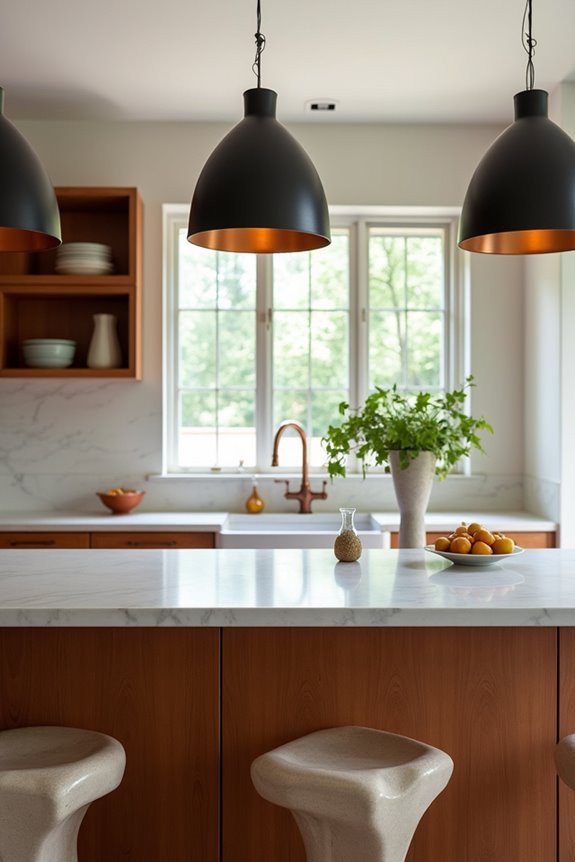
Rather than phasing out kitchen islands altogether, today’s designers are reimagining them as sculptural centerpieces that do far more than provide workspace. Curved islands improve kitchen flow and create a welcoming atmosphere. These furniture-style centers combine integrated appliances, hidden storage, and prep sinks into one functional hub. Designers pair warm woods with materials like Verde Guatemala marble to create visual interest through material dialogue. Multi-functional design takes priority—islands now accommodate cooking, dining, entertaining, and working simultaneously. The shift emphasizes how islands anchor open-plan living spaces. Rather than disappearing, islands are evolving into prominent features that blend practicality with architectural presence. This approach keeps islands relevant by making them indispensable to modern kitchen design.
Storage-Packed Islands Solve the Clutter Problem
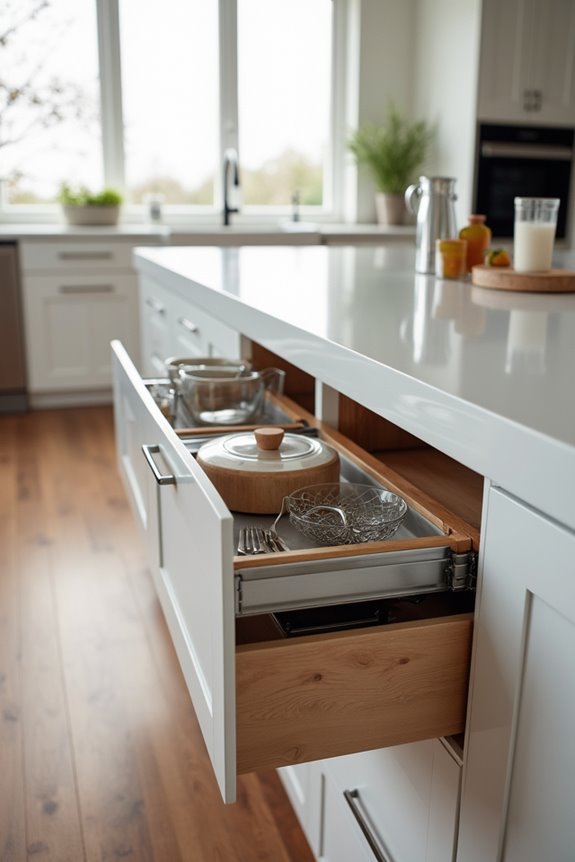
How does a kitchen island become your clutter solution instead of a clutter magnet? By designing it with deeper storage from the start. I’ve found that vertical dividers, hidden bins, and dedicated prep zones keep your kitchen islands organized and functional. These deeper storage spaces hold pots, pans, and small appliances you’d normally scatter across counters. Your prep space stays clear for actual cooking, which matters whether you’re in a compact condo or larger home. The key is planning your island’s position relative to your range, fridge, and sink. This workflow alignment means storage aligns with how you actually move through your kitchen. When infrastructure—power, water, ventilation—gets designed early, you’re supporting both current needs and future changes while maintaining that accessible storage you want.
Warm Wood Tones and Mixed Materials Replace Cookie-Cutter Designs
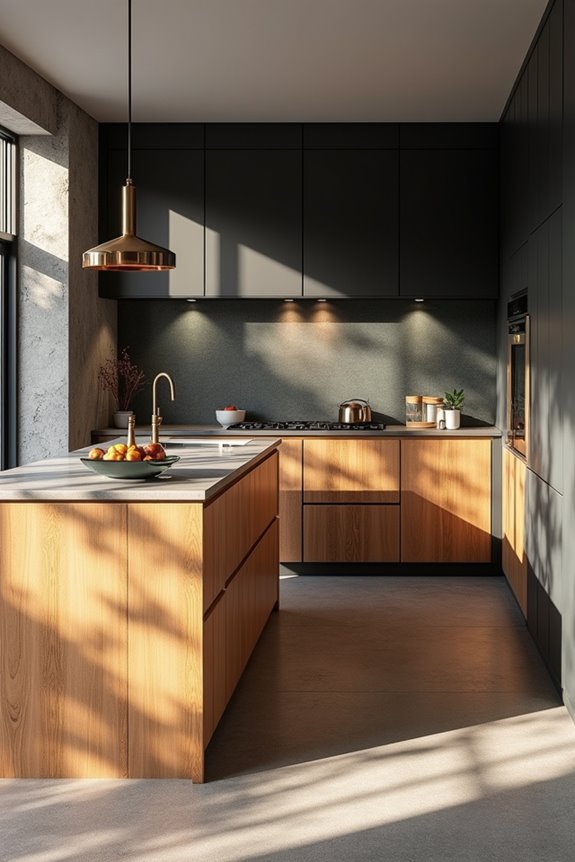
Why does your kitchen island feel like it belongs in a showroom instead of your home? The answer lies in ditching cookie-cutter designs for warm wood tones and mixed materials that actually reflect who you are.
I’m seeing a shift toward design trends that prioritize materials dialogue—balancing warmth vs cold surfaces to create something timeless. Here’s what’s working:
- Oak and walnut tones soften white or stone-heavy kitchens
- Mixed-material islands combine marble, metals, and wood for texture
- Grain choices age gracefully alongside surrounding spaces
- Hardware complements warm wood tones naturally
- Lighting enhances tactile richness throughout
Your kitchen island shouldn’t feel disconnected. When you layer these materials thoughtfully, your island becomes a central design feature that carries purpose and history. That’s where real style lives.
Islands That Double as Dining and Workspace
When your kitchen island works overtime as dining space and workspace, it solves a real problem—you’re not juggling separate furniture or sacrificing prep room. Slimmer countertops with open legs keep things feeling light and spacious, especially in compact kitchens. These multi-use surfaces let you prep meals, work on your laptop, and eat together without clutter.
| Feature | Benefit | Best For |
|---|---|---|
| Slender countertop | Visual lightness | Small spaces |
| Open-legged design | Easy movement | Furniture aesthetic |
| Drawer storage | Hidden organization | Reducing bulk |
| Built-in outlets | Device charging | Modern workflow |
The key is planning storage design early—drawers and hidden compartments prevent that boxy appearance. Add integrated lighting and outlets so you’re supporting varied tasks without visible cords. This approach makes your island actually work for how you live.
Built-in Appliances Transform Islands Into True Work Hubs
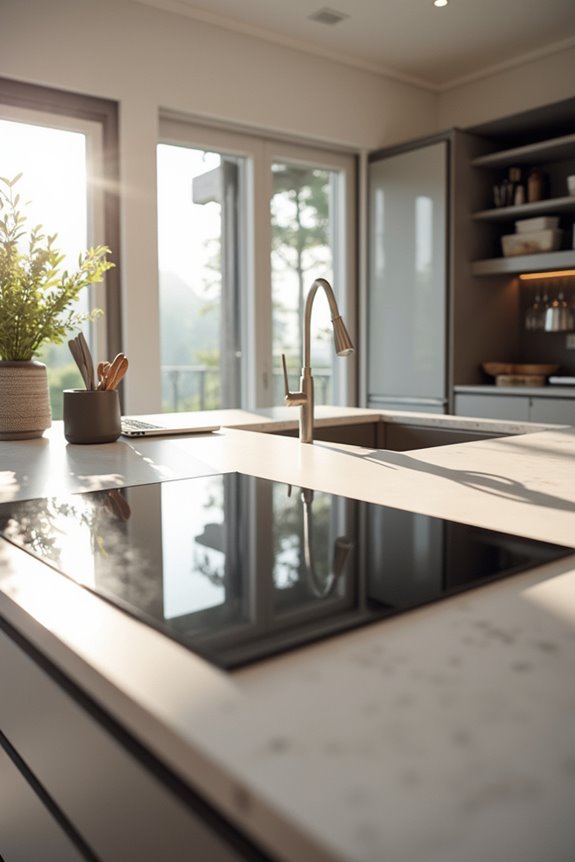
Embed appliances directly into your island to transform it into a genuine work hub that handles prep, cooking, and cleanup.
Taking your island beyond a prep surface and dining spot, you can embed appliances directly into it—think dishwashers, microwaves, or warming drawers tucked into the island body itself. This makes your kitchen island a genuine work hub that handles prep, cooking, and cleanup all in one spot.
Here’s what you’ll need to plan:
- Size your island around the appliance-ready configuration you want
- Map out power routing before construction begins
- Design water routing for dishwashers or beverage centers
- Plan ventilation paths for microwaves and cooktops
- Plan maintenance access for future repairs and replacements
When you integrate built-in appliances thoughtfully, you’re adding convenience and keeping your perimeter walls cleaner while creating a kitchen that works harder for your lifestyle.
Small Spaces and Rentals: Why Movable Islands Win
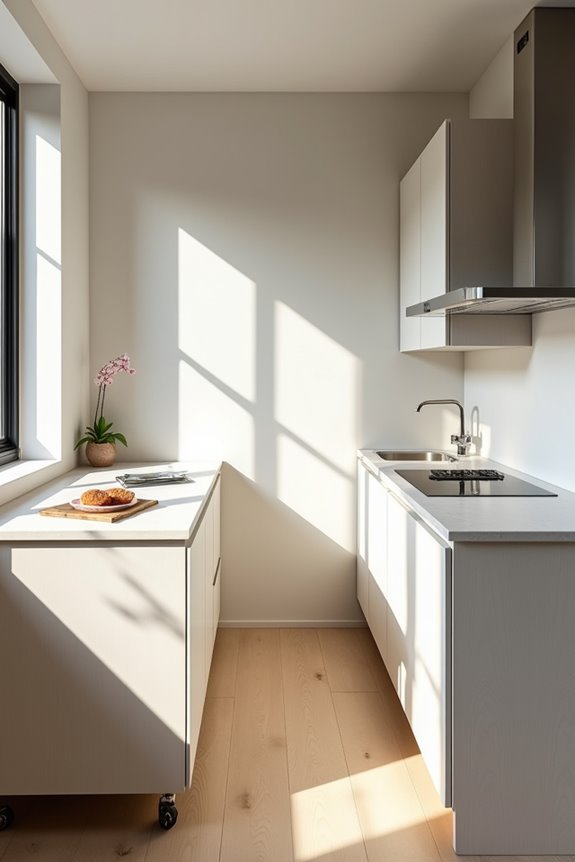
If you’re living in an apartment or a smaller kitchen, a permanent island might feel like it’s eating up your floor space—but a movable island on casters offers practical benefits. Portable storage with wheels gives you flexibility by letting you reconfigure your kitchen whenever you need it. You can roll your island out for chopping and meal prep, then tuck it aside to open up your cooking area. This flexible layout works perfectly for rental kitchens where you can’t install built-ins. Multi-use surfaces on these islands handle everything—from laptop work to serving food. The casters let you test different arrangements without commitment, so you’ll find what layout actually works for your space.
Sculptural Curves Reshape the Island Focal Point
How’d you like your kitchen island to do more than just sit there?
Sculptural curves are turning islands from basic countertops into design statements. Here’s what makes curved islands stand out:
- Organic furniture-like appearance with wood bases paired with veined stone
- Waterfall edges that flow seamlessly down the sides for refined design
- Fluid circulation paths that soften large spaces and welcome movement
- Strategic arc placement requiring early planning and custom fabrication
- Impact on sightlines, flooring direction, and overall layout
Curved islands demand thoughtful design work. You’ll need cabinet fabrication that follows the curve precisely and coordinated seating and lighting placement. The countertop curvature influences how people move through your kitchen. Higher-end projects budget for custom fabrication to achieve seamless results. When executed well, sculptural curves reshape your island from functional surface into an architectural centerpiece.
Soft Edges and Prep Sinks: Small Details, Big Impact on Flow
I’ve noticed that the most functional kitchen islands aren’t just about looks—they’re designed with small features that make your daily workflow smoother. Soft, rounded edges let you move around the island safely and quickly, while a prep sink built into the counter keeps you from constantly running back to your main sink. These practical details work together to create an island that functions naturally in your kitchen rather than like an obstacle you have to work around.
Rounded Edges Ease Movement
Why do so many modern kitchens feature curved islands instead of sharp corners? Rounded edges genuinely improve how you move through your space. Here’s what makes soft-edged design so practical:
- Reduces collision hazards in open-plan layouts
- Creates smoother traffic flow around the island
- Softens the room’s overall silhouette
- Improves sightlines across your kitchen
- Coordinates better with curved cabinetry
A curved island guides your circulation naturally. You’re not navigating around sharp corners that interrupt movement. Full curvature from base to countertop enhances this effect, making your kitchen islands functional pieces that also work as visual anchors. Yes, custom fabrication costs more, but that soft-edged design pays dividends in daily usability and safety—particularly if you have an open-plan layout where smooth movement matters.
Prep Sinks Boost Efficiency
Envision this: you’re prepping dinner and your spouse needs to rinse vegetables while you’re filling pots at the main sink. That’s where prep sinks boost kitchen island efficiency. Two sinks mean two people working simultaneously, cutting weeknight meal prep time substantially.
I’d recommend positioning your prep sink to avoid splash zones near seating areas and outlets. You’ll want moisture protection on your island’s finish—think waterproof materials that match your kitchen aesthetic.
Planning matters here. Consider plumbing placement and storage underneath for components. A smaller basin dedicated to rinsing produce, washing hands, or filling pots creates a separate work zone from your main sink.
This workflow upgrade doesn’t require massive changes. It simply lets you work smarter together.
Design Flow Through Details
Those prep sinks and dual-workspace benefits you’ve just read about? They’re only half the story. Real design flow comes from thoughtful details that build your island into a truly functional space.
I’ve found that curved islands with soft edges create natural traffic patterns. They prevent painful collisions and make movement feel intuitive. Here’s what improves these islands:
- Soft edges that reduce sharp corners throughout your kitchen
- Integrated lighting positioned over work zones and seating areas
- Seamless transitions between flooring and cabinet bases
- Storage solutions hidden within sculptural designs
- Prep sink placement that anchors the workflow
The payoff comes when you combine these elements early. Veined stone countertops paired with brass trim and wood bases don’t just look beautiful—they support efficient movement. Your curved island becomes a natural gathering point where people flow around it effortlessly, not awkwardly.
How to Prioritize Island Features for Your Kitchen
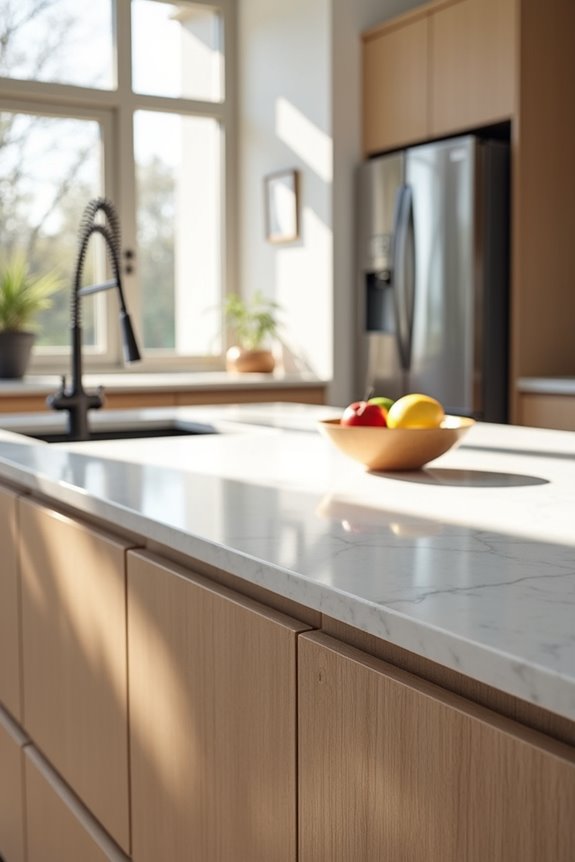
The key to a functional kitchen island starts with deciding what matters most to you. Do you need serious storage with deep drawers and vertical dividers? Or do you prefer open sightlines for daily snack prep and lunch assembly?
A functional kitchen island begins with your priorities: do you need deep storage and organization, or open space for meal prep?
I’d recommend mapping your actual workflow first. If you’re constantly grabbing ingredients, you’ll want accessible zones. If clutter stresses you out, invest in hidden bins and retractable doors.
Consider mobility too. Islands on casters keep your floor open and flexible. Then think about integrated lighting and power outlets for multi-use tasks—blending storage solutions with work zones creates balance.
Mix materials like stone and wood for visual interest. This approach lets your island features support how you actually cook without feeling cramped.