

Your master bedroom and bathroom don’t need to match exactly—they just need to feel connected. I’d focus on cohesion instead: choose a unified color palette with 2–3 colors, repeat accent colors in towels or walls, and coordinate hardware finishes like brushed brass. Use similar materials, like natural wood or marble, in both spaces. A shared design language—whether modern, coastal, or minimalist—ties everything together without identical décor. The transition between rooms should feel natural, not jarring. Keep exploring to discover specific strategies for your style.
Do Your Master Bedroom and Bathroom Really Need to Match?
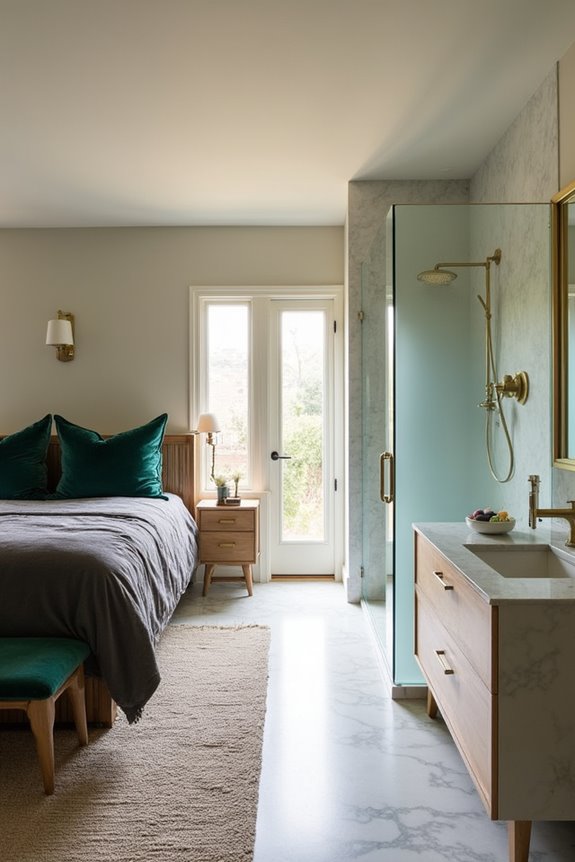
No, they don’t have to match. What matters most is creating a cohesive overall space feel with balanced transitions between rooms. You can choose cohesion or contrast—both are valid depending on your personal preference and desired mood.
If you want matching spaces, use a consistent color palette, repeat materials and textures, and coordinate lighting and hardware for a unified look. If you prefer contrast, use different color palettes with shared undertones to maintain connection while defining distinct atmospheres. Add personal touches suited to each space.
Consider this real example: a dark, warm bedroom paired with a bright, serene bathroom. Gold accents link these different moods together, preserving each room’s unique character while maintaining continuity. The key is making deliberate design choices that feel right for you.
How to Coordinate Without Matching
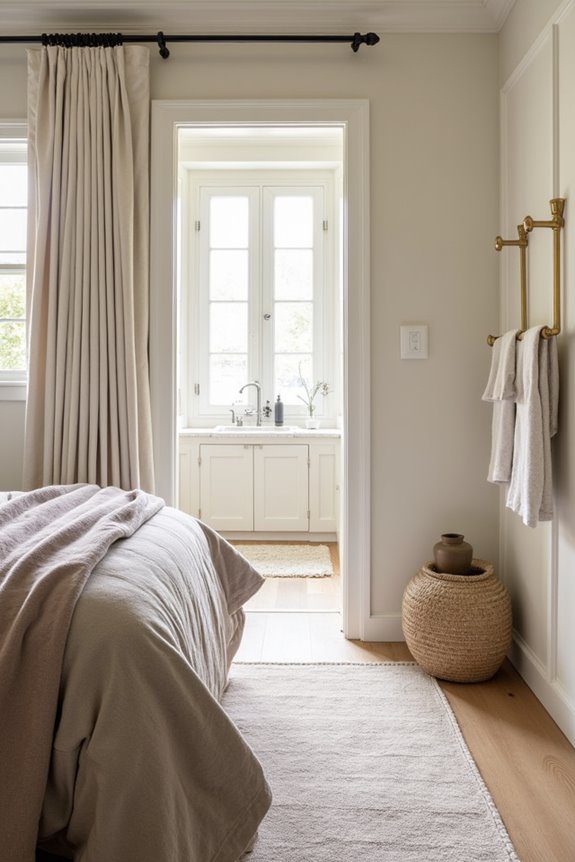
How can you create a connected feel between your bedroom and bathroom without making them look identical? You’ll want to think about cohesion through shared elements rather than exact matching. Start by choosing a color palette with similar undertones across both spaces. Then, establish harmony using these strategies:
- Repeat accent colors on walls, towels, or artwork in each room
- Select cohesive hardware finishes like brushed nickel or matte black for fixtures and drawer pulls
- Use materials with shared qualities, such as natural wood or concrete elements
- Layer in a unified design language through modern, classic, or minimalist styles
This approach maintains each room’s individual function while building balance. Your bedroom stays restful while your bathroom remains practical. The shared elements create visual rhythm that ties everything together. As you refresh decor over time, reassess how well your spaces still feel connected to keep that integrated look current.
Pick a Design Style That Ties Rooms Together
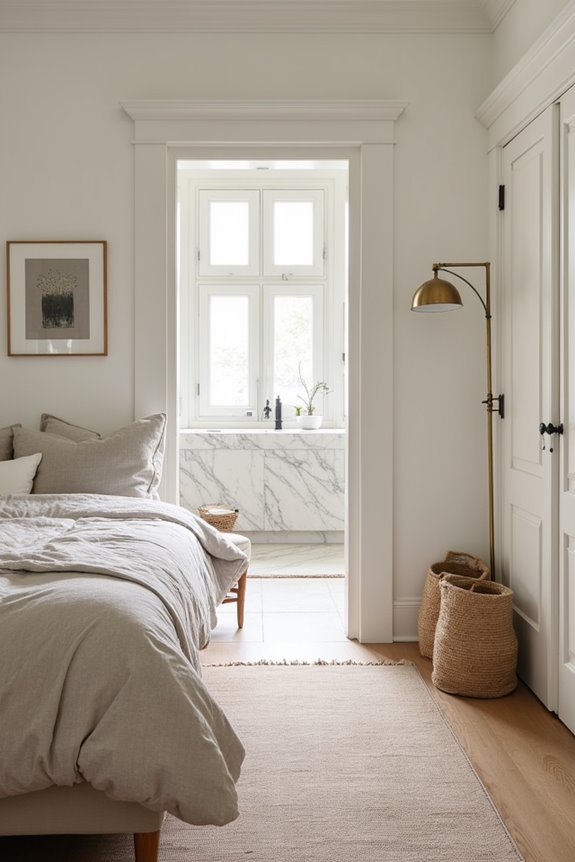
What makes a bedroom and bathroom feel like they belong together? Choosing one design style that works in both spaces. I recommend picking Modern Coastal or Scandinavian Calm as your design language—styles that translate well across both rooms.
Start by selecting a unified color palette. Choose 2–3 colors you’ll use throughout your bedroom decor and bathroom decor. This palette creates spatial cohesion.
A unified 2–3 color palette throughout your bedroom and bathroom creates the spatial cohesion that makes both rooms feel intentionally designed together.
Next, focus on material repetition. Use the same wood tones, marble surfaces, or soft textiles in each room. These shared materials strengthen your design style’s presence.
Finally, coordinate your lighting finishes and hardware finishes. Match brushed brass or matte black fixtures in both spaces. This attention to detail reinforces your unified design language without requiring identical décor, letting each room maintain its own purpose and personality.
When Mismatching Makes Sense
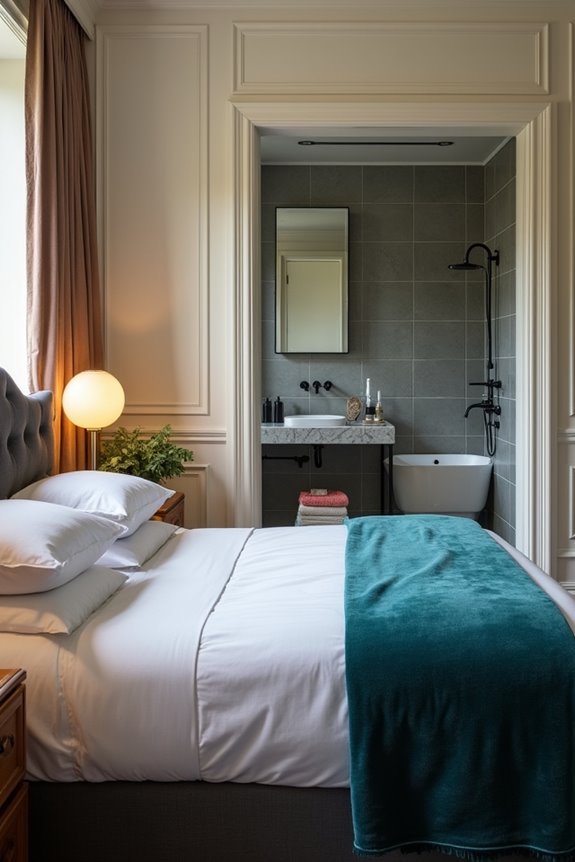
Sometimes you don’t need your bedroom and bathroom to match perfectly, and that’s okay. You can create two spaces with distinct personalities while maintaining cohesion through smart choices.
Focus on these mismatching strategies:
- Use a warm, inviting bedroom palette paired with a spa-like bathroom by repeating shared elements like wood finishes or soft metals
- Let contrast define different moods through lighting, textiles, and color while keeping hardware finishes consistent
- Layer textures strategically so both rooms feel connected despite differing styles
- Personalize each space with art, plants, and accessories reflecting its unique identity
The key is balance. You’ll notice that harmony doesn’t require identical décor. Instead, anchor your two spaces through repeated materials, finishes, and a cohesive color palette. This approach respects each room’s purpose while creating natural transitions between them.
How to Know If Your Suite Feels Cohesive
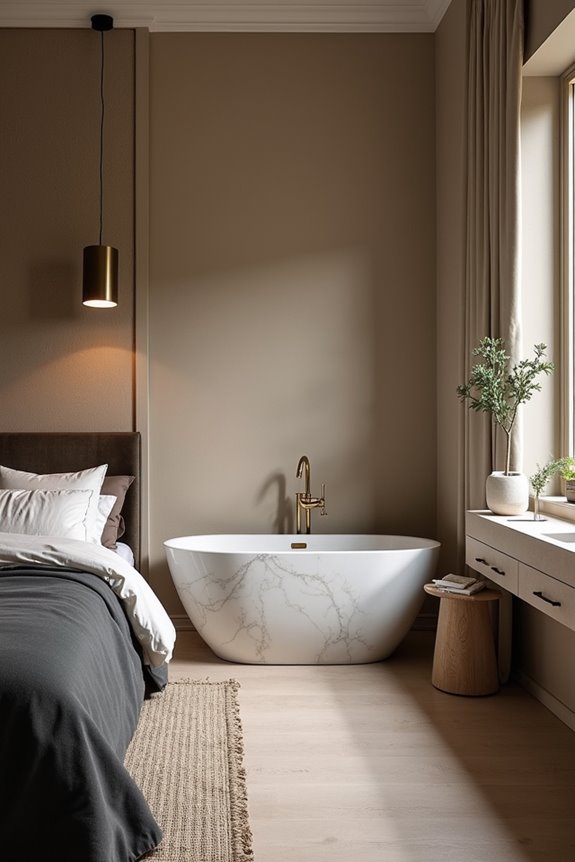
You’ll sense cohesion when you walk from your bedroom into your bathroom and the transition feels natural, not jarring. Notice if your color palette flows smoothly—analogous color schemes work particularly well here. Check whether repeated textures and coordinated hardware tie both spaces together. A neutral base of creams, grays, or whites simplifies this connection across your master suite. Ask yourself: does the bathroom feel spa-like while the bedroom stays calm? Both should reflect deliberate choices, not random selections. Gold or metallic accents can unify everything beautifully. Your spaces don’t need identical décor to feel connected—they need deliberate design choices. Reassess periodically as your style evolves. True unity balances harmony with individuality, allowing each room its own character while maintaining overall flow.