
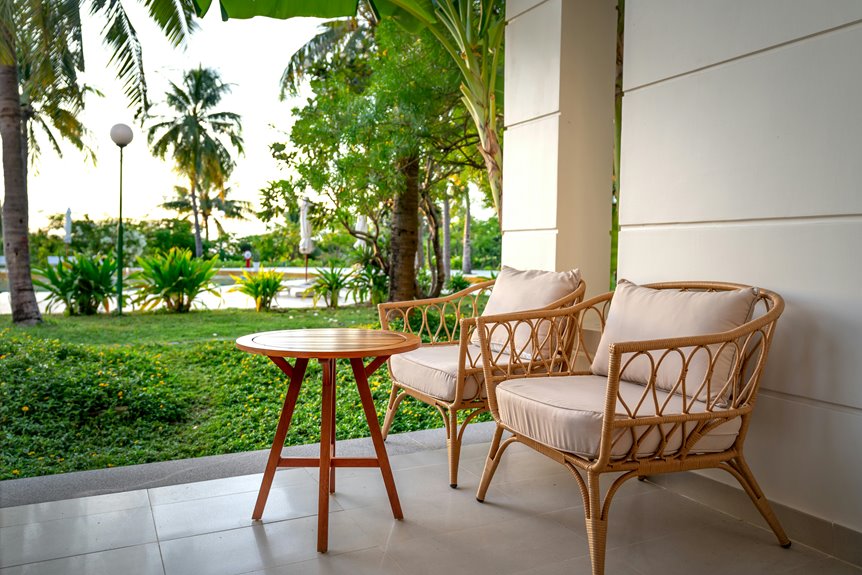
Start by choosing your style and budget, then shop smart: hit Walmart, Target, or Facebook Marketplace for affordable pieces. Pick three to four colors that work in both sun and shade—lighter tones reflect heat, darker ones anchor weight. Layer texture with plants and lighting to fill empty spaces. Repurpose indoor furniture you already own, seal it with weatherproof coating, and combine thrifted finds with new accessories for cohesion. These foundations create a functional, attractive yard that’ll keep looking good year-round.
Find Affordable Decor at the Right Sources
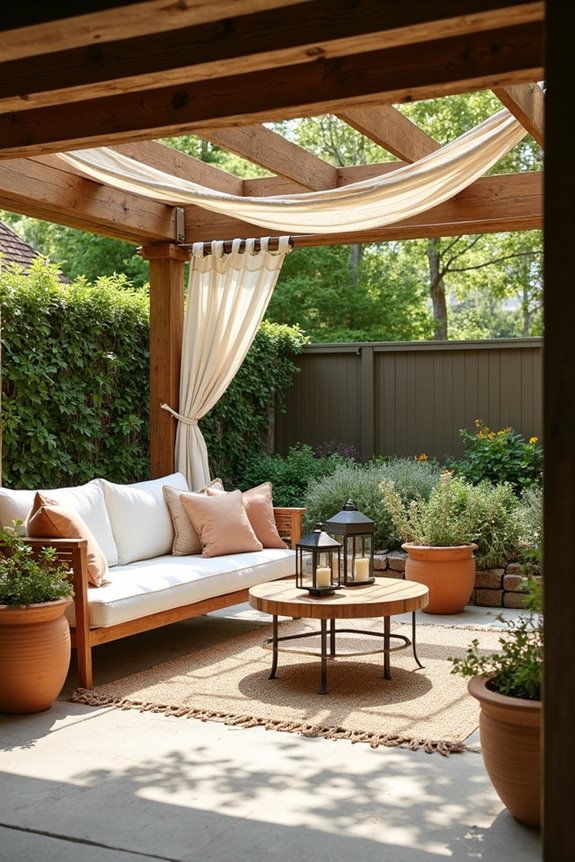
Where should you actually shop if you want to decorate your backyard without spending a lot of money? Budget-friendly outdoor decor sources are everywhere once you know where to look.
Budget-friendly outdoor decor sources are everywhere once you know where to look.
Start with big box stores like Walmart, Target, and Big Lots for reliable selections. Dollar stores—Dollar Tree, Dollar General, and Family Dollar—offer finds for outdoor accents at low prices.
Check Facebook Marketplace for secondhand items, though verify load capacity first. Thrift stores, yard sales, and estate sales give you the cheapest bargains and repurposing opportunities.
For online shopping, compare prices across Amazon, Walmart, and Big Lots. Check specialty sites like Wayfair and Joss & Main for affordable outdoor dining sets. You’ll find great deals when you shop smart across multiple sources.
Choose What to Buy: Style, Budget, and Outdoor Durability
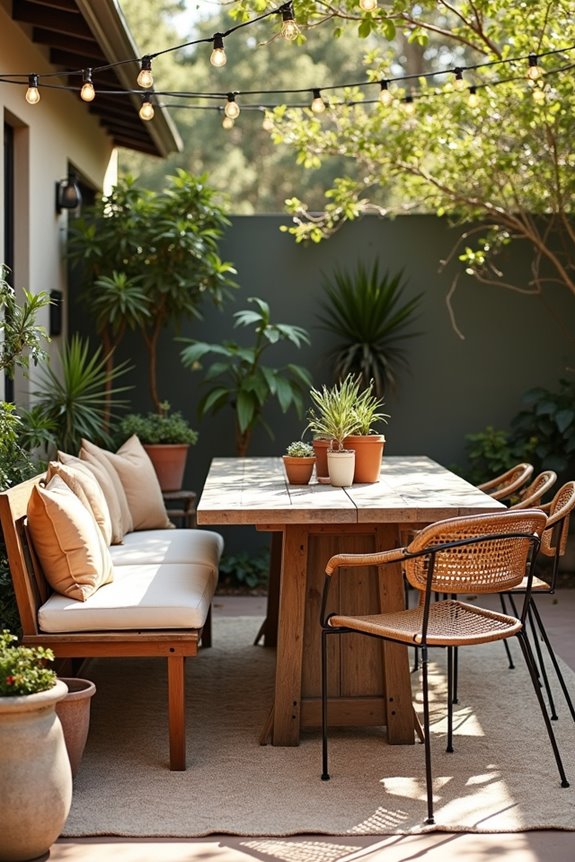
Now that you’ve found affordable sources, focus on three key factors before you buy: your style preference, your total budget, and whether items can actually survive outside weather. You’ll need to balance what you love aesthetically with realistic prices and materials that won’t fade, crack, or rust in rain and sun. Think about which pieces matter most for durability—cushions and wood furniture need weather-resistant fabrics and finishes, while metal accents and glass should have protective coatings.
Style Preferences And Aesthetics
What style speaks to you—modern and minimal, cozy and traditional, or something completely your own? Your aesthetic choice guides your entire outdoor decor strategy and budget allocation.
| Style | Best Retailers | Budget Tips |
|---|---|---|
| Modern Minimal | Target, Wayfair | Shop seasonal sales for clean-lined pieces |
| Cozy Traditional | Marshalls, TJ Maxx | Hunt thrift stores for vintage charm |
| Eclectic Mix | Facebook Marketplace, yard sales | Combine budget-friendly finds creatively |
| Bohemian | Dollar Tree, Big Lots | Layer affordable textiles and lanterns |
| Classic Contemporary | Walmart, All Modern | Mix high and low pieces strategically |
Once you’ve identified your preferred aesthetic, you’ll shop smarter. Budget-friendly outdoor decor becomes easier when you know exactly what you’re seeking. Target seasonal sales like Memorial Day and July 4th clearances to score pieces matching your vision. Reusing indoor items—lanterns, vases, candlesticks—stretches your budget while maintaining your chosen style throughout your backyard space.
Budget Planning And Cost Management
How you spend your money on backyard decor matters way more than how much you spend. I prioritize what I actually need versus what I want, then rank those items by importance. This keeps me focused on essentials like dining areas before splurges like outdoor kitchens.
For budget-conscious sourcing, I shop strategically:
- Big box stores like Walmart and Target offer affordable decor options
- Facebook Marketplace and yard sales provide repurposed treasures at fraction costs
- Discount shops like TJ Maxx carry quality pieces within tight budgets
Cost management means choosing durable materials that last. I invest in scalable, reconfigurable pieces that adapt as my needs change. By limiting my material and plant palette, I avoid visual clutter while stretching every dollar further. This approach balances smart spending with creating the backyard I want.
Weather Resistance And Material Longevity
Your backyard’s durability depends on choosing materials that’ll actually survive rain, sun, and temperature swings without falling apart. I recommend picking weather-resistant options like teak, cedar, and powder-coated metals. These materials won’t warp or rust when exposed to harsh conditions.
Next, apply outdoor finishes such as UV-protective sealants and marine-grade paints to prevent fading and water damage on decks and furniture. This step extends material longevity.
For structures like pergolas and trellises, prioritize rot-resistant framing and corrosion-resistant hardware using galvanized or stainless steel. These choices prevent squeaky joints and structural failures.
Finally, consider low-maintenance surfaces like poured concrete or composite decking with non-slip textures. You’ll reduce both weather-related safety concerns and ongoing upkeep. Smart material choices mean your backyard stays functional and attractive for years.
Separate Seating Areas to Make Small Yards Feel Larger
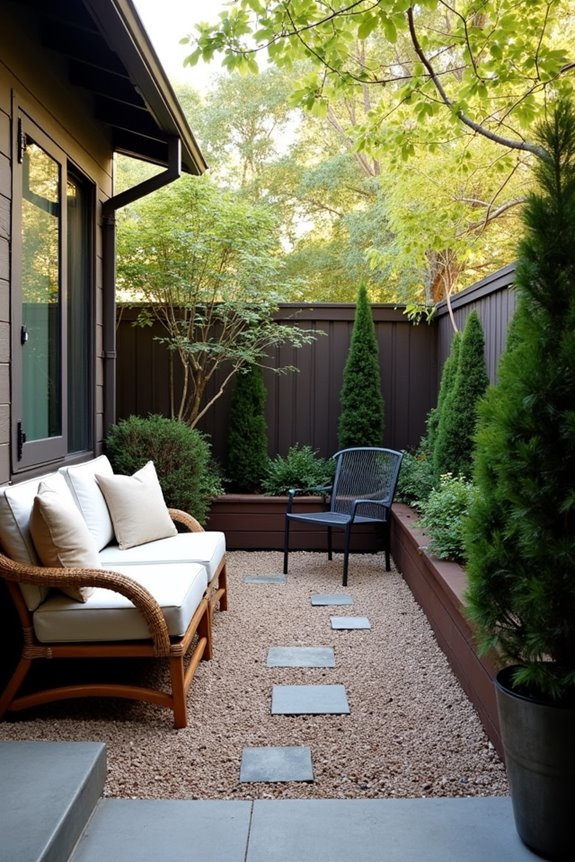
When you’re working with a compact yard, creating separate seating areas might seem impossible—but it’s actually one of the smartest ways to make your space feel bigger.
I use potted plants to carve out distinct outdoor zones without blocking sightlines. This approach keeps everything connected while giving each area its own purpose. Here’s what I recommend:
- Position built-in seating along yard edges to maximize your central open space and define boundaries naturally
- Layer outdoor rugs and vary furniture heights to visually separate zones like dining near the perimeter and lounging near a focal point
- Choose multi-functional pieces such as benches with storage or fire pits that serve double duty while reducing clutter
These strategies help you claim more usable space and create that welcoming feeling of separate retreats within your compact yard.
Add Texture, Plants, and Lighting to Make Your Space Feel Fuller
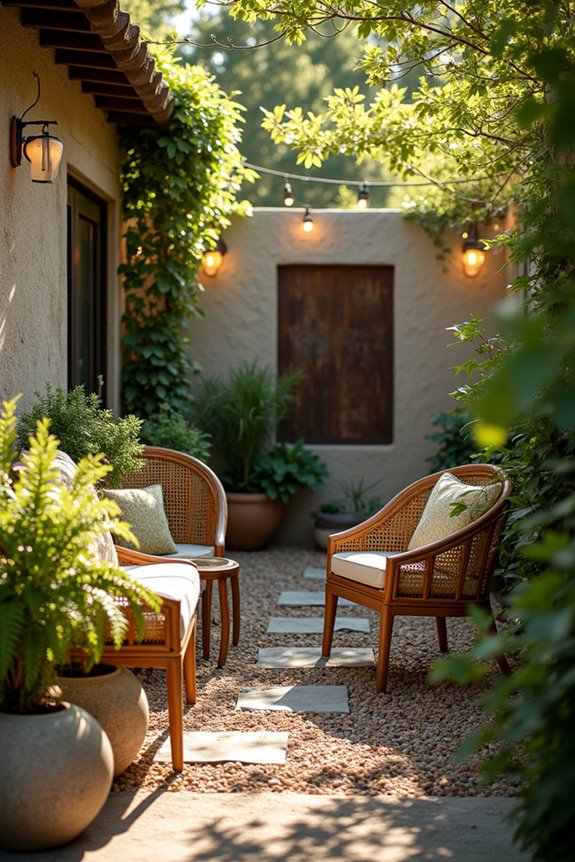
Once you’ve mapped out your seating zones, it’s time to fill your yard with layers that’ll make it feel complete and inviting. I recommend mixing textures through cedar enclosures, wooden trellises, and woven furniture. These materials add visual interest and create dimension. Next, incorporate greenery strategically using potted specimens, flowering plants, and vertical gardens. This approach adds life without crowding your footprint. Finally, layer in lighting to extend your yard’s usability after dark. String lights, solar pendant lamps, and wall-mounted planters work well together. When you combine these three elements—textures, greenery, and lighting—you’ll highlight focal areas like dining zones and seating nooks. The result is a fuller-looking space where you and your guests feel welcome to linger.
Pick 3–4 Colors That Work Across Sun and Seasons
When you’re picking your outdoor colors, you’ve got to think about how sunlight changes throughout the day and how your palette shifts with the seasons. I’d recommend choosing 3–4 colors that stay harmonious whether you’re looking at them in bright sun or dappled shade—like pairing a light color such as Sunset Drive with a darker accent like True Copper from Behr. Test your color samples on the actual materials you’ll use, observe them at different times, and anchor everything with neutrals like white, cream, or gray so your seasonal décor can work together without clashing.
Seasonal Color Transitions
Seasonal Color Transitions
As your backyard moves through the year, you’ll want colors that work whether it’s blazing summer heat or gray winter days—and that’s where picking just 3–4 core colors really helps.
I recommend anchoring your color palette with Sunset Drive as your light hue and True Copper as your dark option. This combination gives you flexibility across seasonal transitions while keeping your outdoor décor visually connected.
Here’s how to make it work:
- Swap furniture cushions and throws between lighter and deeper tones as seasons change
- Use planters and obelisks in your core colors to maintain consistency year-round
- Layer accessories like pillows and art pieces to adapt your space from sunny to overcast periods
This approach lets you refresh your backyard’s vibe without major redesigns or constant redecorating.
Sunlight and Shade Considerations
Your color choices need to work harder than you might think—they’ve got to look good whether they’re sitting in full sun or tucked into shade, and they need to hold up to UV rays and temperature swings. I recommend choosing sun-faded neutrals paired with one durable accent color. Use outdoor paints with UV resistance like Behr’s Sunset Drive for light areas and True Copper for darker zones. This color-contrast strategy addresses sun-bleaching risk: lighter tones reflect heat on exposed surfaces, while darker shades anchor visual weight in shaded spots. Add color-tested planters and textiles that handle temperature fluctuations. These choices keep your backyard consistent from dawn to dusk, creating a unified appearance you can count on year-round.
Decorate With Repurposed Indoor Furniture and Roadside Finds
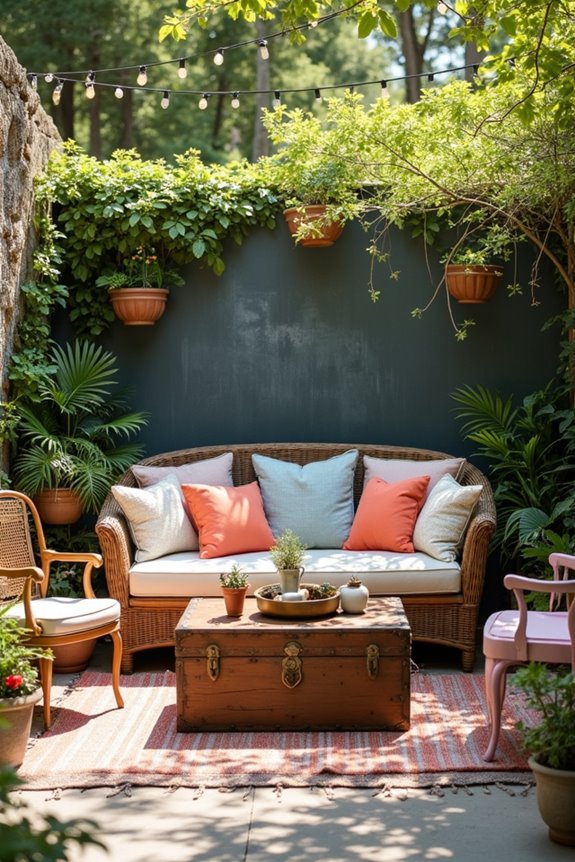
Have you noticed how many useful items sit unused in your home or appear abandoned on roadsides? Repurposed indoor furniture can create an appealing backyard while keeping costs low.
Repurposed indoor furniture transforms your backyard into an appealing outdoor space while keeping costs surprisingly low.
Start by exploring what you already own. Lanterns, vases, and candlesticks work well outdoors. Check Facebook Marketplace, thrift stores, and yard sales for affordable decor pieces that need new life. Roadside finds like wooden chairs or tables just need basic cleaning.
Consider these approaches:
- Reposition indoor pillows on patio seating for comfort and style
- Apply weatherproof sealant to wooden pieces for durability
- Mix vintage finds with modern outdoor accessories for a cohesive design
YouTube tutorials show how to adapt furniture for outdoor conditions. This strategy lets you create a personalized space that suits your tastes at a reasonable cost.