
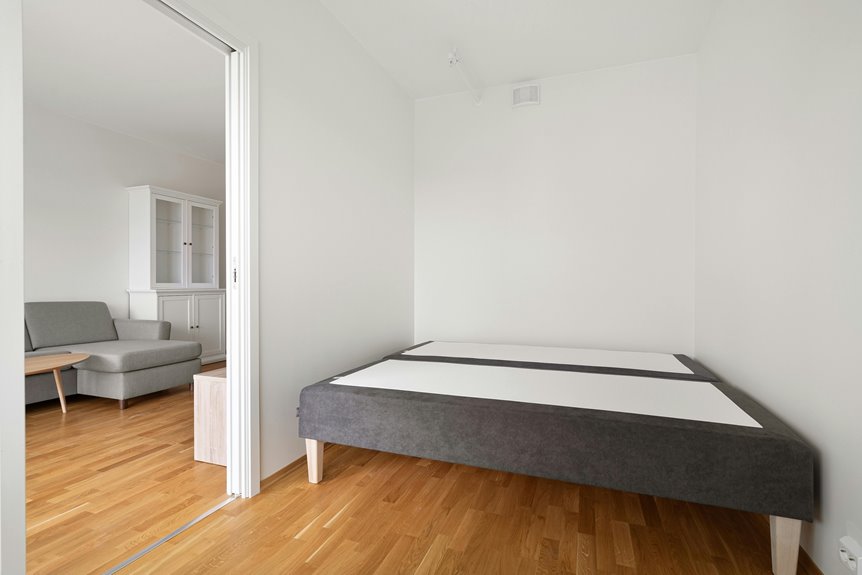
To legally use your living room as a bedroom in Virginia, you’ll need at least 70 square feet, 7-foot ceilings, and two escape routes—a door leading outside plus an operable window with 5.7 square feet of opening area.
You’ll also need permanent heating and adequate ventilation. Local zoning might require stricter standards or permits. An official inspection confirms compliance and establishes legitimate bedroom status. Each requirement matters for safety and legal occupancy. Understanding the specifics of your situation requires reviewing these details.
Virginia’s Minimum Space and Ceiling Height Standards
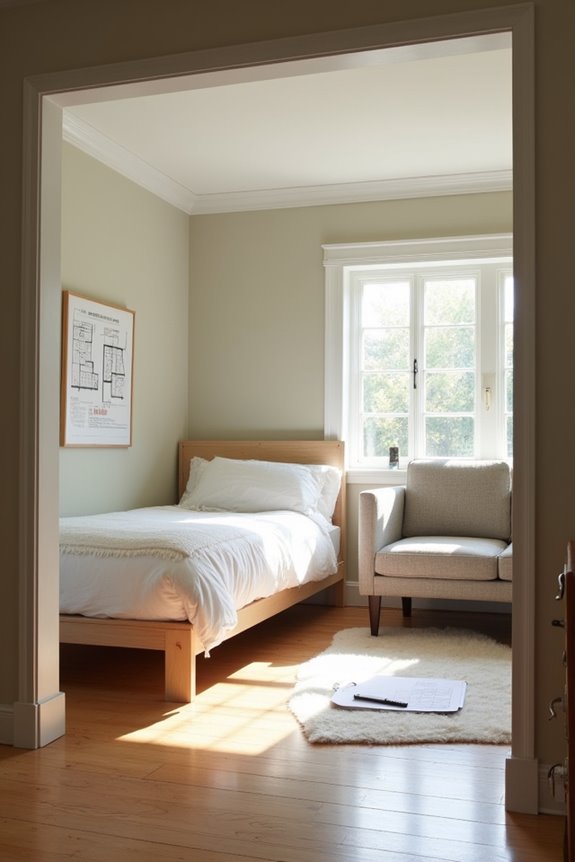
What makes a living room qualify as a bedroom in Virginia? The space must meet specific minimum space and ceiling height regulations. Your room needs at least 70 square feet of floor area. If two or more people occupy it, you’ll need at least 50 additional square feet per occupant.
Ceiling height matters too. Virginia requires ceilings to be at least 7 feet high throughout most of the room. If your ceiling slopes, that’s acceptable as long as half of your usable space reaches that 7-foot minimum.
These measurements support adequate ventilation and safe egress. Your window must be operable for emergency access. Meeting these Virginia standards helps your living room legally function as a bedroom while keeping you safe and comfortable.
Two Means of Egress: The Fire Safety Rule
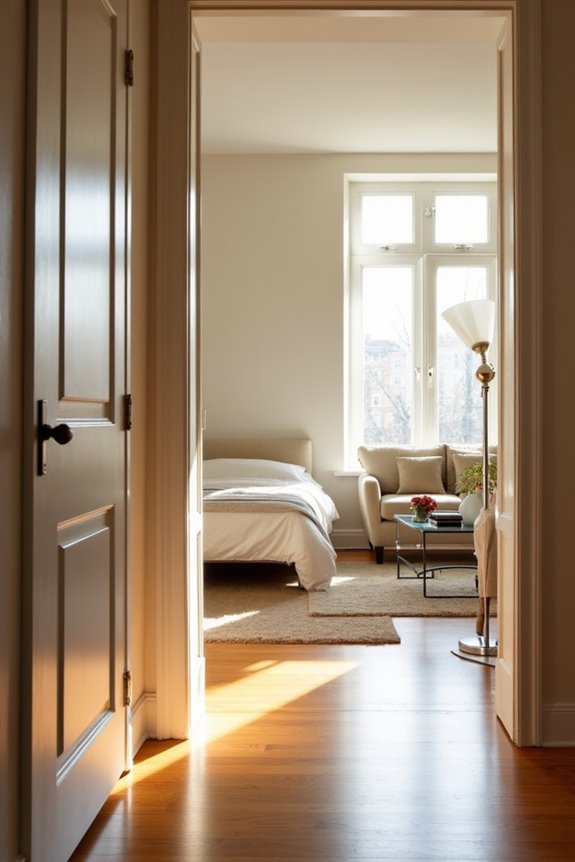
When you convert a living room into a bedroom, you must follow Virginia’s fire safety rules, which require two separate ways to escape in case of emergency. You’ll need a door that opens directly outside and an operable window that meets minimum size requirements—typically around 5.7 square feet of opening space, or roughly 24 inches by 20 inches. These two egress points exist for one reason: they provide you and anyone else in the room a way to get out safely if a fire breaks out.
Door and Window Requirements
Why do building codes insist on two ways out of a bedroom? Fire safety, plain and simple. You need both a door and an operable window for your two means of escape. Your primary exit is the door leading directly outside—no passing through other rooms. Your secondary exit is an egress window that lets you climb out safely if the door’s blocked.
| Requirement | Door | Egress Window |
|---|---|---|
| Opening area | Standard size | 5.7 sq ft minimum |
| Dimensions | Varies | 24″ × 20″ typical |
| Location | Direct outside | Direct outside |
| Operability | Must open | Must open fully |
| Height placement | Floor level | 44″ max sill height |
Building codes demand these specific measurements because they’ve proven effective. Your minimum opening area allows you to escape quickly during emergencies.
Emergency Evacuation Standards
How you escape a bedroom during a fire depends on having two separate routes out—and building codes take this seriously. You’ll need both a door as egress and an egress window for two means of escape. Your egress window must open directly to the exterior and meet minimum opening area requirements—typically 5.7 square feet. The sill can’t sit higher than 44 inches from the floor without permanent access solutions. Your bedroom door serves as one fire safety route, leading to a hallway or outside. If skylights replace traditional windows, you’ll need an additional door for your fire escape route. Building codes enforce these emergency exit standards to protect you during emergencies. Check your local building codes to confirm your room’s specific requirements.
Bedroom Windows and Ventilation Requirements
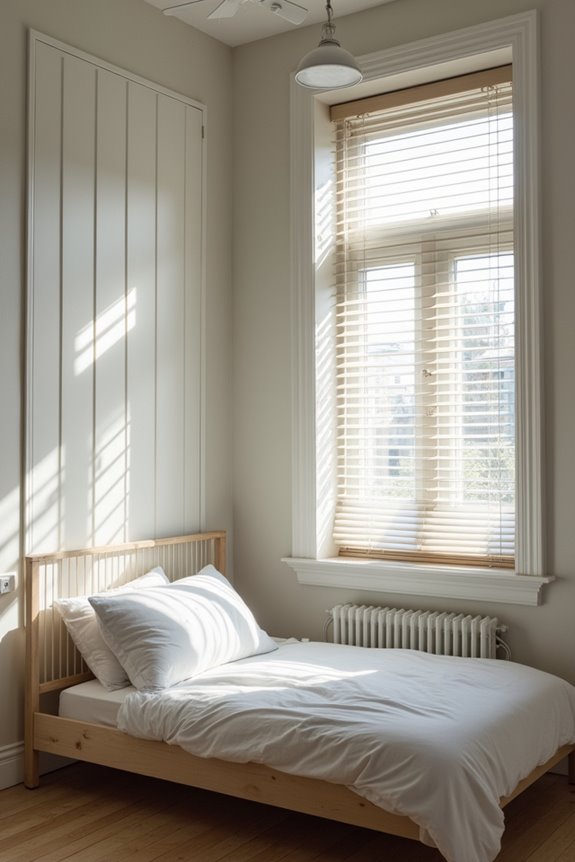
One of the most important features that separates a legal bedroom from other rooms is the window, and I’ll explain why it matters so much. Your window must be operable, meaning you can actually open it for natural ventilation and fresh air. Building codes typically require a minimum opening area of 5.7 square feet. This isn’t just about comfort—it’s about fire safety and occupancy standards. Basement bedrooms need egress-compliant windows so you can escape during emergencies. A door alone won’t meet code requirements; you need that natural light and ventilation path. Nothing should block your window. Check your local building codes because requirements vary by location. Verify your specific window specifications with your local zoning office before converting your living room into a bedroom.
Bedroom Heating and Cooling Requirements
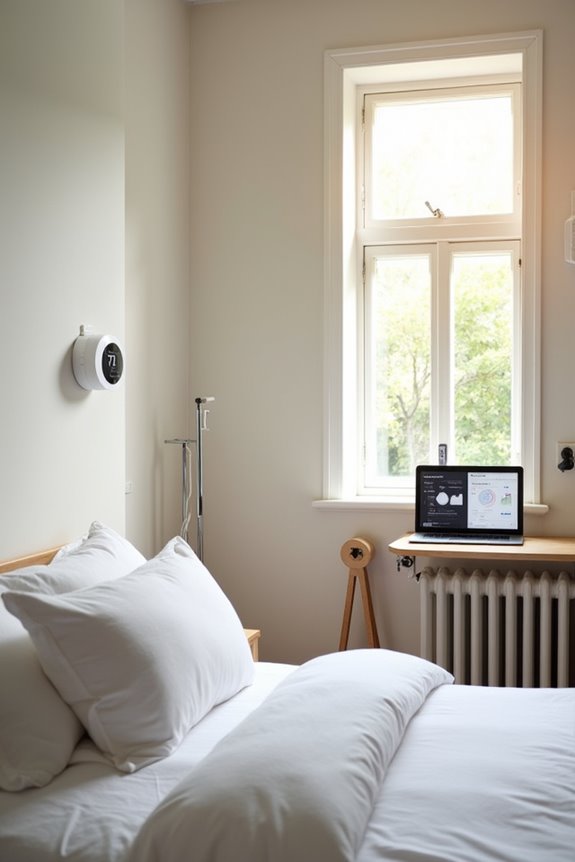
Just like your bedroom needs windows for fresh air, it also needs a reliable way to stay warm and cool year-round. Your heating requirements demand a permanent heating source—think furnace or baseboard heater, not a portable space heater. For cooling requirements, you’ll want central AC or a fixed system. Together, these create the climate control that defines a habitable space. Your HVAC system works alongside natural ventilation through window or door openings to keep air fresh and comfortable. Local building codes vary by region, so check with your local authorities about specific standards. The key point: your living room converted to a bedroom must meet these heating and cooling standards to be legal and livable.
When Local Zoning Overrides Virginia Requirements
While Virginia sets baseline bedroom standards, your local zoning code might demand stricter rules about ventilation, heating, egress windows, or room size. I recommend you contact your local zoning office before converting a living room, since what qualifies as a bedroom in one municipality might not in another. Getting this verification upfront avoids costly mistakes or having to undo work that doesn’t meet your area’s specific requirements.
Local Zoning Code Variations
How much do your local zoning rules actually matter when you’re converting a living room into a bedroom? They matter a lot. Your municipality might demand stricter standards than Virginia’s baseline. You’ll encounter local zoning codes that specify minimum square footage, ceiling height, window size, and egress requirements—sometimes exceeding state minimums significantly.
Many jurisdictions require explicit labeling and permitting for non-traditional spaces like converted living rooms. You’ll likely need inspections before legally using that space as a bedroom. These regulations directly impact property tax assessments and lender appraisals, affecting your home’s marketability.
Contact your local zoning office immediately. They’ll clarify exactly what your area requires. Don’t assume state standards apply everywhere—they don’t. Understanding these variations protects your investment and maintains compliance with local regulations.
Stricter Municipality Requirements Apply
Now that you’ve got the state baseline down, here’s where things get complicated: your local municipality can—and often does—demand more. Your city or county might require stricter egress window sizes, higher ceiling height standards, or additional space requirements than Virginia Code allows. Many jurisdictions mandate two exits—a door and window exits—rather than relying on just one. They’ll enforce access via hallway rules, meaning you can’t pass through another bedroom to reach the living room bedroom. Building code officials also control ventilation standards and may restrict how you use that living room entirely.
| Requirement | Virginia Standard | Your Municipality | Status |
|---|---|---|---|
| Egress Window | 5.7 sq ft | ? | Verify |
| Ceiling Height | 7 feet | ? | Verify |
| Two Exits | Recommended | ? | Verify |
| Access via Hallway | Not specified | ? | Verify |
| Ventilation | Building code | ? | Verify |
Contact your local zoning office for verification before finalizing plans.
Verification With Local Authorities
You’ve checked Virginia’s baseline standards, but that’s only half the battle. Now you need official confirmation from your local zoning office or Building Department. Here’s why: your area’s local zoning codes might demand stricter requirements than state rules allow. Contact your zoning office and describe your living room conversion plans, including egress routes, window sizes, and occupancy standards you’re proposing. They’ll evaluate whether your setup meets local egress and privacy requirements for legal bedroom status. Request a permit—it’s your paper trail proving the conversion’s legitimate. Without this official approval, your space won’t count as a legal bedroom for valuation and financing purposes. Getting a permit isn’t bureaucratic hassle; it’s protecting your investment and confirming you’re meeting your community’s housing standards.
Inspection Requirements for Official Bedroom Status
When you’re figuring out whether a living room can legally count as a bedroom, an official inspection checks several specific things. Inspectors verify the minimum square feet requirement and measure your ceiling height to meet code. They’ll examine your egress options—both a door and window opening—to confirm you have safe escape routes. The inspector checks that your window opening meets the required size and height standards for emergency exit. They’ll also verify you have direct access from a common area, not through another bedroom, and confirm the room offers privacy through a closable door. Finally, inspectors confirm you’ve installed a permanent heating source and adequate ventilation. Meeting these inspection requirements officially establishes your bedroom status.