I’d say the U-shaped kitchen ranks best because it delivers the shortest work triangle—the distance between your sink, cooktop, and fridge. You’ll get the most counter space across three walls and the deepest storage capacity, which means fewer steps during meal prep and cooking. The layout keeps your prep, cooking, and cleanup zones separated yet accessible. That said, your best choice depends on your space and how you actually cook, so let’s explore what makes each design work.
Evaluate Kitchen Layouts Using Three Core Criteria
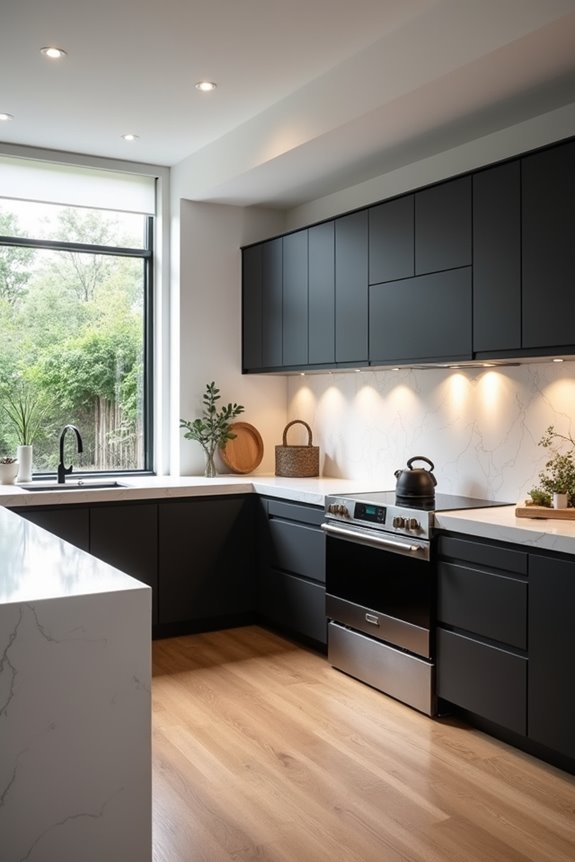
How do you know if a kitchen layout actually works for the way you cook? I evaluate three core criteria that reveal whether your space truly serves you well.
A functional kitchen layout reveals itself through three core criteria that truly serve the way you cook.
First, I assess the working triangle—the distance between your sink, cooktop, and fridge. This triangle should minimize unnecessary steps during meal prep and cooking.
Second, I examine counter space and traffic flow. You need adequate room for prep work without people constantly squeezing past you. U-shaped kitchens and island setups excel here, while galley efficiency depends on clear pathways.
Third, I check storage organization. Your pots belong near the stove, dishes near the dishwasher, and spices near prep zones. This functional arrangement makes any kitchen layout more practical and user-friendly.
U-Shaped Kitchens Excel at Counter Space and Workflow
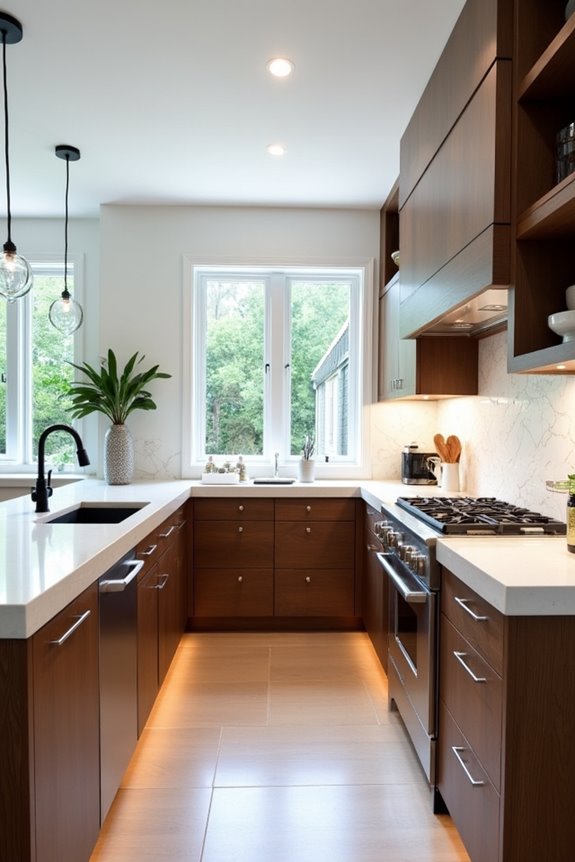
Why does a U-shaped kitchen work well for most home cooks? I’ll explain what makes this efficient layout practical.
A U-shaped kitchen uses three walls for cabinetry, creating an ideal work triangle. This design gives you clear advantages:
- Counter space extends across all three walls, giving you room for multiple tasks at once
- Wall cabinets reach higher and deeper, significantly boosting your storage capacity
- The work triangle keeps prep, cooking, and cleanup zones separated yet accessible
- A peninsula extension adds extra counter space without blocking traffic flow
You can prep vegetables on one wall while someone else cooks on another. Wall cabinets maximize your storage without eating floor space. This efficient layout lets you work smoothly, whether you’re cooking solo or with family. That’s why many home cooks prefer U-shaped kitchens.
Island Layouts Maximize Prep Area and Social Flow
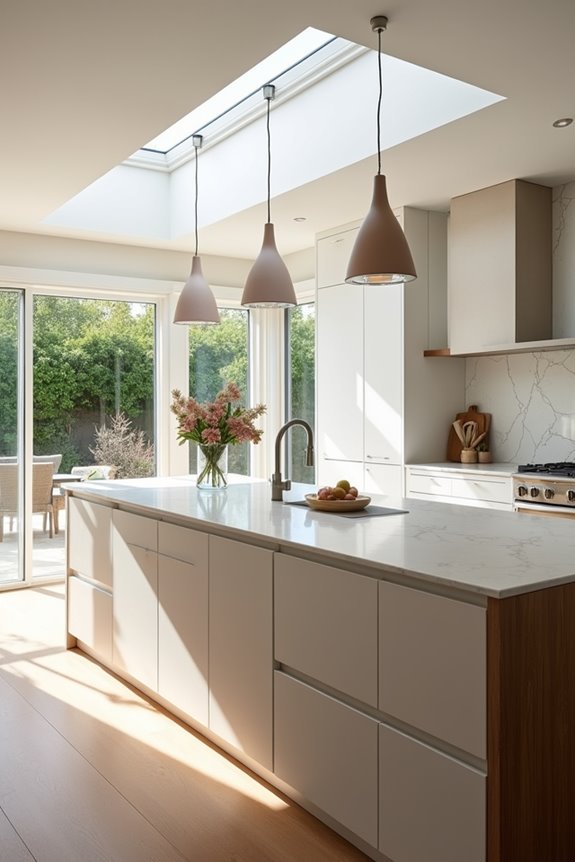
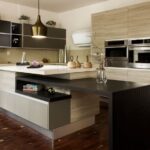
While U-shaped kitchens give you plenty of counter space across three walls, island layouts take efficiency in a different direction by concentrating your prep work in one central hub.
Positioning your sink, cooktop, and prep space along one island side creates a streamlined workflow. You’ll reduce unnecessary movement between tasks. Seating on the opposite side lets guests interact with you without interrupting your cooking zone.
| Element | Location | Benefit |
|---|---|---|
| Prep space | One island side | Maximizes countertop area |
| Seating | Opposite side | Enables social flow |
| Storage | Perimeter counters | Keeps items accessible |
This setup keeps your working triangle tight while giving your kitchen island room for sheet pans and cutting boards. Store heavy-use items like pots and spices near your island to minimize walking. You’ll work smarter, not harder.
Galley, L-Shaped, and Peninsula Designs: Space-Conscious Options
When you’re working with a smaller kitchen, three layouts stand out for their practical use of space: galley, L-shaped, and peninsula designs.
I’ll break down why each works:
- Galley kitchens use two parallel walls with a corridor-like workflow, keeping everything compact and organized.
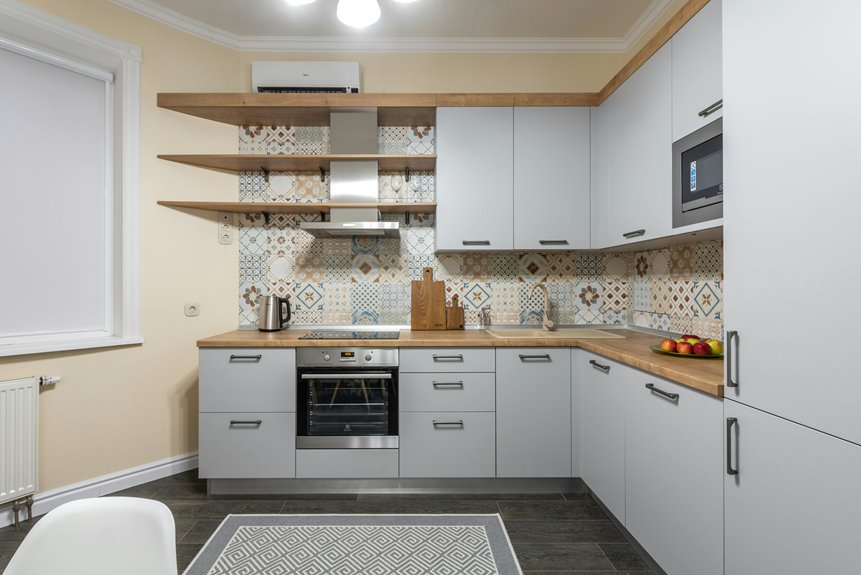
- L-shaped kitchens maximize corner space and create an efficient work triangle while keeping traffic flowing freely.
- Peninsula designs add counter space with three open sides connected to a wall, offering flexible prep or seating without blocking walkways.
- Strategic storage anchors frequently used items near their work zones—pots by the stove, dishes by the dishwasher, spices near prep areas.
These layouts share one key strength: they minimize movement between your cooking, prep, and cleanup zones. You’ll find that thoughtful appliance placement and accessible storage make even tight spaces into functional kitchens.
Align Your Layout to Your Workflow Zones
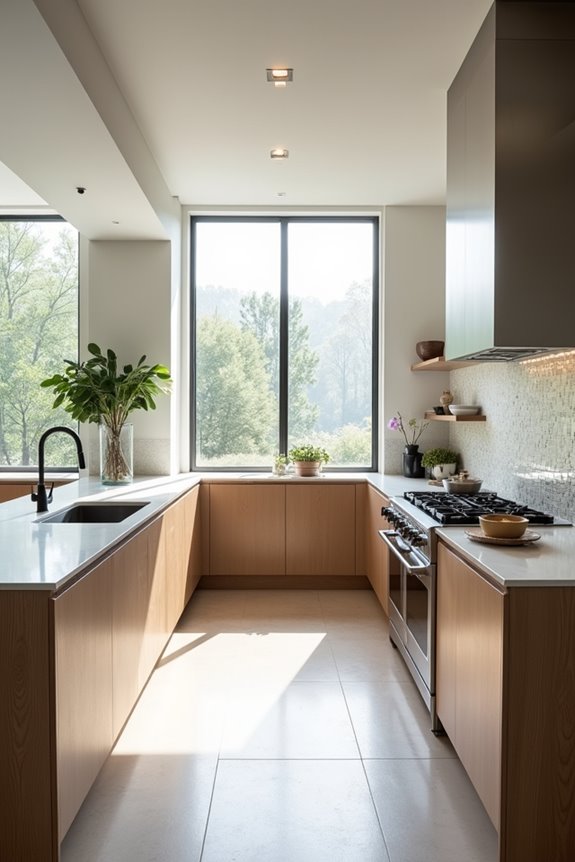
You grab ingredients, prepare them, cook the food, then clean up. That’s your kitchen workflow, and this is how to align your layout to match it.
Think of your kitchen layout as having distinct workflow zones. Your prep zone should sit near the rangetop where you’ll cook. Keep your clean-up zone centered on the sink and dishwasher. Position your pantry access closest to prep tasks for efficiency.
| Zone | Key Elements |
|---|---|
| Prep | Cutting board, knives, pull-out shelves |
| Cooking | Rangetop, cookware, seasonings |
| Clean-up | Sink, dishwasher, trash |
A tight working triangle between sink, rangetop, and fridge minimizes wasted movement. In a galley kitchen or any layout, cluster these three points closely. Maximize your open countertop space within that triangle for comfortable work. Pull-out shelves in your pantry boost accessibility throughout meal prep.