
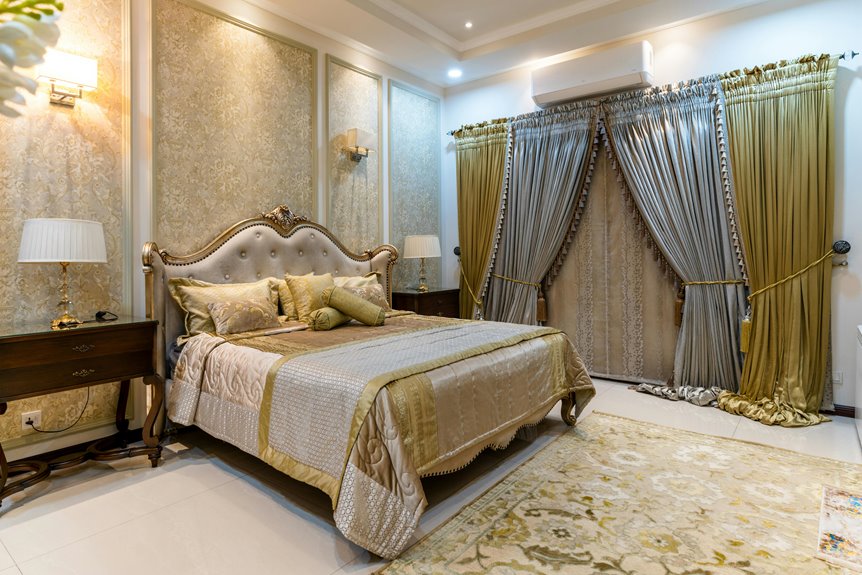
Start by choosing a quality mattress paired with a sturdy bed frame, then add a neutral upholstered headboard to anchor your space. Layer soft textiles—flannel in winter, breathable cotton in summer—and define the room with a large area rug extending beyond your bed. Use matching bedside lamps at eye level with warm bulbs, hang blackout curtains for better sleep, and anchor the wall above your bed with gallery-style art. These foundational choices work across any style, and the specific details matter more than you’d expect.
Start With a Bed That Invites You to Sink In
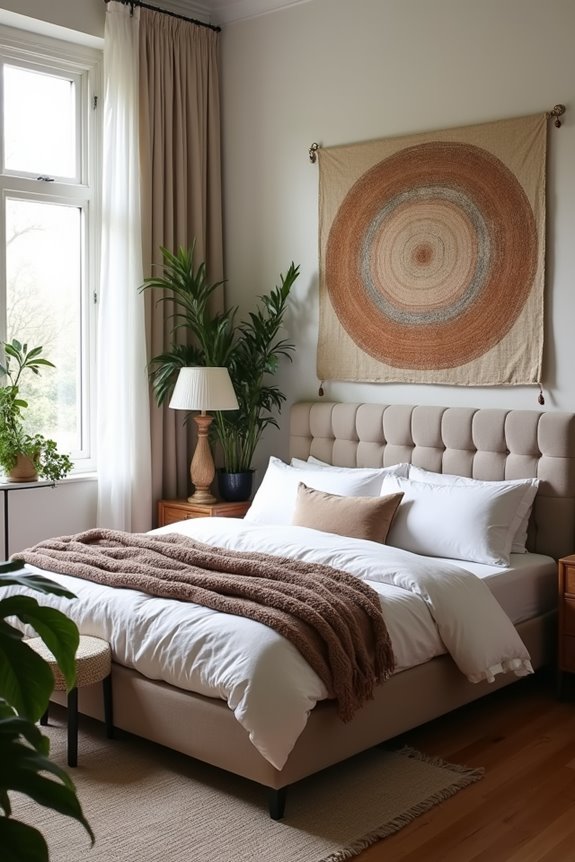
Why does your bed matter so much when you’re decorating a bedroom? It’s your room’s visual anchor and the place where you spend a third of your life. Start by choosing a mattress you can sink into, paired with a solid foundation for year-round support. Your bed frame deserves investment—pick one built to last. An upholstered headboard grounds your room’s style and serves as a long-term centerpiece.
Here’s what makes bed-making easier: use one long lumbar pillow and minimal decorative pillows for a streamlined look. Consider storage underbed with baskets or crates to maximize space without cluttering your room. If you’re sharing, provide access from both sides. Otherwise, push your bed into a corner to create that comfortable, intimate nook. Your bed should feel like an invitation to rest.
Choose Calming Wall Colors That Set the Mood
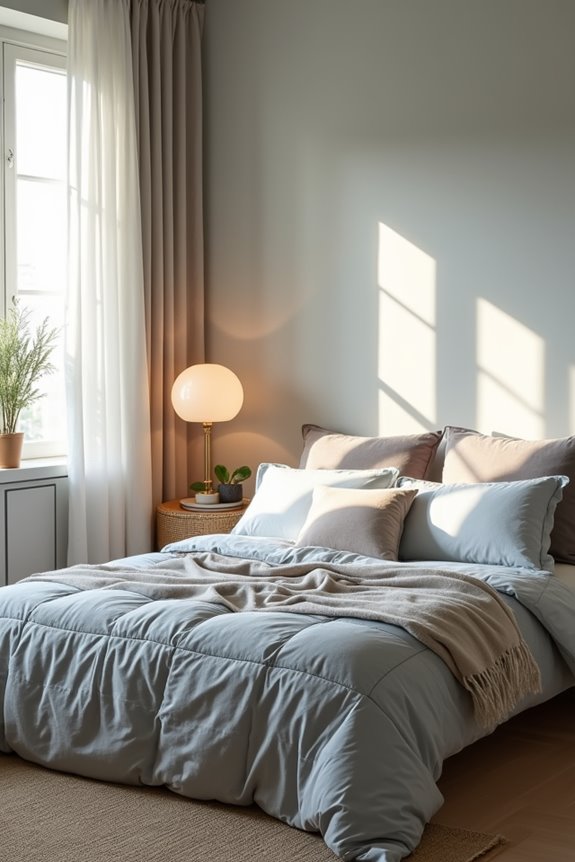
Your wall color does more than fill space—it shapes how calm and rested you feel in your bedroom, so choose hues based on the mood you want rather than what’s trendy. You can strengthen that feeling by layering your chosen color throughout the room using linens, rugs, artwork, and decorative items, which ties everything together and deepens the effect. Keep in mind that your room’s lighting direction matters too: north-facing rooms need warmer tones to avoid feeling icy, while south-facing rooms can handle cooler blues without feeling cold.
Color Psychology and Relaxation
How a bedroom wall color makes you feel matters more than you might think. Color psychology shows us that certain hues genuinely influence relaxation and mood enhancement. Soft, muted tones like sage green or dusty blue create calming spaces where you’ll feel at ease. Darker shades build intimate atmospheres, while lighter ones make rooms feel more open.
I recommend layering your color through textiles—add throw pillows, soft rugs, and artwork that echo your wall color. This reinforcement deepens the peaceful effect throughout your space.
Consider your light and shade carefully too. North-facing rooms benefit from warmer tones to balance cool natural light. South-facing rooms work beautifully with cooler hues. Your wall color becomes the foundation for everything else you add, so choose thoughtfully.
Layering Hues Throughout Space
Once you’ve selected your calming wall color, layering that hue throughout your space using textiles, art, and decor creates visual depth. Pull your bedroom’s palette from that foundation color and weave it into different elements. Start with a rug that echoes your wall tone, then add throw pillows and linens in coordinating shades. Hang artwork that reinforces your chosen mood. These layered colors prevent your bedroom from feeling flat and one-dimensional.
Lighting plays an important role in completing your design. Use three light sources at different levels to complement your palette. A bedside lamp, overhead fixture, and accent light work together to support your calming atmosphere. This approach to layering creates a bedroom that feels cohesive and thoughtfully designed for you.
Layer Soft Textiles for Year-Round Comfort
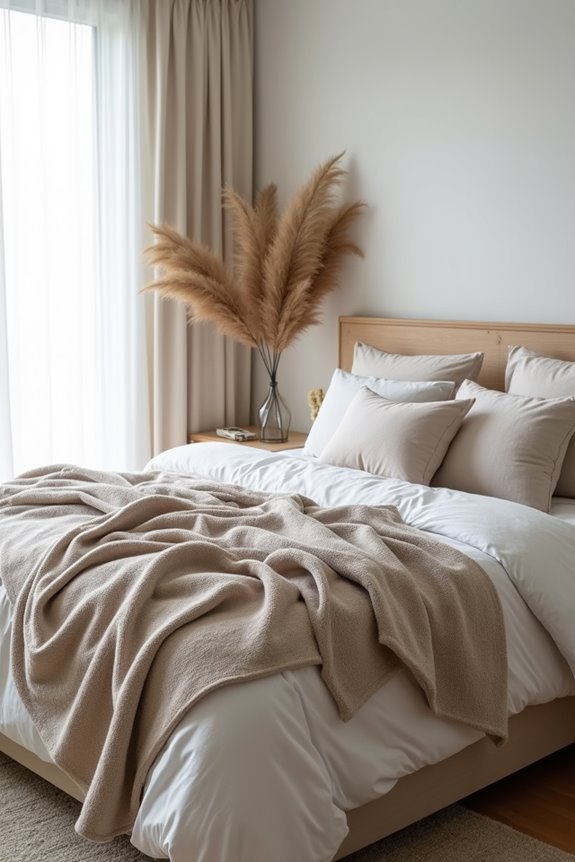
What makes a bedroom feel truly comfortable changes with the seasons, and I’ve found that swapping out your textiles is one of the easiest ways to adapt. In winter, I switch to soft flannel sheets that trap warmth, then layer a duvet insert, quilt, and throw blanket for extra comfort. When temperatures rise, I replace these with breathable cotton or linen that won’t make me sweat at night. I also mix pillow textures and densities—pairing down-alternative pillows with plush options lets different sleepers find their preference. The key is coordinating your soft textiles so sheets, quilts, throws, and decorative pillows share complementary tones. This creates a unified appearance while maintaining year-round comfort. Rotating quality fabrics keeps your bedroom looking fresh and well-designed throughout the year.
Define Your Space With a Soft Area Rug
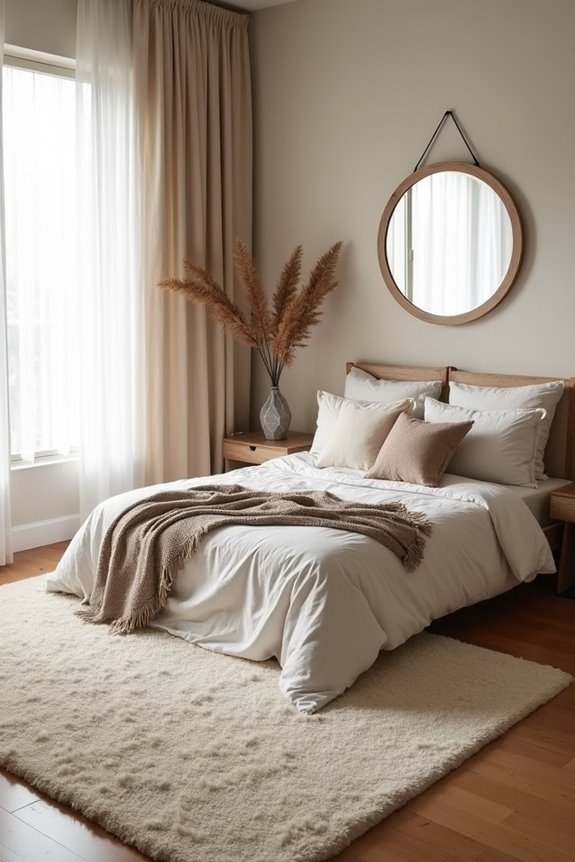
Define Your Space With a Soft Area Rug
A soft area rug anchors your bedroom by defining your sleeping zone and providing warmth underfoot, particularly valuable on timber floors. A quality rug creates underfoot comfort while establishing visual cohesion with your overall décor palette.
| Bed Type | Recommended Rug Size | Bed Footprint |
|---|---|---|
| Full | 6×9 feet | 54×75 inches |
| Queen | 8×10 feet | 60×80 inches |
| King | 9×12 feet | 76×80 inches |
Rug sizing matters. Position your rug to extend beyond all sides of your bed, surrounding the lower two-thirds. This placement balances coverage while maintaining easy foot traffic flow. Select colors and patterns that coordinate with your bedroom flooring and existing décor. A layered rug also improves acoustics and comfort, completing your personalized bedroom.
Invest in a Headboard That Anchors the Room
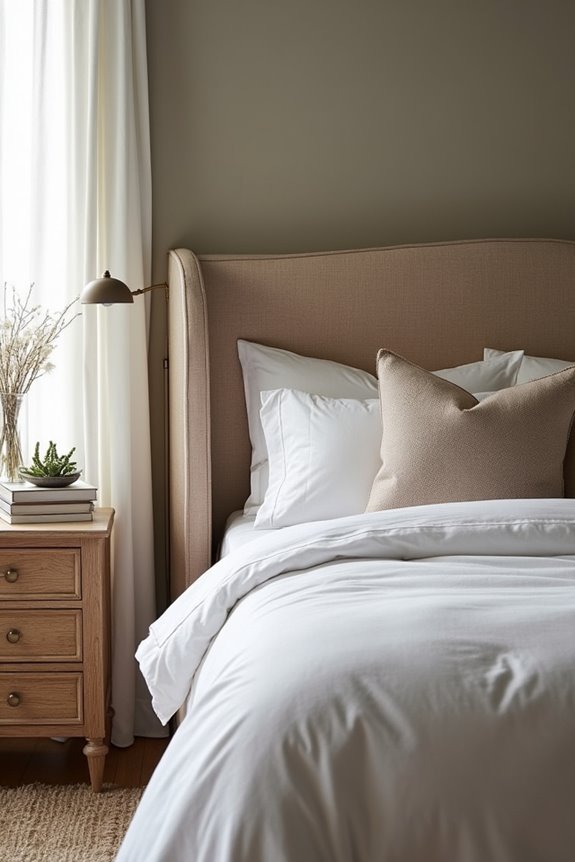
A sturdy upholstered headboard serves as your bedroom’s anchor—it’s a long-term investment that frames your bed and creates visual balance with nightstands on either side. I’d recommend choosing a classic design in a neutral fabric because timeless styles won’t feel dated as trends shift, and they pair well with different bedding and décor changes. When you layer it with quality pillows and throws, your headboard becomes the central point that ties your whole room together while giving you a comfortable spot for reading or relaxing in bed.
Upholstered Headboard Benefits
If you’re looking to anchor your bedroom with one strategic piece, an upholstered headboard accomplishes this effectively. This single element creates a visual focal point that ties everything together. The durability and longevity of a quality upholstered headboard make it a smart long-term investment. You’ll layer textured textiles like pillows and throws around it, which builds the comfortable feel most people want. The best part? You can customize the height and fabric to match your space perfectly. Choose easy-care finishes in durable materials like performance fabrics to keep it looking polished through daily use. Whether you’ve got a traditional bed or platform frame, an upholstered headboard works beautifully and creates the bedroom sanctuary you want.
Classic Design Longevity
Now that you’ve considered the visual impact of an upholstered headboard, let’s address durability. Choose a classic design that remains relevant beyond five years. Avoid trendy details like unusual shapes or patterns that quickly lose appeal. Instead, select neutral colors and simple lines that work with different styles over time.
Pair your upholstered headboard with a sturdy bed frame made from solid wood or metal. This combination creates a visually solid anchor for your entire room. Quality construction keeps both pieces durable and relevant for decades.
When you invest in longevity, you build a bedroom that grows with you. A timeless headboard and frame become the foundation for everything else in the space. That’s practical decorating.
Place Nightstands Where You Can Reach Everything
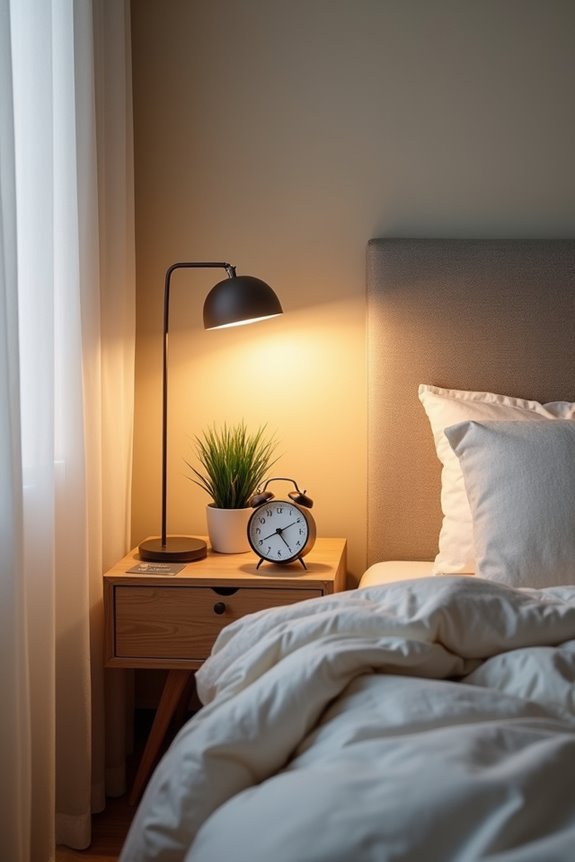
Your nightstands should sit within arm’s reach of your bed so you can grab essentials without stretching or rolling over awkwardly. The best bedside tables are positioned at the same height as your mattress, making it easy to access items from a seated position.
Choose nightstands with closed storage to keep clutter hidden while holding phones, glasses, and books. Pair them with compatible lamps and outlets for convenient charging. Position them symmetrically on both sides of your bed for a balanced appearance that unifies your bedroom.
Keep your nightstands organized using small trays or bowls. This prevents visual clutter and makes bed-making quicker. When your reach and storage work together, your bedroom becomes both functional and inviting.
Balance Both Sides With Symmetrical Bedside Lamps
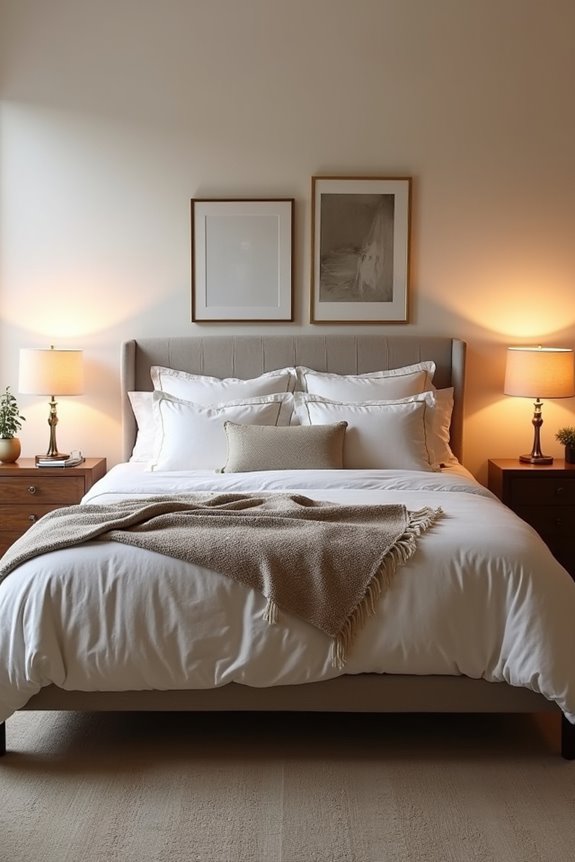
Have you noticed how matching lamps on either side of your bed create balance in the space? Symmetry provides a sense of order and deliberation in bedroom design.
Position each lamp at eye level when you’re sitting up so you get glare-free reading light. Choose warm-toned bulbs that support relaxation and set appropriate mood lighting for winding down.
Here’s what I recommend: 1) Select identical or coordinated lamps for both sides. 2) Use smart bulbs if possible—they let you control each lamp independently. 3) Hide all wiring by routing cords behind nightstands or using cord covers.
This symmetrical approach creates a unified bedroom that feels deliberately designed.
Darken Your Windows for Privacy and Better Sleep
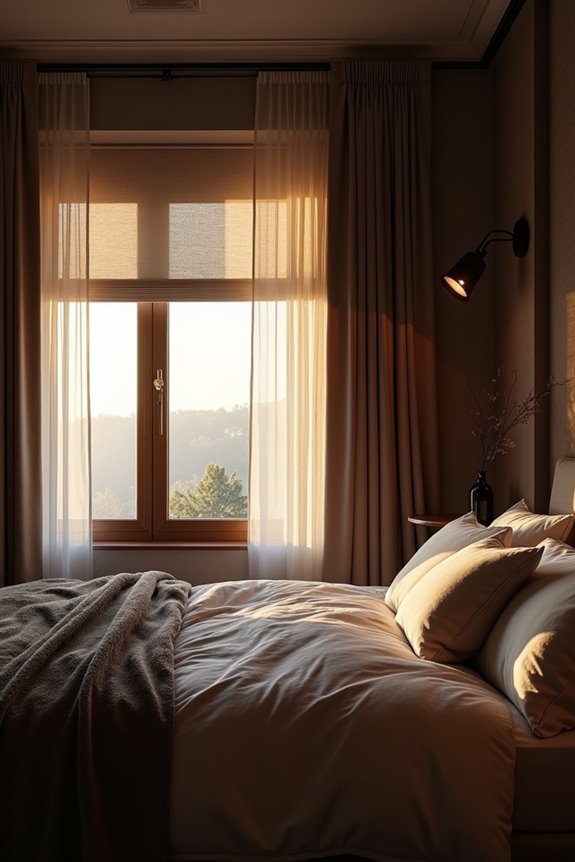
If you’re struggling to sleep, consider blackout options and layered window treatments to create a darker, more restful bedroom. Blackout curtains or blinds block nearly all light on their own, while layered treatments—like pairing sheer curtains with blackout panels—let you control how much light enters during the day and block everything at night. When you hang your rods above the window frame and extend them past the sides, you’ll maximize light control and make your windows appear larger while creating a well-designed room.
Blackout Options For Sleep
Why do so many people struggle to sleep when outside light filters through their windows? I’ve found that controlling light is key to better sleep quality. Blackout curtains or blackout blinds completely block light, creating the dark environment your body needs for rest. If you want flexibility, I recommend layering sheer panels with blackout fabrics. This lets you enjoy daylight during the day while maintaining privacy at night. For maximum light blockage, extend your window treatment rods beyond the frame—this widens your perceived window and stops light from sneaking around edges. Ready-made blackout options exist, or you can customize treatments to match your style. Blinds offer a cost-effective, low-maintenance alternative. Either choice delivers consistent darkness that improves your sleep.
Layered Window Treatment Styles
The best way to control light and privacy in your bedroom is combining different fabric layers on a single window. I recommend pairing blackout curtains with sheer panels for flexible light control throughout the day. Here’s how I organize my layered window treatments:
| Layer | Material | Purpose |
|---|---|---|
| Outermost | Blackout curtains | Complete darkness at night |
| Middle | Sheer panels | Daytime light diffusion |
| Rod placement | Extended past frame | Wider perceived light |
| Length | Floor-length | Enhanced privacy |
| Color | Coordinated with bedding | Cohesive aesthetic |
Start by extending your curtain rod beyond the window frame and above it. This positioning widens your perceived light and strengthens privacy. Add blackout curtains as your primary layer, then layer sheer panels in front. This combination gives you complete darkness when you need sleep and soft daylight when you want it. Coordinate your fabric colors and textures with your bedding for a unified bedroom look.
Anchor the Bed With Large-Scale Art or Gallery Walls
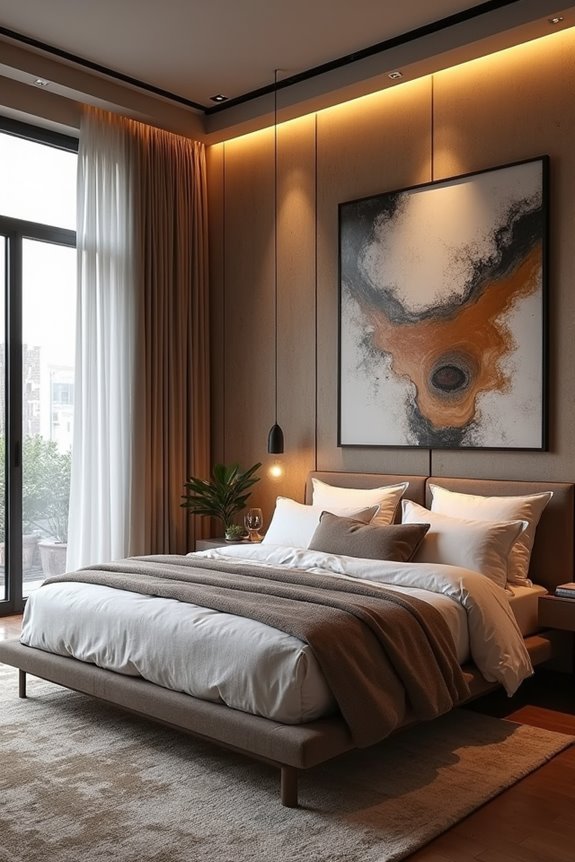
Your bed’s the biggest piece of furniture in the room, so it needs something equally bold above it to balance that visual weight. Large-scale art or a gallery wall works well for drawing attention to your bedside wall.
Here’s how to approach it:
- Hang your main piece at eye level (around 145–150 cm from the floor) so you see it clearly from bed
- Add complementary smaller pieces nearby to create a gallery wall with intentional arrangement
- Match your artwork’s color palette to your textiles and lighting for visual consistency
- Use picture shelves or ledges to rotate pieces without cluttering your bed’s surface
This strategy anchors your entire room while keeping things organized and visually balanced.
Add Ambient Lighting, Plants, and Finishing Touches
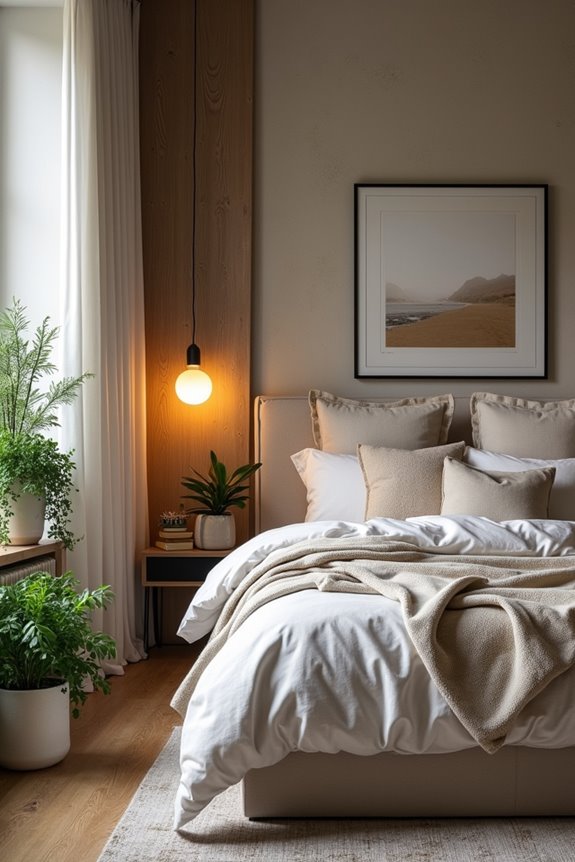
Once you’ve anchored your bed with art, it’s time to bring the room to life with lighting and greenery that’ll make it both functional and complete. I recommend using the three-part rule: combine bedside lamps, floor lamps, and ambient lighting fixtures to create depth and mood control. Position your bedside lamps at eye level when seated to reduce glare and improve reading comfort. Layer task and ambient options symmetrically on both sides of your bed for balance. Add smart lighting for app control and scheduling that fits your routine. Finally, incorporate plants and wall sconces as finishing elements that complement your color palette. These components work together to create your bedroom into a personalized space where you’ll actually want to spend time.