
The correct spelling is “living room”—two separate words, not one. Every major dictionary and style guide confirms this standard. You’ll never find “livingroom” as acceptable in formal or informal writing. The “-ing” ending resists merging into closed compounds, which is why it stays open like “dining room” does.
Use “living room” in lowercase within sentences and capitalize it in titles or labels. If you want to understand why this rule exists and how it compares to similar words, there’s more information available.
Living Room Is Two Words: Not One
Why do so many people write “livingroom” as one word when it’s actually two? The answer is straightforward: we’re following established patterns. The correct form is “living room,” two separate words. English dictionaries and style guides universally agree on this. Historically, the term has been written this way since 1787, when the Oxford English Dictionary first recorded it. You’ll notice that compounds ending in “-ing” rarely become closed one-word forms in English. That’s an important pattern. Hyphenated versions like “living-room” or closed spellings like “livingroom” are no longer standard. When you’re writing formally or informally, use the two-word version. This keeps your writing consistent with what educated readers expect.
Why “Livingroom” Doesn’t Work in English
- English treats “-ing” words and nouns as distinct units that need spacing between them
- Removing the space creates an awkward, unrecognizable form that readers don’t expect
- Standard dictionaries and style guides reject this nonstandard spelling completely
You might see “livingroom” online, but that’s usually just a typo or informal writing. The living room in your home requires the correct two-word spelling. When you’re writing formally—whether for school or work—use “living room.” It’s the version that matches how English actually functions.
The “-ing” Ending: Why It Resists Closed Compounds
Combining a word ending in “-ing” with a noun creates a natural friction in English. The -ing endings rarely bond into closed compounds because they function as descriptive words. When “living” describes “room,” it stays separate—the participial adjective doesn’t merge into a single unit like some other word combinations do.
| Compound Type | Example | Status |
|---|---|---|
| -ing + noun (adjectival) | living room | Two words |
| -ing + noun (gerund) | running shoes | Two words |
| -ing + noun (action) | dining table | Two words |
| Standard compounds | baseball | One word |
| Hyphenated option | well-known | Hyphenated |
Dictionary evidence shows “ingroom” doesn’t exist. This pattern reflects how English orthography works—-ing endings resist closed compounds when meaning stays descriptive rather than creating new concepts.
How Long Has “Living Room” Been Two Words?
The two-word form “living room” didn’t just appear in modern English—it’s been the standard spelling for over two centuries. This article explains how this spelling developed and why it persisted.
According to the Oxford English Dictionary, we’ve been using “living room” as two words since at least 1787. Here’s what happened:
The Oxford English Dictionary confirms “living room” as two words dating back to at least 1787, establishing a centuries-long tradition.
- Historical texts consistently spelled it as two separate words, never as one closed form
- The “-ing” ending naturally resists forming single closed compounds, so “livingroom” never gained traction
- Modern English continued this two-word pattern because it matched established orthographic conventions
This consistency matters. When you see “living room” everywhere—in dictionaries, articles, and homes—you’re following a tradition spanning generations. It’s the correct, time-tested spelling.
Comparing Living Room to Bedroom: A Key Difference
Why does “bedroom” get to be one word while “living room” stays as two? It’s actually about history and how English compounds develop. “Bedroom” solidified into a single closed word through consistent usage over centuries. “Living room,” however, remains a two-word compound because of specific patterns in English orthography.
Words ending in -ing, like “living,” naturally resist merging into closed compounds. This linguistic tendency keeps “living room” spaced apart. Meanwhile, “bed” doesn’t carry that same resistance, allowing “bedroom” to become established as one word.
This difference illustrates a key point: compound status isn’t random. It reflects actual usage patterns and historical evidence. The OED documents “living room” as two words since at least 1787, while “livingroom” never gained traction as a recognized single form. Understanding this distinction helps you recognize why certain compounds stick together while others don’t.
Orthographic Rules in English Compound Nouns
English compound nouns follow specific orthographic rules that determine whether they’re written as one word, two words, or hyphenated—and I’ll show you why “living room” resists becoming “livingroom.” First, closed compounds (single words like “bedroom”) typically form when the pairing becomes familiar and frequently used together, but the “-ing” ending creates a special problem because words ending in “-ing” naturally resist joining into one word, which is why “living room” stays separate. Second, historical orthographic conventions matter too: English speakers have written “living room” as two words since at least the 1700s, and that long-standing pattern keeps the spacing standard even today, just like “drawing board” remains two words rather than one.
Closed Compounds and Solidification
How do two separate words gradually merge into one? I’ll explain how closed compounds form and why “living room” resists this process.
Closed compounds happen when two words unite into a single word over time. Think of “baseball” or “notebook”—they’re now written as one. However, not all word pairs follow this path. Here’s what I’ve noticed:
- Ing-phrases resist merging because they feel less natural as single units
- Historical usage matters—”living room” has been two words since at least 1787
- Readability concerns keep certain compounds separated for clarity
The tendency for ing-room combinations to stay open (two words) is strong in English. Orthographic choice reflects what feels right to readers and what’s been written that way historically. “Living room” simply hasn’t solidified into one word because the two-word form persists naturally.
The “-ing” Ending Problem
Combining a gerund like “living” with a noun like “room” creates a predictable problem: English resists fusing them into one word. You won’t find “ingroom” in any dictionary because the “-ing” ending doesn’t work as a prefix that bonds tightly with following nouns. Instead, English speakers naturally space or hyphenate these combinations. This pattern reflects how our language treats gerunds and participles—they stay separate from the words they modify. Historical records show “living room” appearing since the 18th century, establishing the two-word standard. Think of it this way: “-ing” endings function as modifiers that describe action, not as building blocks for sealed compounds. That’s why you’ll consistently encounter “living room” rather than any fused alternative. This reflects how English orthography actually works.
Historical Orthographic Conventions
Why do some compound nouns stick together as one word while others stay separate? I’ll walk you through how English orthographic conventions shaped “living room” into its two-word form.
English has no single rule governing compound-words. Instead, historical usage determines spelling patterns. “Living room” emerged around 1787 with two distinct words, and that convention stuck. Here’s what influenced this pattern:
- Gerund resistance: Words ending in “-ing” rarely merge into single closed compounds
- Historical precedent: Long-standing two-word usage became the accepted standard
- Dictionary authority: Modern references consistently recognize “living room” as the correct form
I find it helpful to remember that compound-words follow usage trends rather than rigid rules. When a phrase stays separated for centuries, that’s your answer. “Living room” remains two words because that’s how English speakers have written it since the beginning.
Common Spelling Mistakes to Avoid

You’ll want to steer clear of several common errors when writing about this room in your home. The biggest mistake I see is writing it as one closed word: livingroom. That’s simply incorrect in standard English. You might think it should be one word since other compounds have merged over time, but the living room hasn’t followed that pattern.
Another error is adding a hyphen between the words. Living-room looks formal, but it’s not standard either. Stick with two separate words instead.
Here’s what works: use “living room” in lowercase during regular sentences. When you’re titling a floor plan or heading, capitalize it as “Living Room.” Keep this distinction clear, and you’ll write it correctly every time.
Capitalization: When to Use Title Case
When should “living room” be capitalized, and when shouldn’t it? I’ll break this down for you so it’s clear.
When should “living room” be capitalized, and when shouldn’t it? We’ll break this down for clarity.
You’ll capitalize “Living Room” when it’s a heading, label, or proper name. That’s where title case comes in. Here’s when you’d use it:
- Room labels: Use title case on signs, floor plans, or real estate listings (“The Living Room features natural light”)
- Headings in documents: Capitalize it in article titles, section headers, and formal outlines
- Proper names: If you’re naming a specific space in a building or venue, capitalize it
In regular sentences, though, keep it lowercase: “I relaxed in the living room.” The difference is straightforward: formal labels and headings get title case, everyday writing doesn’t. This distinction keeps your writing consistent and professional across all your documents.
When Not to Hyphenate (Living-Room Is Wrong)

Living room as two separate words is the correct standard in modern English. Historically, compound words formed from gerunds (verbs ending in -ing) like “living” remain unhyphenated and written as two distinct words. Current style guides and dictionaries confirm this convention. You should avoid using a hyphen in living room in your regular writing.
Historical Orthographic Standards
Why did “living room” stick around as two separate words instead of becoming one word or a hyphenated version? History shaped this choice.
The 1787 OED entry documented “living room” as two words, and that standard persisted. Here’s what made this pattern stick:
- Gerund nouns don’t close up: When a word ending in -ing starts a compound, it typically stays open as two words
- Room remains independent: The second noun keeps its identity rather than merging into a single term
- Historical consistency: Early dictionaries consistently showed the two-word form as standard practice
- Rare hyphenation: You’ll find few historical instances of “living-room” with a hyphen in actual documents
This orthographic standard reflects how English compounds naturally develop. The open form simply won out because it matched how we naturally spoke and wrote about this household space.
Modern English Compound Conventions
Today’s style guides and dictionaries won’t accept “living-room” as correct—and there’s a solid reason why. When you’re working with compound-words like this one, modern English follows specific patterns. The hyphen actually doesn’t fit here because “living room” belongs to a category of open compounds that stay as two separate words.
I’ll explain why: compound-words with -ing forms typically resist closing up into single words or hyphenating. Instead, they remain open. Think of similar terms like “dining room” or “reading room”—you’d never write them hyphenated either.
This convention reflects how English speakers naturally use these terms. We say them as two distinct words, and our written form matches that speech pattern. When you’re writing formally or casually, stick with “living room.” That’s what contemporary usage expects, and it keeps your writing aligned with current standards.
Style Guide Rules: AP, Chicago, and Oxford
How do the major style guides handle this two-word compound? I’ll walk you through what the most respected style guides actually say.
The three biggest authorities on writing agree on this one:
- AP Stylebook treats living room as two words, no exceptions
- Chicago Manual of Style maintains the two-word format consistently
- Oxford Style Guide follows the same two-word standard
These aren’t random choices. Style guides exist to create consistency across professional writing, journalism, and publishing. When working on anything formal, follow whichever guide your project requires. The good news? They’re all aligned here. There’s no debate between them about living room versus livingroom. You won’t find livingroom in any of these authoritative references. Sticking with living room means you’re following industry standards that professionals trust.
Living Room vs. Lounge and Sitting Room
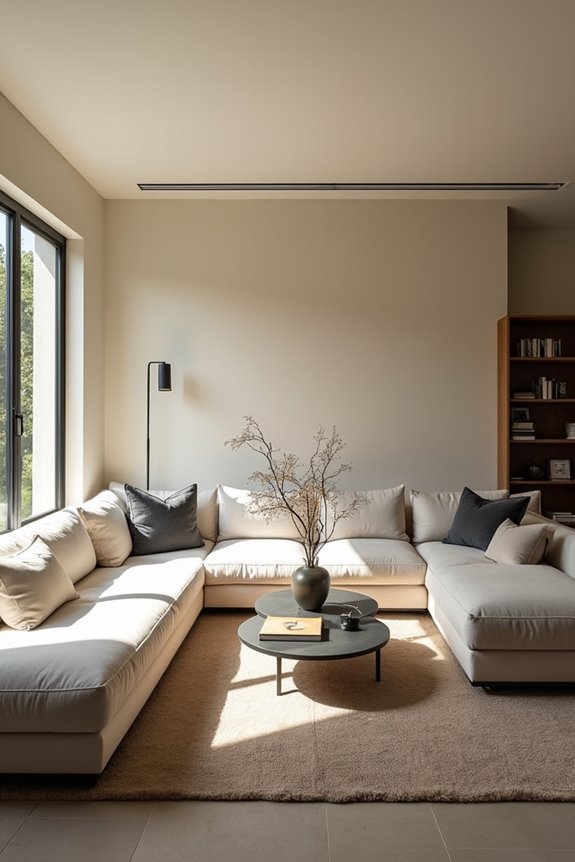
While “living room” is the standard American term, regional differences shape what we call this space. British English speakers often say “lounge” or “sitting room” instead, and these aren’t just casual swaps but reflect distinct cultural naming traditions. When you’re choosing between these terms, consider your audience: American readers expect “living room,” while British audiences may prefer “lounge,” and “sitting room” works in both regions but sounds more formal. Understanding these distinctions helps you match your word choice to your context, whether you’re writing for a specific country, communicating with international readers, or simply wanting to know why different English speakers use different names for the same room.
Regional Terminology Distinctions
Across the English-speaking world, you’ll find that what Americans call a living room goes by different names depending on where you are. Regional terminology distinctions matter when you’re talking about spaces in your home.
Here’s what I mean:
- In Britain, people commonly say “lounge” in everyday conversation, though “sitting room” also appears frequently
- In American English, “living room” is the standard term you’ll hear and see consistently
- In Australia and New Zealand, “lounge” dominates everyday speech similar to British usage
These regional differences aren’t random. They reflect how different English-speaking communities developed their own vocabulary over time. When you’re reading floor plans or chatting with people from other countries, knowing these distinctions helps you understand exactly which room they’re describing. The two-word form “living room” remains standard in American contexts, while British speakers lean toward the single word “lounge.”
British Versus American Usage
Why does the same room have different names depending on where you live? It comes down to regional preferences. In American English, we call it a “living room.” In British English, you’ll hear “lounge” or “sitting room” instead. Regardless of which term you use, the spelling stays consistent at two words: “living room,” not “livingroom.” This two-word form became standard in the 1890s through decorating books that shaped how we talk about our homes. Both British and American speakers follow this same spelling rule today. Single-word or hyphenated versions aren’t considered correct in either dialect. Whether you’re American or British, you’re using “living room” with two separate words when discussing this common household space.
Synonym Selection and Context
When you’re talking about that main room where your family gathers, you’ve got a few options depending on where you live and what feels right for the situation. “Living room” is the standard two-word term you’ll find in most dictionaries and hear across both American and British English.
Here’s what you should know about your choices:
- Living room works everywhere and suits formal or casual contexts
- Lounge appears more often in British English and sounds slightly more upscale
- Sitting room carries a traditional feel, especially in older British homes
Use “living room” for clarity and universal understanding. You’ll fit in anywhere with this choice. If you’re aiming for a specific regional flavor or want to match local speech patterns, “lounge” or “sitting room” work perfectly. Context matters—pick whichever feels natural to your audience and situation.
Regional Variations in Terminology
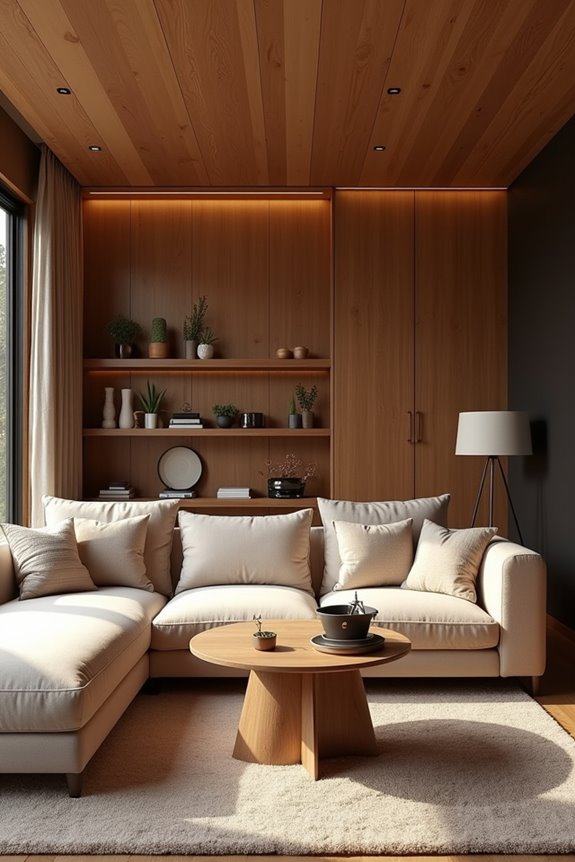
Different regions of the English-speaking world don’t all agree on how to say or write this room’s name. In Britain, you’ll hear “lounge” or “sitting room” most often. Australians typically say “lounge room,” which mirrors the British preference. Meanwhile, Americans stick with “living room” as two separate words. These regional wording differences reflect how language evolves differently across countries. The two-word form became popular in the 1890s through decorating magazines, which influenced American English especially. You won’t find “livingroom” or “living-room” accepted in any major English variety—the two-word version remains standard everywhere. Understanding these regional variations helps you communicate naturally whether you’re reading British publications, talking with Australian friends, or navigating American content.
Quick Proofreading Checklist
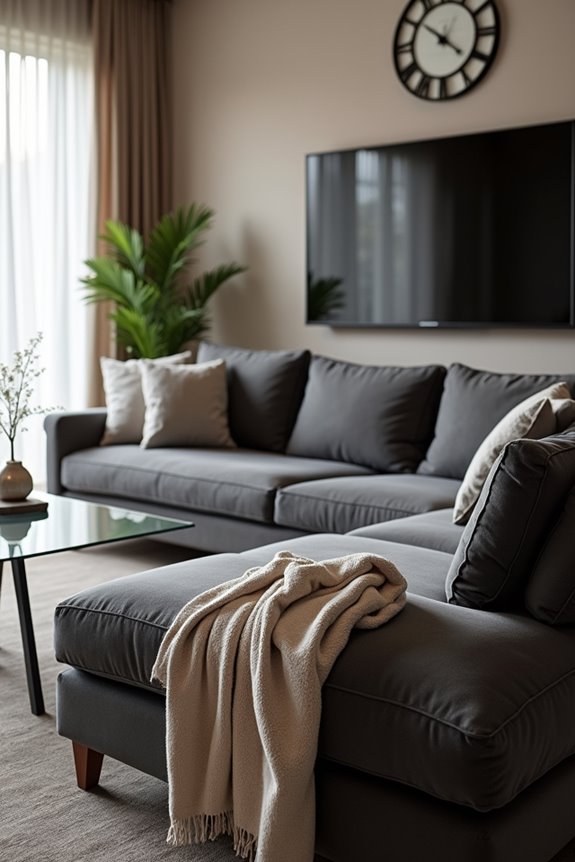
When you’re checking your writing, I recommend three quick strategies: read your sentences aloud to hear if “living room” sounds right in context, consult a trusted reference like Merriam-Webster or your school’s style guide to confirm the two-word form, and select one style guide to follow consistently throughout your paper. You’ll find that most dictionaries and teachers prefer “living room” as two separate words, which makes your choice straightforward once you know where to look. Taking just a few minutes for these checks prevents errors and shows your reader you’ve done your homework carefully.
Read Aloud for Rhythm
How’s your ear for spotting spelling mistakes? I’ll share a technique I use that works every time: reading aloud reveals the rhythm of language.
When you say “living room” out loud, notice the two distinct beats. Each word gets its own pulse, like this: LIV-ing ROOM. That natural pause between them confirms the two-word form.
Here’s why this matters:
- Fusing it sounds awkward: “Livingroom” as one word breaks the rhythm native speakers expect
- Hyphens feel forced: “Living-room” interrupts the natural flow most of us recognize
- Your ear knows the difference: Saying it aloud activates your built-in grammar detector
This living room rhythm test works for proofreading because your voice catches what your eyes might miss. Listen to that natural two-word spacing you hear. It’s your best guide to confident, correct writing.
Consult Trusted References
Your ear’s a great starting point, but it won’t settle every spelling question you’ll face. That’s where trusted references come in handy. When you’re unsure about “living room,” check the Oxford English Dictionary. The OED confirms that “living room” appears as two separate words, with first documented usage dating back to 1787. This historical consistency matters. Major style guides like Chicago Manual of Style and AP Stylebook also support the two-word format. These aren’t random choices—they reflect how English actually works. Compounds with “-ing” as the first element rarely form single closed words. Instead, they stay open or hyphenated. So when you’re writing about that comfortable social space in your home, consult these established references. They’ll consistently point you toward “living room” as two words, every time.
Check Style Guide Selection
Before you finalize any piece of writing, I’d recommend pulling up the style guide you’re supposed to follow. Different guides handle compound words slightly differently, so checking yours first saves you time and keeps your work consistent.
Here’s what I suggest you do:
- Look up your specific guide – AP, Chicago, MLA, or APA all list their preferred formats
- Check for context rules – some guides vary based on whether you’re writing headings or body text
- Review examples – see how your guide shows compound words like “living room” in actual sentences
Most major style guides agree: “living room” stays as two words in standard prose. You’ll find this listed clearly in their compound-word sections. When you follow your chosen guide consistently, your writing looks professional and reliable. That’s what makes the difference.
Bottom Line: Always Use Two Words
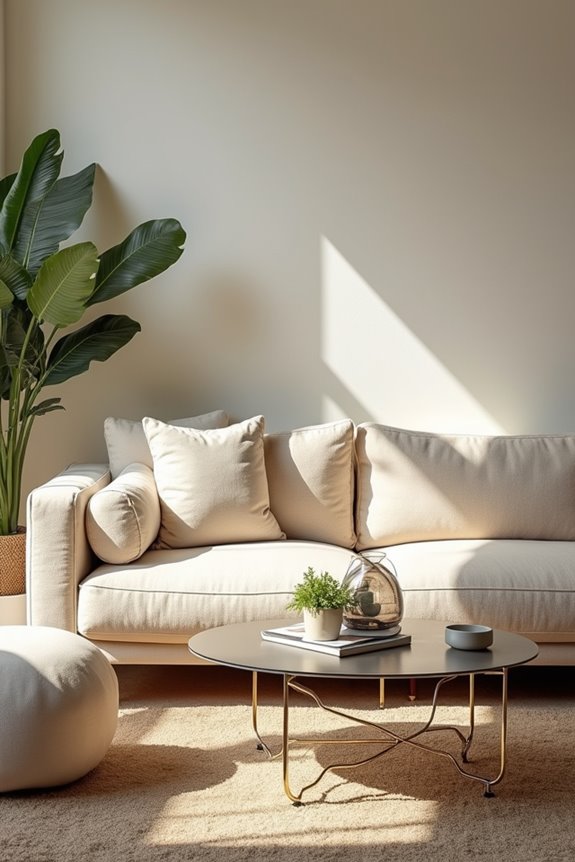
When you’re writing about that room in your home where you relax and watch TV, there’s only one correct way to spell it: living room—two words, always. I know you might see “livingroom” online or in casual texts, but that’s simply incorrect. Major dictionaries like Merriam-Webster and the Oxford English Dictionary both confirm the two-word format as standard. This consistency matters because it shows you’re writing professionally and correctly. Whether you’re writing an essay, email, or social media post, stick with “living room.” The hyphenated version “living-room” isn’t used in modern English anymore. By using the correct two-word spelling, you’re following standard writing conventions. It’s a small detail that affects how others perceive your writing.