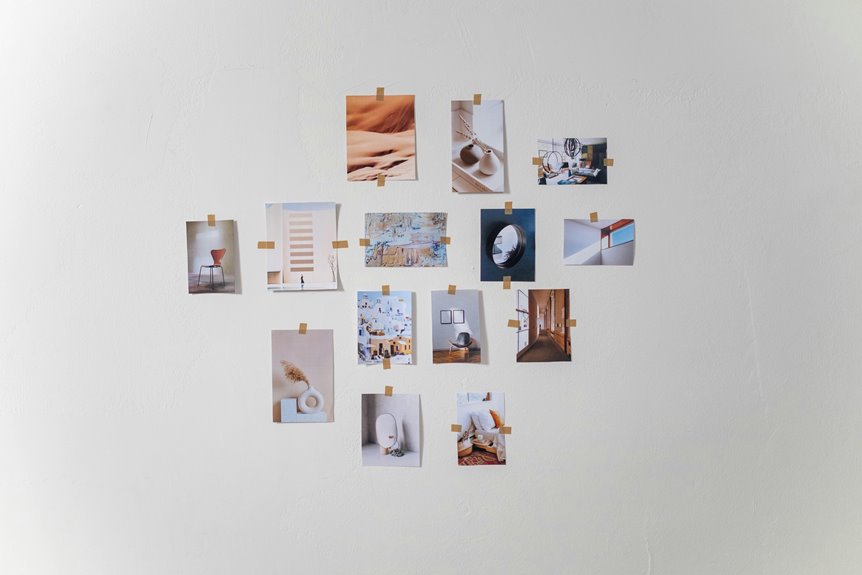
Start by anchoring your wall with one strong focal point—an oversized artwork or mirror positioned at eye level, around 57–60 inches from the floor.
Next, decide between a single statement piece or a gallery wall with varying sizes and frames.
Layer additional art, mirrors, and objects asymmetrically to create depth and visual interest.
Coordinate your display’s colors and textures with your furniture, using wall sconces to highlight the arrangement.
Finally, remember that empty space is intentional—sometimes restraint produces the most effective results.
These strategies work together to turn blank walls into notable focal points.
Start With a Focal Point to Anchor the Space
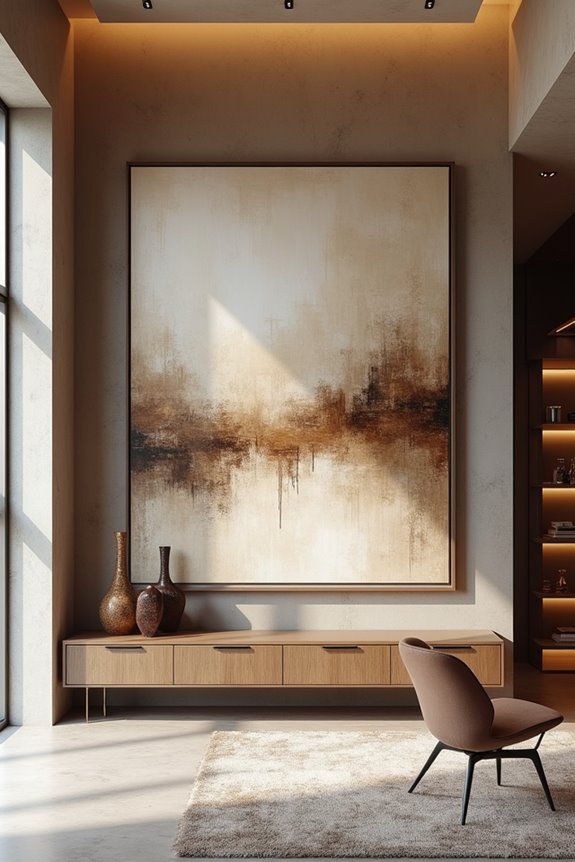
How do you fill a massive wall without it looking bare or cluttered? Start by choosing one strong focal point—an oversized artwork or mirror works well. Position it at eye level, around 57–60 inches from the floor, to anchor your space and establish scale for everything else.
Your focal point needs visual weight. Select a piece with bold color or striking contrast so it naturally draws your eye first. Pair it with supporting elements like a long sofa or console underneath to maintain balance and prevent the wall from feeling overwhelming.
If your large wall spans considerable space, try positioning your focal point slightly off-center. This creates dynamism while keeping things grounded. Use secondary pieces and strategic lighting around it to reinforce balance and tie the whole arrangement together.
Choose Your Style: Statement Piece or Gallery Wall
Once you’ve anchored your space with a focal point, you’ll need to decide whether you want to go bold with a single large piece or create visual interest with a gallery wall.
Here’s how to choose the right approach for your space:
- Oversized piece option: Hang one large piece to command attention. This works best when you want plenty of negative space around it and a clean, uncluttered look that balances with seating.
- Gallery wall approach: Use frame variety and varying sizes on your large wall to build rhythm while maintaining cohesion through a shared color palette or recurring motifs.
- Eye level alignment: Position groupings horizontally where people sit to create natural visual flow.
- Mixed elements: Alternate art with mirrors, shelves, or consoles to maintain movement without overloading your wall decor ideas.
Both approaches work—choose what feels right for your home.
Layer Additional Art and Objects for Depth
To make your large wall feel dynamic and interesting, you’ll want to build layers instead of hanging a single piece flat against the surface. I recommend combining varying frames and sizes to create visual hierarchy. Place a large central artwork flanked by smaller pieces in asymmetry rather than a rigid grid. Mix mediums like canvas, prints, and sculpture together. Add textured objects such as woven baskets or vintage plates between framed pieces for shadow play. Incorporate wall sconces or picture lights to highlight your layered art and enhance depth. Use a cohesive color palette throughout your wall display so everything reads as one rich focal point. This approach creates a gallery wall that demonstrates thoughtful design choices and welcomes viewers in.
Coordinate Color, Texture, and Light
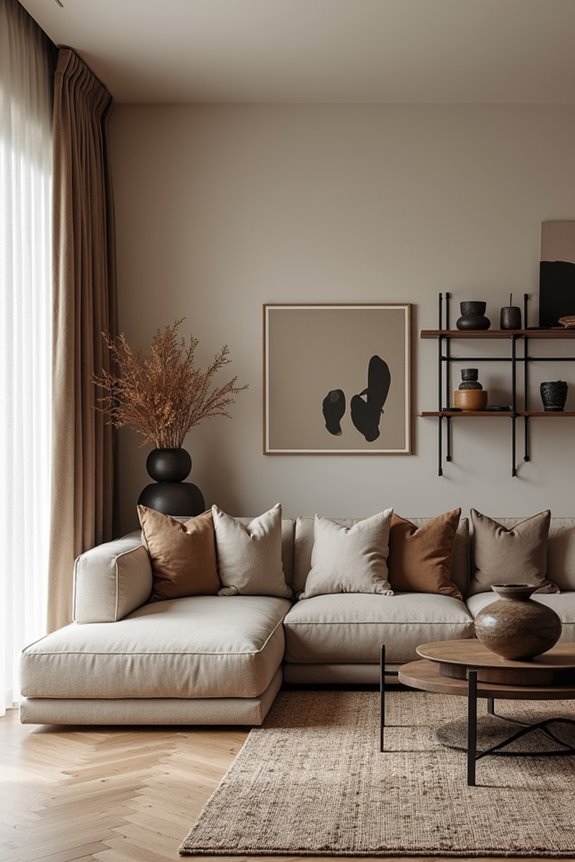
Now that you’ve built your layered wall display, it’s time to make sure all those pieces work together visually. I’m going to walk you through creating harmony across your large wall so everything feels coordinated rather than random.
Start by thinking strategically about your color palette and how it connects to your furniture:
- Match wall art tones with your sofa fabrics using neutral bases and bold accents
- Layer different textures—matte frames, glossy mirrors, and woven hangings—to add visual interest
- Position wall lights to highlight art frames while avoiding shadows that dull texture
- Repeat accent colors through throws, vases, and rugs to unify your wall space
Balance scale matters too. Large color-heavy pieces need quieter surroundings. This prevents your accent wall from overwhelming the room, creating the coordinated look you’re after.
Know When to Leave Walls Empty
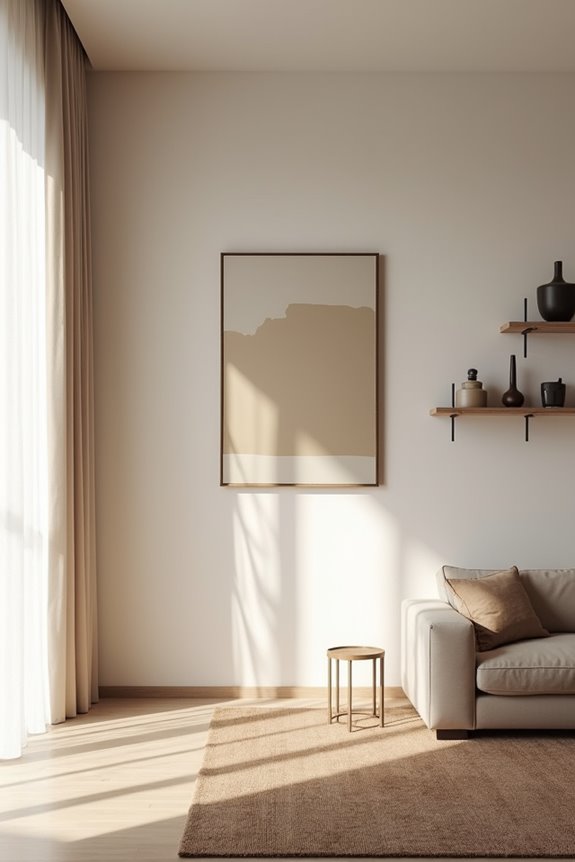
Why does every wall need something on it? Empty walls aren’t failures—they’re intentional design choices. Negative space and breathing room actually make large living rooms feel more spacious and less cluttered. A minimalist decor approach draws attention to your furniture layout and lighting emphasis instead of wall volume.
Empty walls highlight architectural features like molding or windows that deserve attention. They also create room balance by providing neutral backdrops for bold furniture pieces. When you have oversized seating or statement pieces, wall openness prevents visual overwhelm.
Try this: Evaluate your walls periodically. Reposition furniture to see where openness improves your space. Sometimes restraint creates stronger impact than decoration. What you don’t hang matters just as much as what you do.