
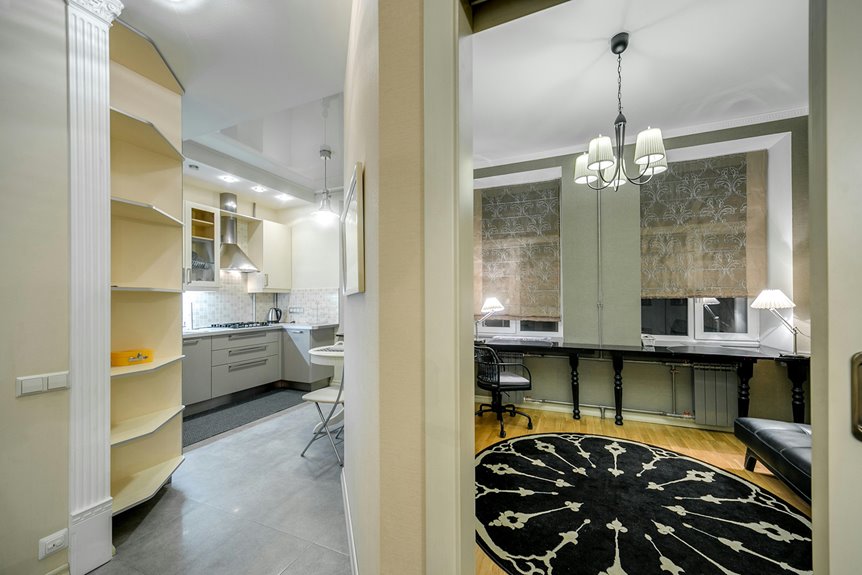
Kitchen desks solve real problems most families face daily—homework, bills, charging cables, and permission slips need a home. I’ve found they work best when they match your actual routines. Use them three or more times weekly, and they’re worth keeping. Pick the right size (36–60 inches for most homes), add drawer organizers, and establish a weekly clearing routine. A cluttered desk beats a cluttered kitchen. The specifics of making this work in your space depend on your layout and needs.
Kitchen Desks Address a Real Design Problem
A kitchen desk isn’t just a trendy accessory—it’s a practical solution to a problem most households actually face. You know that feeling when papers, phones, and daily clutter pile up on your counters? Kitchen desks solve this directly. They create a dedicated zone for homework, charging cables, bills, and permission slips that’d otherwise scatter everywhere. I’ve seen how this single piece of furniture organizes a chaotic kitchen into a functional hub. Instead of searching for your phone or that important form, you know exactly where to find it. Kitchen desks contain the mess before it spreads, protecting your cooking and dining spaces. They’re not outdated—they’re responding to real needs families have today. When you need a spot to manage daily life, a kitchen desk delivers exactly that.
Why This Trend Misses the Point
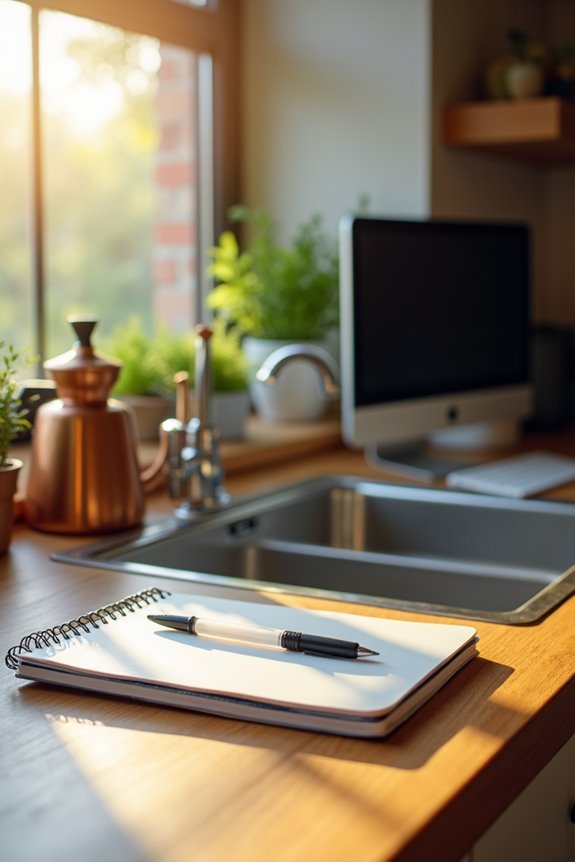
While kitchen desks solve one problem, they can create others you might not expect. I’ve found that kitchen desks often become clutter magnets, pulling papers, chargers, and supplies into your main living space. This visibility can feel chaotic, especially when you’re trying to cook or relax.
Privacy matters too. If you’re working from home, you’re stuck in the kitchen’s activity zone. Kids interrupt. Conversations happen nearby. You can’t fully focus on important tasks.
The real issue? Kitchen desks assume one solution fits everyone. They don’t. What works for organizing bills might fail for concentrated work. Before installing kitchen desks, ask yourself: Do I actually need this here, or am I just following a trend? Consider whether a closed-door space would serve you better.
Three Types of Kitchen Desks: Built-In, Integrated, and Freestanding
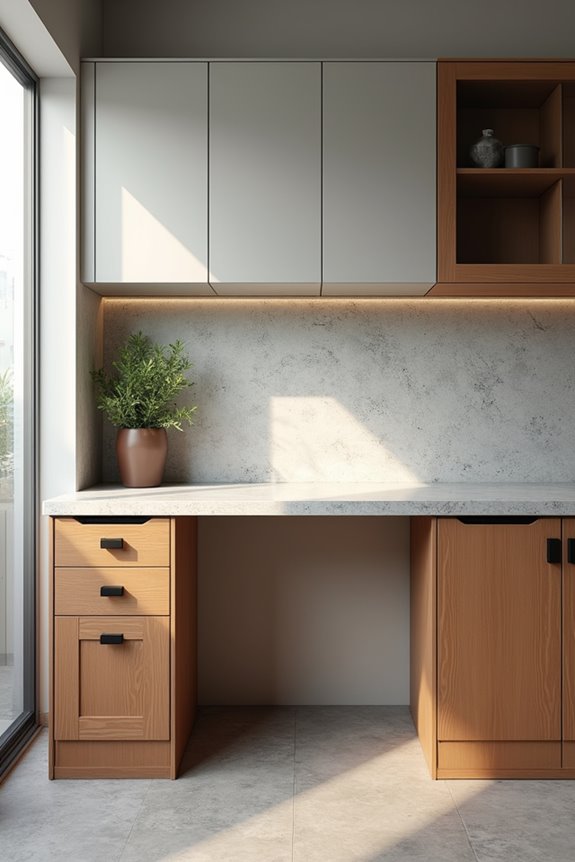
So you’ve considered whether a kitchen desk actually fits your life—and you’ve decided it does. Now let’s explore your options.
Built-in kitchen desks integrate directly into your cabinetry, matching finishes and hardware for a seamless appearance. They blend with surrounding storage and create an unobtrusive workspace.
Integrated desks work similarly, designed to coordinate with your cabinet style while maintaining a cohesive appearance throughout your kitchen.
Freestanding kitchen desks offer flexibility. You can move them around, position them in a corner, or tuck one at an island’s end. They come with their own chair and function as portable hubs.
Each type serves the same purpose: handling homework, bills, and device charging. The difference lies in how permanently they fit your space and daily routine.
Right-Sizing Your Desk: Small, Medium, and Large Layouts
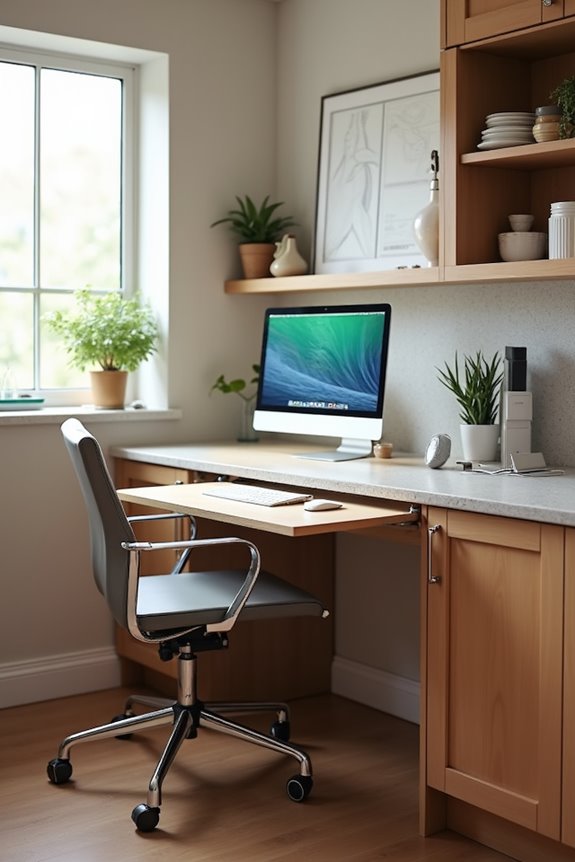
How much space can you actually spare? That’s the real question when you’re sizing kitchen desks for your home. Matching your desk to your room prevents awkward traffic jams and wasted space.
| Layout | Width | Best For |
|---|---|---|
| Small | 36-48″ | Tight kitchens, mail sorting |
| Medium | 48-60″ | Homework, meal planning |
| Large | 60-72″+ | Multiple users, storage |
Small kitchen desks fit snugly in corners or against walls. Medium ones handle daily homework and scheduling without dominating your space. Large layouts work when you’ve got room and need serious workspace.
The approach: Don’t force a template. Measure your traffic flow first. Add storage solutions—drawers, shelves, cabinets—so your desk stays organized, not cluttered. Your kitchen deserves a desk that actually works for your family’s lifestyle.
Kitchen Desks for Remote Work and Hybrid Learning

When you’re working from home or your kids are learning remotely, that kitchen desk becomes way more valuable than you might’ve thought. It’s the perfect spot for multitasking—you can monitor dinner while answering emails or help with homework between conference calls. Kitchen desks keep your workspace stable and organized, eliminating the need to shuffle between rooms constantly. You’ll charge devices right where you need them and maintain quick transitions between work and home duties. The setup supports both remote work and hybrid learning without demanding dedicated office space. Your family gets a central hub for information sharing and task management. When you’re juggling multiple responsibilities, having everything in one accessible location makes your day run smoother and keeps you connected to household activity.
Using Your Desk for Meal Prep, Bills, and Daily Workflows

Your kitchen desk can handle way more than just work emails—it’s actually an ideal spot to consolidate three major household tasks: meal planning, bill paying, and daily workflow management. I keep my meal planning notebook right there, jotting down weekly menus and grocery lists without hunting through drawers. My kitchen desk gives me space for organizing bills, receipts, and financial documents in one accessible zone. This prevents paperwork from scattering across countertops and the dining table. When I tackle daily tasks—responding to emails, scheduling appointments, or managing household projects—I’m steps away from my kitchen. This setup keeps clutter contained rather than dispersed throughout my home. You’ll find that having everything in one dedicated spot actually streamlines your routine and reduces stress.
Storage Solutions: Drawers, Shelves, and Hidden Compartments
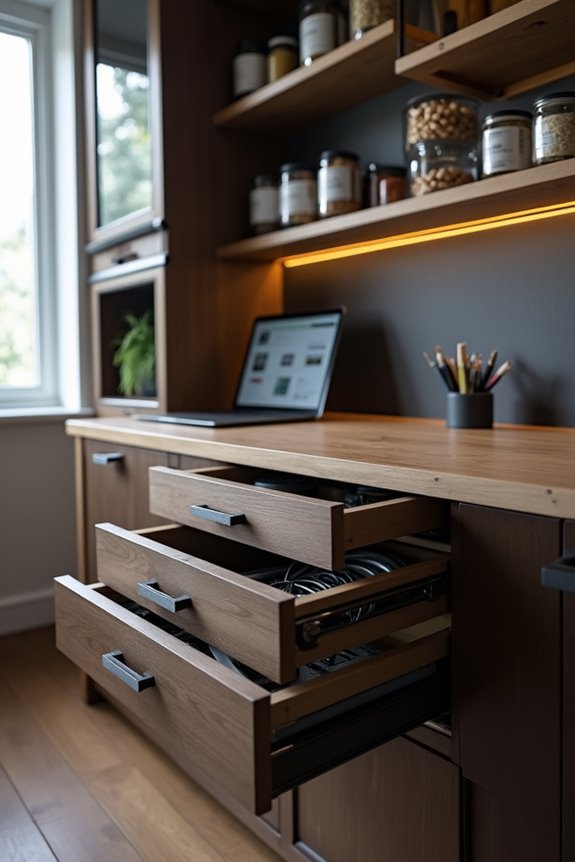
What makes a kitchen desk truly functional isn’t just the flat surface—it’s the smart storage built around it. Adding drawers, shelves, and hidden compartments helps organize my workspace effectively. These features keep my storage space tidy and everything within reach.
| Storage Type | Best For | Depth |
|---|---|---|
| Shallow drawers | Pens, chargers | 4 inches |
| Deep drawers | Bills, documents | 8 inches |
| Open shelves | Baskets, books | 10 inches |
Consider installing a desk with built-in compartments for phone chargers and cables. Floating shelves above work well for cookbooks or decorative bins. Under-desk storage units maximize your footprint without taking up floor space. Desks that blend form and function are practical investments that adapt to what you actually need.
Matching Your Kitchen Desk to Existing Cabinetry
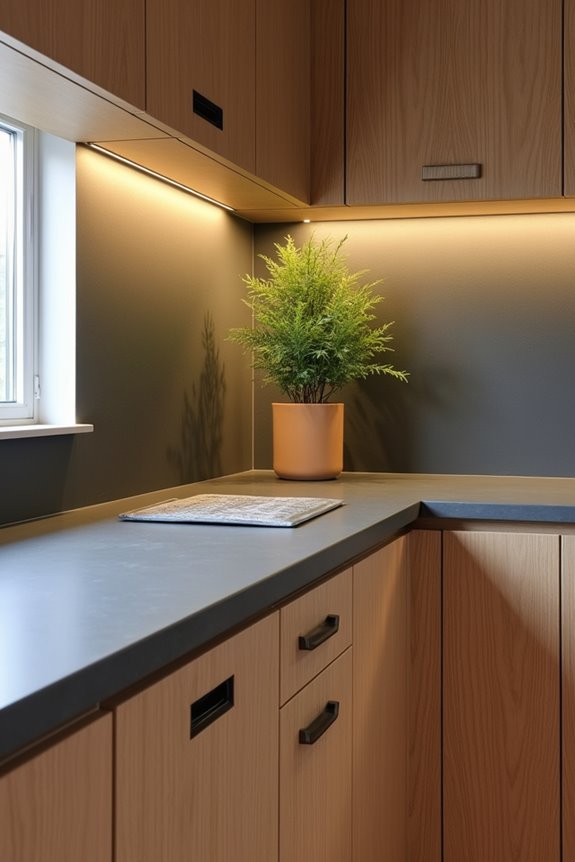
How you integrate your kitchen desk with existing cabinetry determines whether the space appears well-planned or hastily added. Matching materials works best. If your cabinets are white shaker style, choose a desk with similar lines and finish. You can also coordinate colors and hardware to create visual harmony.
Consider the desk’s depth and height relative to adjacent cabinetry. A standard desk runs 18–24 inches deep, while most cabinets are 24 inches. This slight variation shouldn’t create problems if you plan carefully.
Pairing your kitchen desk with surrounding cabinet updates prevents a dated appearance. Add matching trim or crown molding to unify the space. When everything coordinates, your workspace functions as a natural part of your kitchen rather than an afterthought.
Cable Management and Charging Stations That Stay Invisible
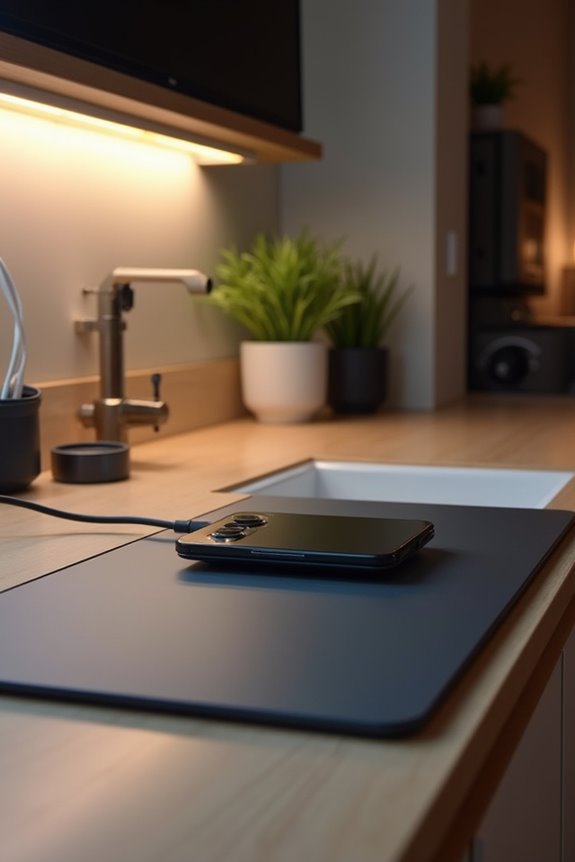
A kitchen desk without visible cords tangled behind it actually works better than one buried under cable clutter. I’ve found that smart cable management makes your workspace more functional and usable for daily work.
Here’s what I recommend:
- Install cable trays or clips along the back of your desk to bundle cords neatly together
- Use a power strip with surge protection positioned inside a cabinet or behind a panel to hide it completely
- Label each cord with tags so you know what connects where without hunting
When you hide your charging stations and cables, your kitchen desk stays functional and clean. Built-in storage around your desk gives you spots to tuck power strips and excess cord length. This approach keeps your kitchen looking clutter-free while maintaining full access to everything you need for homework, device charging, and laptop work.
Pull-Out Organizers and Compartment Ideas
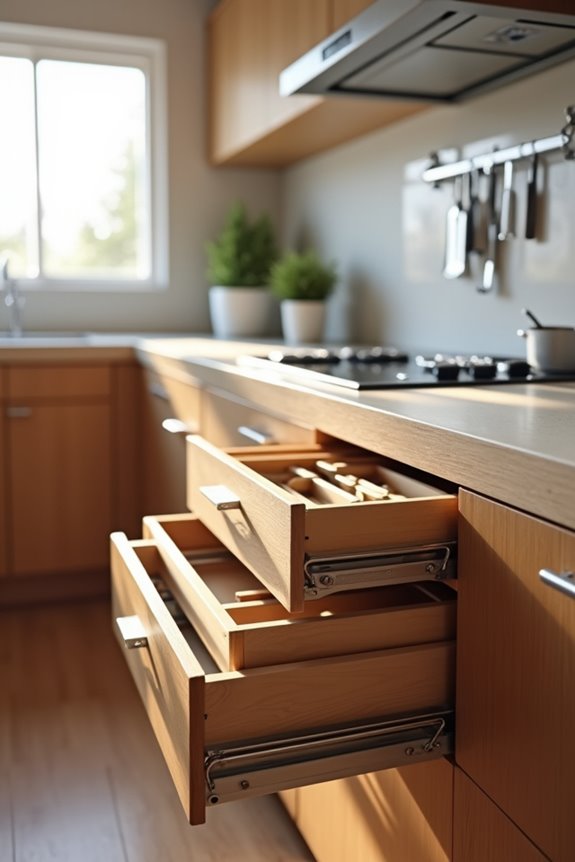
Pull-out organizers make your kitchen desk a functional system. Adding compartmentalized drawers keeps pens, papers, and chargers separated and accessible. Consider installing a 12-inch pull-out tray under your desk surface—it holds office supplies without using counter space.
Vertical dividers inside drawers prevent items from shifting around. Label each section so everyone in your household knows where things belong. This matters because kitchen desks serve multiple purposes: homework stations, mail sorting, and device charging hubs all at once.
Drawer organizers with adjustable compartments adapt as your needs change. Installing these solutions takes about an hour and costs between $30-$75. You’ll notice immediately how much easier it becomes to find what you need while keeping clutter hidden away.
Kitchen Desk Ideas for Compact Kitchens
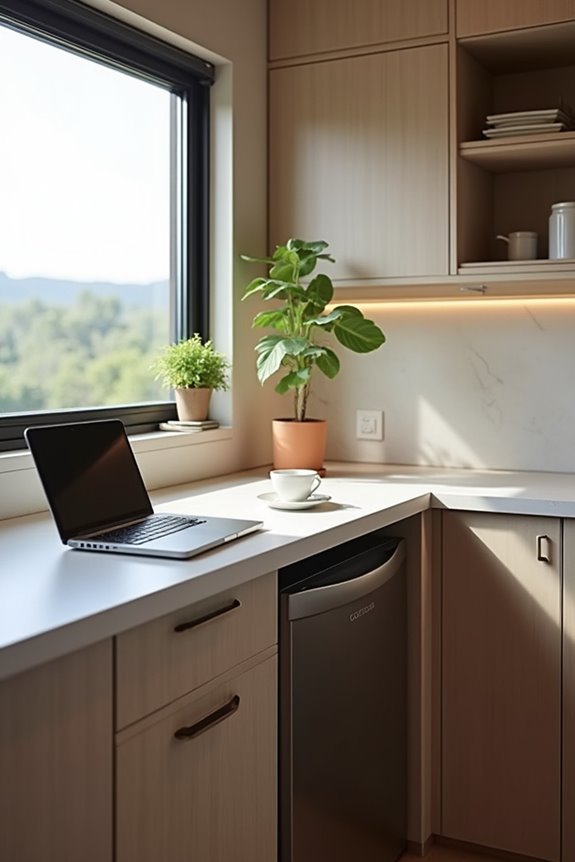
When you’re working with a compact kitchen, focus on three key strategies: first, maximize limited space by choosing a slim desk that fits into underused corners or along a single wall, rather than taking up central real estate. Second, consider multi-functional desk solutions like a fold-down model that doubles as extra counter space when you’re not using it, or a narrow desk with built-in shelving that serves storage and workspace at once. Third, think strategically about placement by positioning your desk near natural light from a window or tucking it into an alcove where it won’t interfere with your kitchen’s main work triangle—this way, you get the organizational benefits without sacrificing your cooking space.
Maximizing Limited Space
How do you fit a functional workspace into a kitchen that’s already tight on square footage?
Smart choices matter. You don’t need much space to create a practical work zone. Here’s what actually works:
- Wall-mounted desks fold down when you’re not using them, freeing up floor space instantly
- Narrow drop-down models (12-18 inches deep) tuck into corners or against unused walls
- Built-in shelving above keeps supplies organized without adding bulk
Kitchen desks in compact spaces work best when they’re intentional. Mount one at counter height so it doubles as extra prep space. Consider pairing it with closed cabinetry underneath to hide clutter and maintain that clean look you want. This approach keeps your workspace functional while respecting your kitchen’s limitations. You’re not sacrificing anything—you’re just being strategic about every inch.
Multi-Functional Desk Solutions
Why settle for a desk that does just one thing? Multi-functional desk solutions give your compact kitchen a workspace that works harder for you. I’ve found that pairing a wall-mounted desk with closed cabinetry keeps clutter hidden while maintaining a clean look. These units slide seamlessly into existing cabinetry, saving valuable floor space you’d otherwise lose.
| Feature | Benefit | Best For |
|---|---|---|
| Wall-mounted desks | Saves floor space | Small kitchens |
| Fold-down surfaces | Hidden when not needed | Minimal footprints |
| Built-in storage | Organized paperwork | Busy families |
| Modular units | Adapts to your needs | Growing households |
| Counter combos | Doubles as workspace | Limited room |
Choose modular, budget-friendly options that integrate with your cabinetry. You’ll appreciate having a dedicated homework and charging zone without sacrificing functionality or aesthetics.
Strategic Placement Strategies
The location you choose for your kitchen desk can make or break its usefulness in a compact space. Strategic placement affects how well your workspace functions alongside daily kitchen activities.
Consider these placement options:
- Near entryways or dining alcoves – Centralizes organization while keeping your prep area clear
- Against unused wall space – Maximizes floor area without sacrificing functionality
- With wall-mounted or fold-down designs – Provides workspace that disappears when you need room
Pair your kitchen desks with closed cabinetry above to hide clutter. This keeps your space looking organized rather than chaotic. When your desk blends inconspicuously with existing cabinetry, it doesn’t feel like an afterthought. This approach lets you tackle bills, homework, and device charging without compromising your cooking workflow. Your kitchen becomes functional for everyone in your household.
Budget-Friendly Ways to Add or Upgrade a Desk
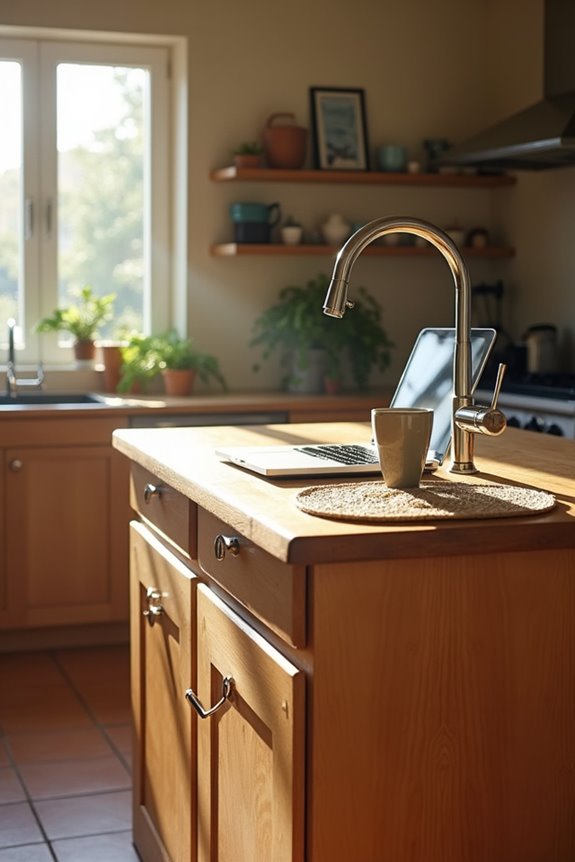
If you’re working with a tight budget, I’ve found that repurposing existing kitchen space—like that awkward corner or unused wall—can save you hundreds compared to a full installation. You can tackle a DIY desk setup using affordable materials like plywood, hairpin legs ($20-40 per set), and wall-mounted shelving, which lets you build exactly what fits your kitchen without professional help. The key is starting simple: paint an old table, add some pegboard storage, or use cabinet doors to hide your work zone when you’re not using it.
Repurposing Existing Kitchen Space
Got a kitchen that’s doing double duty as your command center? You’re not alone. I’ve found that repurposing existing space beats buying new furniture every time. Look around your kitchen—you likely have untapped real estate waiting to become functional workspace.
Consider these cost-effective options:
- Peninsula nooks: Convert unused counter space into a compact work zone with a simple stool
- Window alcoves: Install a slim desk (24-30 inches deep) under natural light for bills and paperwork
- Adjacent cabinetry: Add floating shelves above existing counters to create desks in kitchens without extra footprint
I’ve discovered that closed storage above keeps clutter hidden. A rolling cart fits snugly in corners and moves when you need counter space back. These solutions create an organized hub without renovation costs.
DIY Desk Installation Options
Now that you’ve identified where your desk will live, let’s build it. I’ll show you three budget options that require no professional installation.
| Method | Cost Range |
|---|---|
| Repurpose existing counter | $0–$50 |
| Add slim writing surface | $75–$150 |
| Integrate compact desk | $100–$200 |
The simplest option? Use your current counter space by clearing a 24-inch-wide section. Add a modular storage unit beneath for supplies. If you need more room, install a slim writing surface—24 inches deep works perfectly—along your cabinetry run. These kitchen desks maximize functionality without renovation costs. Start with what you have, then add components as your needs grow.
Affordable Materials and Solutions
You don’t need to spend thousands remodeling your kitchen to add a functional desk—smart material choices and strategic reuse can create a productive workspace in any corner.
Consider these budget-friendly approaches:
- Repurpose existing cabinetry by converting standard stock cabinets in white or gray finishes into your desk base, keeping costs minimal while maintaining kitchen cohesion
- Install wall-mounted or pull-out solutions like a slim desk drawer or compact peninsula with built-in charging stations that require no major construction
- Add organizational accessories including pegboards, wire management systems, and under-desk organizers to maximize functionality without expensive updates
Kitchen desks work best when you capitalize on what you already have. Use existing outlets and under-cabinet lighting rather than hiring electricians. A simple plug-in task lamp handles extra illumination affordably. These practical choices prove that functional kitchen desks fit any budget.
When to Keep Your Desk vs. When to Remove It
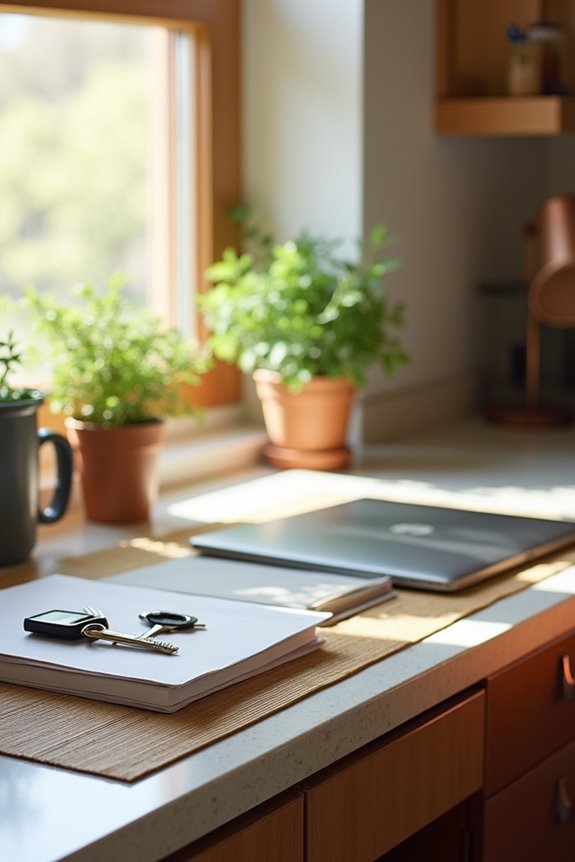
How does your kitchen desk actually function in your daily life? If you’re using it regularly for homework, bills, or device charging, keep it. Your kitchen desks serve a real purpose when they support your routines. However, if your desk constantly becomes a clutter magnet and bothers you visually, removing it makes sense. Consider these factors: Do you work there three or more times weekly? Is the surface usually clear or buried? Does it improve your kitchen’s flow? If you’re keeping kitchen desks, commit to maintaining them. Use drawer organizers and establish a weekly clearing routine. If clutter wins despite your efforts, the streamlined look of removing it might bring you more peace. Either choice is valid—pick what actually works for your family.
Kitchen Desk Checklist: Does One Fit Your Home?
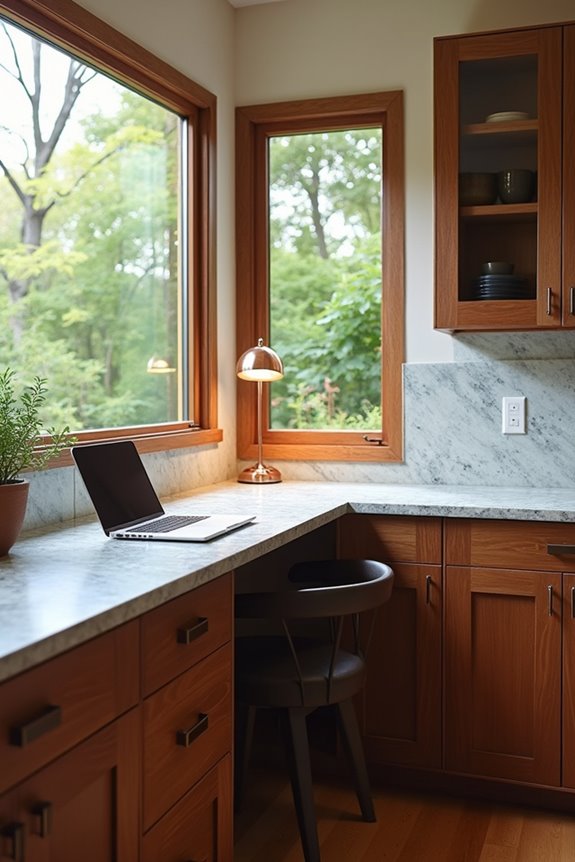
Before you commit to adding a kitchen desk, it’s worth evaluating whether your space can actually support one. I’d recommend working through a practical checklist to determine if a kitchen desk works for your home.
Consider these factors:
- Space and traffic flow: Measure your available wall space and check that the desk won’t block kitchen pathways or appliance access
- Cable management: Plan where you’ll route charging cables and internet connections to keep things organized
- Storage integration: Assess whether you can hide clutter behind cabinetry or built-in shelving to maintain a clean appearance
Next, think about your daily habits. Does your family need a homework zone or charging station here? Would you actually use it, or does your kitchen already feel crowded? Honest answers help you decide whether a kitchen desk makes sense for your lifestyle.