

Storage bins aren’t furniture—they’re storage accessories that organize items, while furniture anchors your room and supports daily activities. Bins use lightweight plastic or fabric with stackable designs; furniture features solid frames built for weight-bearing. You interact directly with furniture like chairs and tables, but bins simply contain and protect belongings. Decorative bins blur this line only when built into larger furniture pieces like storage ottomans. Understanding this difference helps you plan your space and choose the right solutions for your needs.
Storage Bins vs. Furniture: Key Construction and Purpose Differences
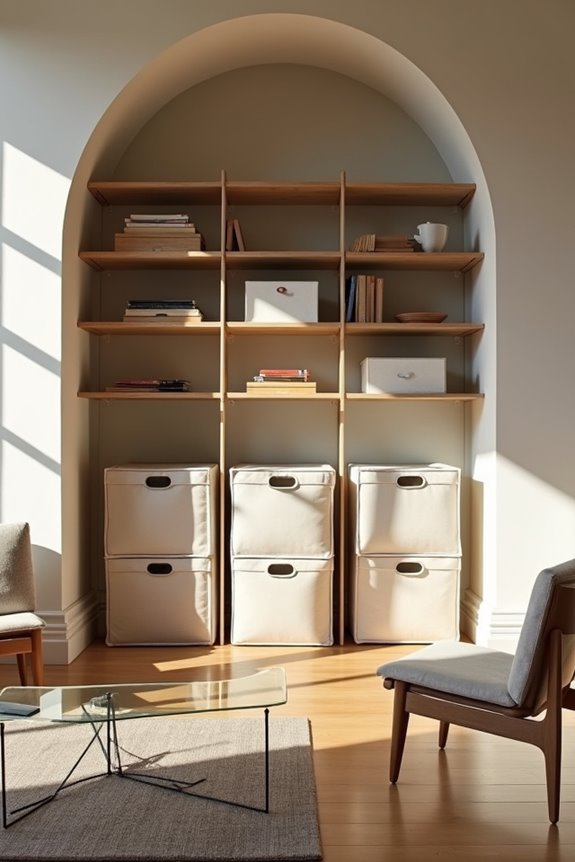
What makes a storage bin different from a piece of furniture? The answer lies in how they’re built and what they’re designed to do.
Storage bins use plastic or fabric with interlocking lids that stack vertically. They prioritize visibility and space efficiency. Furniture, by contrast, features solid frames, upholstery, and hardware built for weight-bearing and daily use.
Storage bins prioritize visibility and space efficiency with lightweight, stackable designs, while furniture demands durability through solid frames and weight-bearing construction.
The purpose difference is also significant. Storage bins organize and protect items—they’re organizational accessories. Furniture serves human interaction through seating, support, or room aesthetics.
Consider construction materials. Bins emphasize lightweight, modular design. Furniture demands durability for long-term sitting and structural integrity.
The practical distinction matters when you’re shopping. You’ll classify bins as storage solutions, not primary furniture. However, storage ottomans blur this line by combining bin functionality with seating capacity, creating a hybrid that serves both purposes effectively.
Why Storage Bins Don’t Meet the Furniture Definition
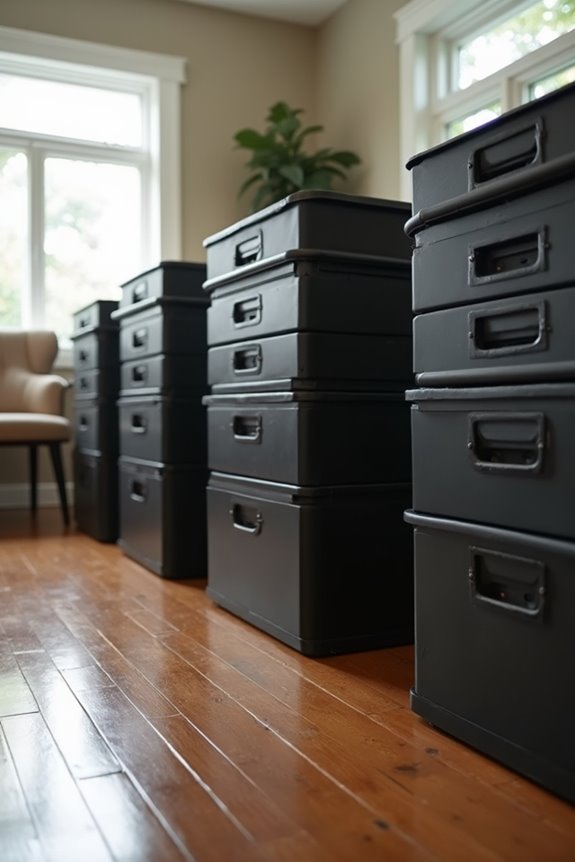
they’re built for a completely different job than the pieces we sit on or use daily. When I look at furniture definitions, I notice they emphasize supporting body weight or enabling daily activities like eating or sleeping. Storage bins don’t do that. Instead, they focus on containment and visibility—keeping items organized and accessible. Furniture typically has fixed structure and durability for seating or surface use, which bins lack. From an accounting perspective, I see bins classified as office supplies rather than furniture. They’re designed for protection and organization, not as functional pieces you interact with directly. That distinction matters when you’re categorizing your office or home storage solutions accurately.
Can Decorative Bins Count as Furniture?
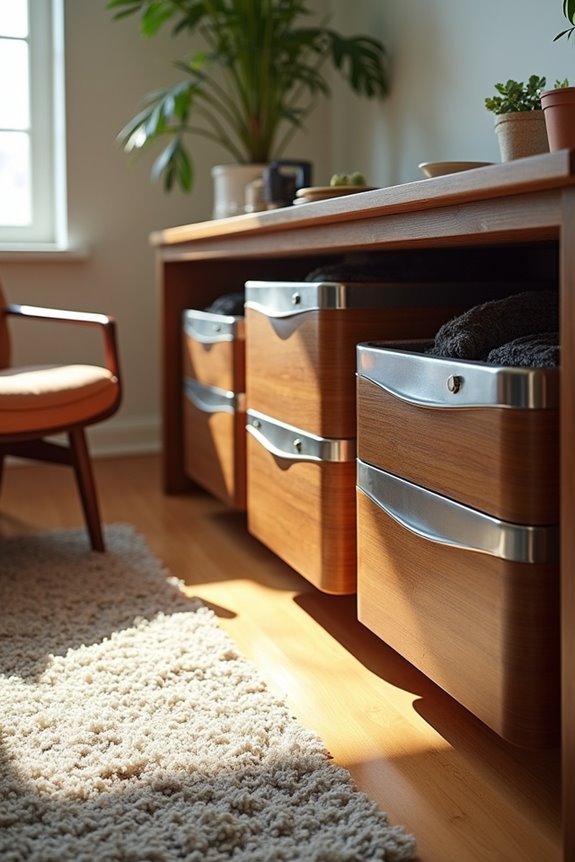
Now that we’ve established why basic storage bins fall short of furniture standards, it’s worth asking whether decorative bins change the equation. I find that decorative bins occupy a gray area. When you use them standalone on a shelf, they’re still storage accessories, not furniture. However, here’s where it gets interesting: when decorative bins become part of a larger furniture piece—like built into a cabinet or integrated into a storage bench—the overall item qualifies as furniture. The bins themselves remain accessories, but their function within that furniture structure matters. Retailers sometimes blur these lines by marketing storage ottomans with bin-like compartments as furniture because they provide seating and structure. So decorative bins alone don’t become furniture, but their context determines their classification.
Why Room Layout Differs for Bins vs. Furniture
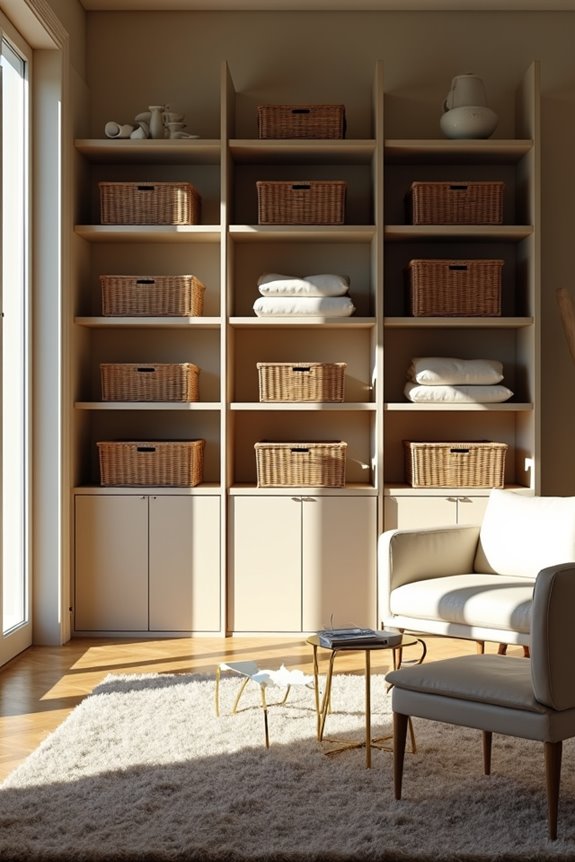
Have you ever noticed how storage bins and furniture pieces sit in a room completely differently? That’s because they serve different purposes in your space. Furniture like cabinets anchors your room layout and demands permanent placement. You plan around these pieces because they’re heavy and built-in storage solutions. Bins, however, work with modular containment design that lets you move them freely. You can stack them in closets, under beds, or on shelves without affecting your room’s flow. Furniture pieces influence how you arrange everything else around them. Bins adapt to whatever space you have available. When you’re designing a room, you prioritize furniture placement first, then figure out where bins fit around those fixed elements. Understanding this difference helps you plan storage that works for your lifestyle.
Matching Storage Containers to Your Space Constraints
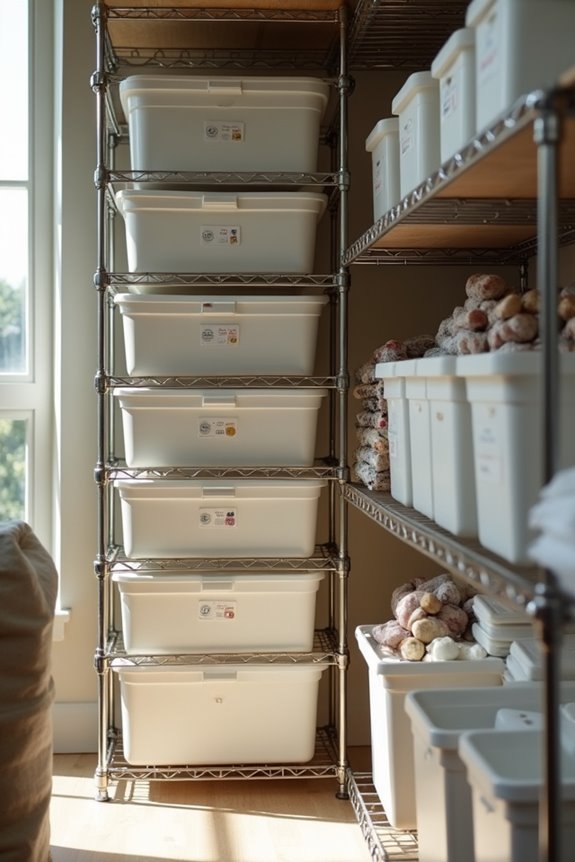
Once you’ve figured out where furniture anchors your room, you can focus on choosing bins that actually fit your space. Measure your floor footprint and door swing clearance before buying anything—this prevents frustration later. Stackable clear plastic totes offer transparency, letting you spot contents instantly without opening them. Plan for vertical optimization by stacking bins three to four high maximum; going higher risks instability.
Pair bins with cabinets strategically. Reserve cabinets for frequent-use items you access daily, then stack bins above or beside them for seasonal or yearly storage. This combination reclaims floor space while reducing visual clutter. Your setup works best when you respect both your room’s dimensions and your storage habits. This approach keeps everything accessible and organized.